
Spiders in Quebec
Quebec has no widow, no recluse and no spider whose venom is medically significant, which makes it one of the easiest provinces in Canada to live in if spiders worry you. Seven of the species you are most likely to meet are profiled below, from the cross orb weaver on the balcony railing to the dark fishing spider that patrols the shoreline at the chalet.

On this page
- What spiders live in Quebec?
- Are there dangerous spiders in Quebec?
- Where you meet them
- Spider season in Quebec
- Look-alikes and false alarms
- Common Spiders in Quebec
- Big Spider in Quebec
- Dangerous Spiders in Quebec
- Most Venomous Spiders in Quebec
- Less Venomous Spiders in Quebec
- Living with Quebec's spiders
- Frequently asked questions
What spiders live in Quebec?
The older version of this page opened by saying there are very few spiders in Quebec. That is worth correcting straight away: the province is larger than most European countries and runs from the deciduous forests of the Outaouais and the Montérégie, through the mixed woods of the Laurentians and the boreal belt, to the taiga and tundra of Nunavik. Several hundred spider species are known from that range, and small sheet-web weavers alone occur at densities of hundreds per square metre in summer meadows. What is genuinely small is the number of species people notice.

Seven of the conspicuous ones are profiled below. Two of them dominate the reports from Montreal and Quebec City: the cross orb weaver, a European introduction that rebuilds a new wheel on balcony railings every evening, and the bold jumping spider, which stalks flies on sunlit brick and deck boards through the summer instead of spinning a web at all.
Are there dangerous spiders in Quebec?
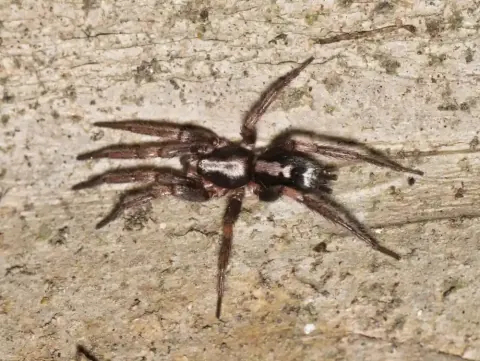
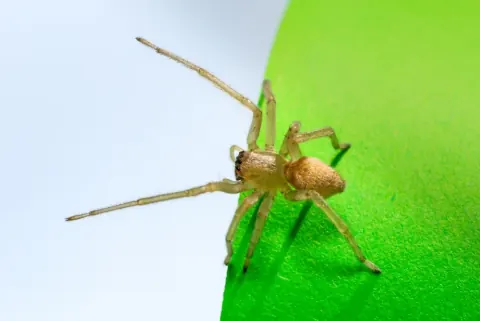
No. Nothing recorded in Quebec is medically significant, and the two species the original page listed as dangerous are not. The "long-legged sac spider" of that list is the northern yellow sac spider, a pale nocturnal hunter that spins a silk sleeping bag in ceiling corners and window frames. It bites more often than most spiders simply because it wanders across beds and clothing at night, and the bite stings sharply for a few minutes and leaves a red mark. The claims that its venom destroys tissue were tested and not supported. The eastern parson spider, the other name on the list, is a fast ground hunter that runs from everything; its bite is uncommon and produces local redness and itching at worst.

Quebec has no established widow population. The northern black widow is the only widow native to eastern Canada, and it reaches its northern limit in the sand barrens of southern Ontario. Recluse spiders are not established anywhere in Canada, so a brown recluse bite diagnosed in Montreal, Laval or Gatineau deserves a second look — that wound pattern is usually a bacterial skin infection.
Bitten? Wash the area with soap and water, apply a cold pack and watch it for a day or two. Nothing in the province calls for antivenom or emergency treatment. See a doctor if the mark spreads, weeps or is accompanied by fever, since that points to infection rather than venom.
Where you meet them
Houses, triplexes and chalets
Quebec's older housing stock — stone foundations, wooden galleries, unheated basements — suits spiders well. Cobweb spiders hold the ceiling corners, cellar spiders hang in garages, and the yellow sac spider builds its silk retreat where the wall meets the ceiling. Under damp boards, planters and paving stones you will find the woodlouse spider, an odd-looking animal with a glossy dark red body, a cream abdomen and fangs so long they point forwards; it eats sowbugs and almost nothing else.

Gardens, fields and forest edges
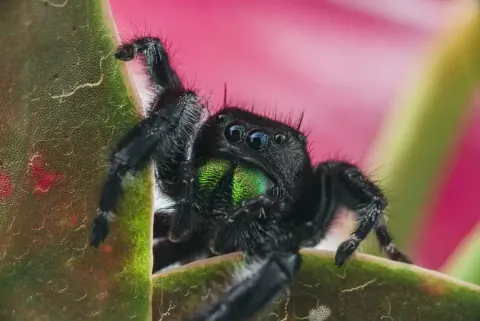
From August the orb weavers take over the outdoors. The cross orb weaver spans doorways, hedges and clothes lines, while the marbled orb weaver, with its cream-and-orange marbled abdomen, keeps to damp woodland edges and hides in a curled leaf at the corner of its web, holding a signal thread. Jumping spiders work the same habitats by daylight, and the bold jumping spider — velvety black with a bright abdominal triangle and iridescent green chelicerae — is the one people photograph.
Lakes, rivers and the St Lawrence shore
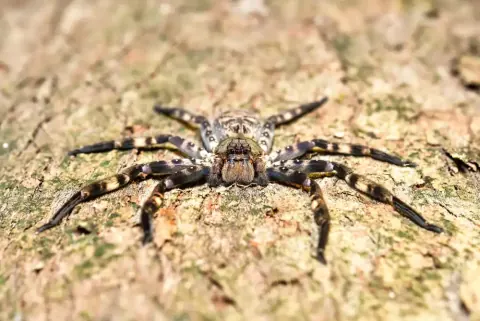
The province's biggest spider is the dark fishing spider, with a leg span reaching around seven centimetres. Despite the name it is often found well back from water, on tree trunks, boathouse walls and woodpiles, which is why it produces so many alarmed calls from cottage country. It hunts insects at the waterline, can run across the surface film and will dive and stay under to escape. It is shy and its bite is not medically significant.
Spider season in Quebec
The visible season is short. Most species overwinter as eggs or part-grown juveniles, feed through the summer and reach adult size from mid-August, which is when webs suddenly seem to appear everywhere and when mature males start wandering indoors in search of females. The first hard frosts end it, usually in October in the south and considerably earlier in Abitibi and on the Côte-Nord.
Winter is survived in place. Spiders shelter in leaf litter, under bark and inside plant stems, insulated by snowpack and protected by antifreeze compounds that stop ice crystals forming in their tissues; the process is described in our guide to where spiders go in the winter. Spiders in a heated basement ignore the season entirely.
Look-alikes and false alarms
The commonest false alarm in Quebec is a dark, glossy, round-bodied cobweb spider in a basement being reported as a black widow. False widows of the genus Steatoda are widespread in the province and look the part, but they lack the red hourglass on the underside of the abdomen and are completely harmless.
The second is the crane fly, which drifts in through screen doors in September and is regularly called a giant spider despite having six legs and two wings. Harvestmen get the same treatment: one fused body section, no silk glands, no venom glands, no danger. Among true spiders, any pale spider found in a bed is assumed to be a sac spider, though most turn out to be small cobweb spiders or an immature funnel weaver.
Common Spiders in Quebec
- Cross Orb-weaver Spider
- Bold Jumping Spider
Big Spider in Quebec
- Dark Fishing Spider
Dangerous Spiders in Quebec
- Long-legged Sac Spider
- Eastern Parson Spider
Most Venomous Spiders in Quebec
Ground Spiders
Sac Spiders
Less Venomous Spiders in Quebec
Orb-weaver Spiders
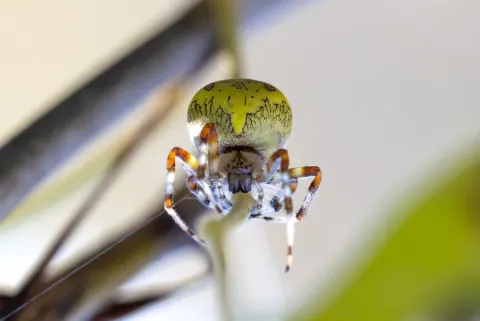 Orb WeaversMarbled Orb-weaver (Araneus marmoreus)Identify the marbled orb weaver (Araneus marmoreus): marbled abdomen, the orange pumpkin spider form, size, web and retreat, range, and whet
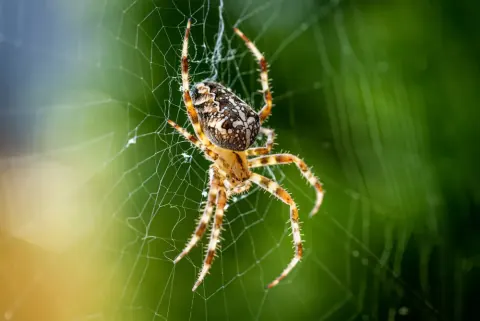 Orb WeaversCross Orb Weaver (Araneus diadematus)Identify the cross orb weaver (Araneus diadematus) by the white cross on its abdomen: size, colour, web, egg sac, range and whether the bite
Woodlouse Hunter Spiders

Nursery Web Spiders
Jumping Spider
Living with Quebec's spiders
With no dangerous species in the province, the advice is about comfort rather than safety:
- Shake out bedding and clothing left on the floor in summer; that is where the sac spider bites actually happen.
- Seal gaps around basement windows, galleries and garage doors in August, before wandering males move in.
- Vacuum webs and egg sacs rather than spraying — clearing the web and the insects that feed it lasts longer than insecticide.
- Wear gloves when moving firewood, damp boards or stored lumber at the chalet.
- Leave the balcony orb weaver alone until frost takes it; one web removes hundreds of mosquitoes and blackflies.
For the neighbouring fauna, see Ontario, which shares most of Quebec's species but does have a resident widow in its far south, and New Brunswick, whose Acadian forest fauna closely matches that of the Gaspésie.
Frequently asked questions
Are there any dangerous spiders in Quebec?
No. No spider recorded in Quebec is medically significant. The species older lists call dangerous, the northern yellow sac spider and the eastern parson spider, deliver a bite comparable to a wasp sting at worst. There is no established widow or recluse population anywhere in the province.
What are the most common spiders in Quebec?
Tiny sheet-web weavers are by far the most numerous but go unnoticed. The species people actually see are the cross orb weaver on balconies, fences and hedges, the bold jumping spider on sunlit walls and decks, and cobweb spiders in basement and ceiling corners. All of them are harmless to people and pets.
What is the biggest spider in Quebec?
The dark fishing spider, with a leg span of roughly seven centimetres. It is often found far from open water, on tree trunks, boathouse walls and woodpiles, which is why it startles so many cottagers. It hunts insects at the waterline, can walk on water and dives to escape. Its bite is not dangerous.
Are there black widow spiders in Quebec?
No established population exists in the province. The northern black widow, the only widow native to eastern Canada, reaches its northern limit in the sand barrens and dunes of southern Ontario. Dark, glossy cellar spiders in Quebec are false widows of the genus Steatoda, which lack the red hourglass and are harmless.
Are there brown recluse spiders in Quebec?
No. Recluse spiders are not established anywhere in Canada and the Quebec climate is far outside their range. Wounds diagnosed as recluse bites here are almost always bacterial skin infections or another condition. A sore that spreads, weeps or refuses to heal should be examined by a doctor, not blamed on a spider.
Can a yellow sac spider bite hurt you?
Only briefly. The bite stings sharply for a few minutes and leaves a red mark that fades over a day or two. These spiders bite more often than most because they hunt at night and get trapped against skin in bedding or clothing. Claims that their venom destroys tissue are not supported by research.
Is the eastern parson spider venomous?
It has venom, as nearly all spiders do, but it is not dangerous to people. The eastern parson spider is a fast nocturnal ground hunter that flees rather than fights. Bites are uncommon and produce brief pain, local redness and sometimes itching for a day. No medical treatment is normally needed.
How do you identify a bold jumping spider?
Look for a compact, velvety black body with a white or orange triangle on the abdomen, brilliant metallic green chelicerae and two very large forward-facing eyes. It builds no capture web, moves in short quick bursts and jumps on prey, trailing a silk safety line. It is completely harmless.
When are spiders most active in Quebec?
Mid-August through early October in the south, earlier in the north. Spiders that hatched in spring reach adult size then, so webs appear everywhere and mature males wander in search of mates, which is when large spiders come indoors. The first hard frosts end the season abruptly.
What is the white spider web in the corner of my ceiling?
A small, dense silk pouch in a ceiling or window corner is usually the resting retreat of a northern yellow sac spider, which hunts at night and sleeps inside it by day. A loose, tangled three-dimensional web in the same spot belongs to a cobweb spider. Neither is dangerous.
Published April 26, 2022 · Last updated September 14, 2026