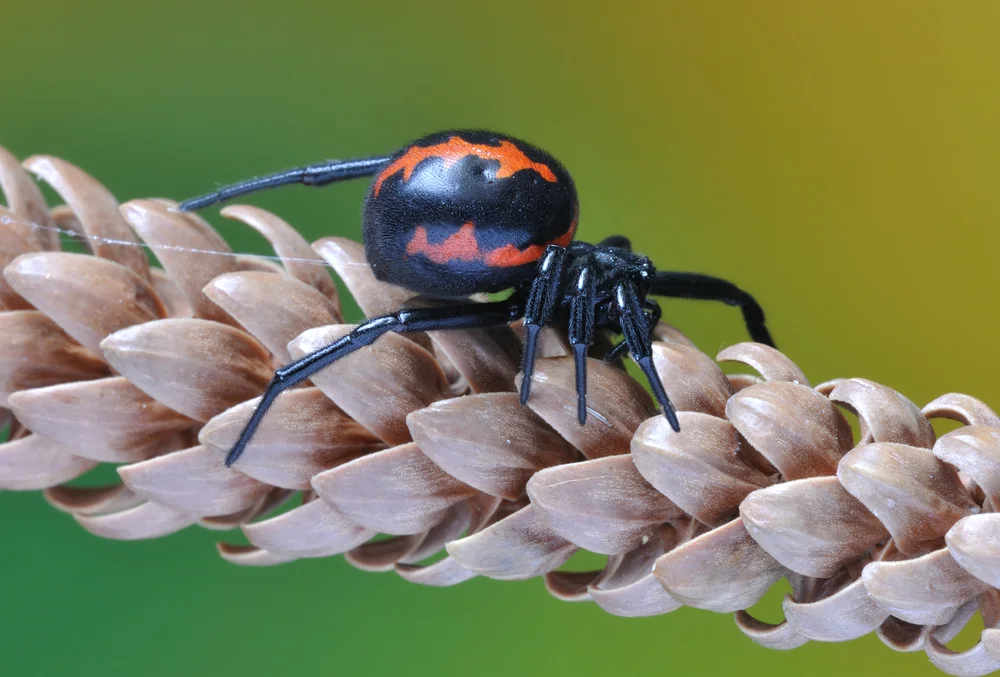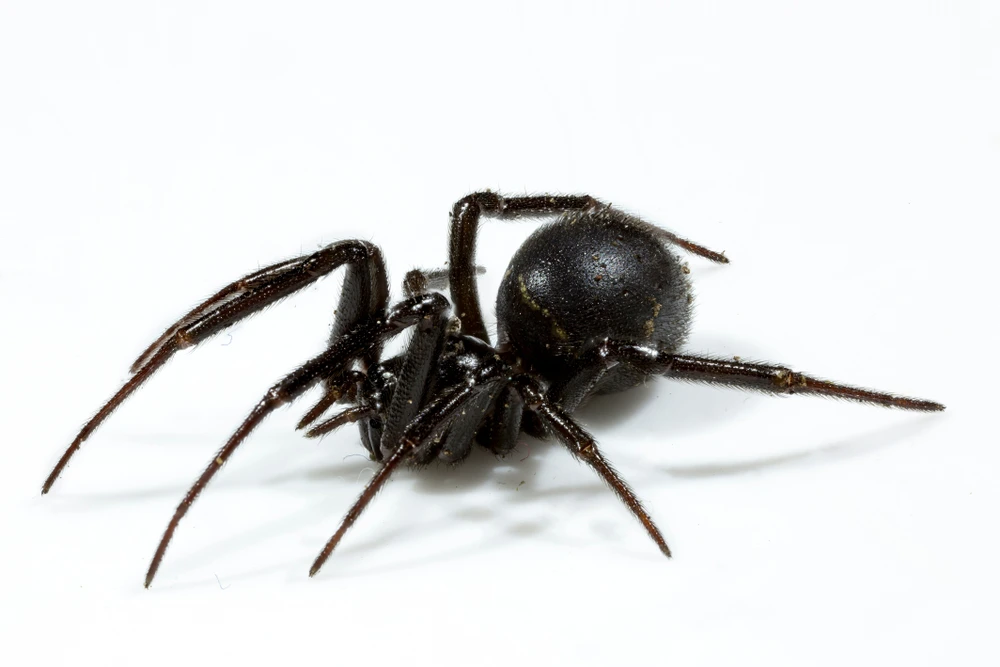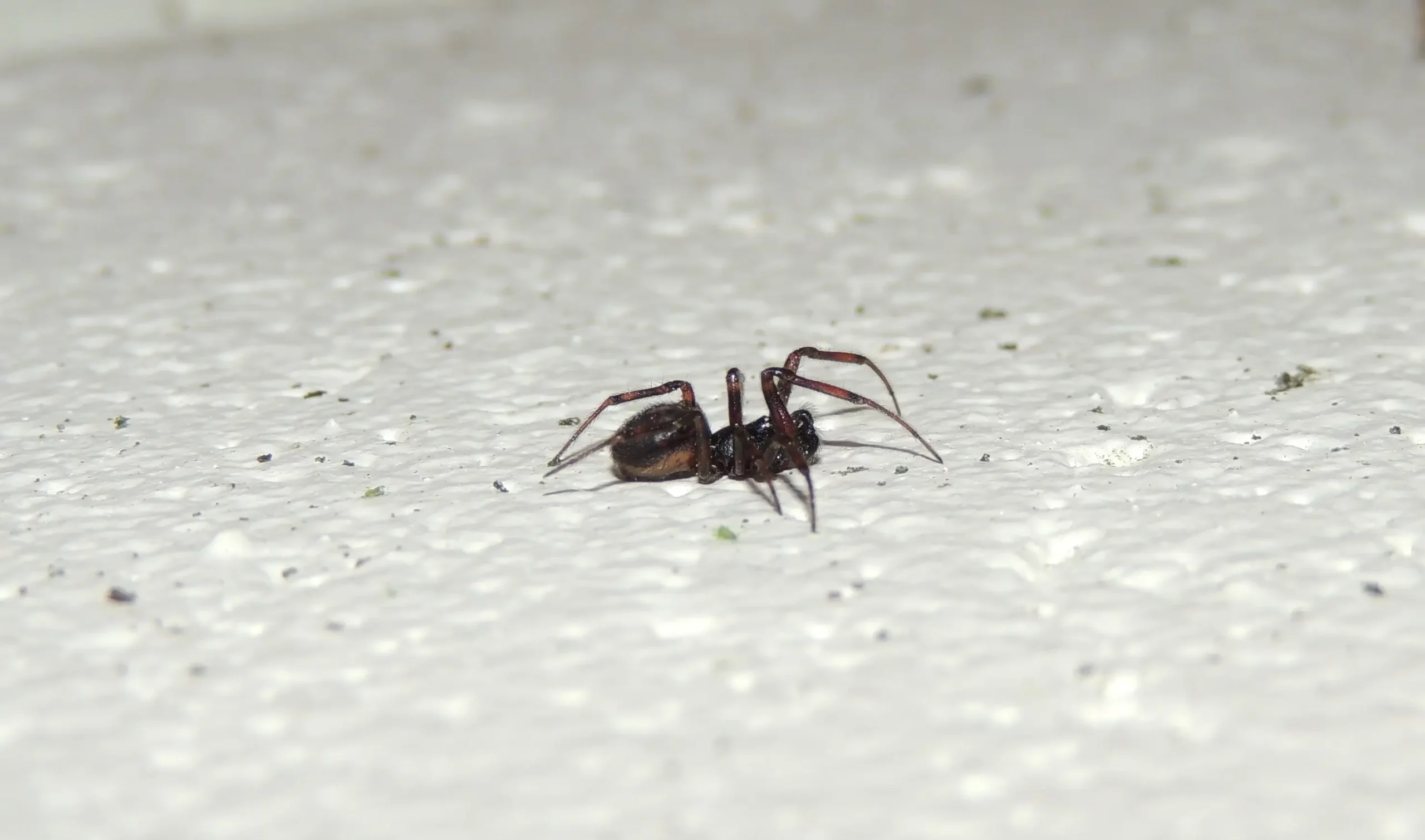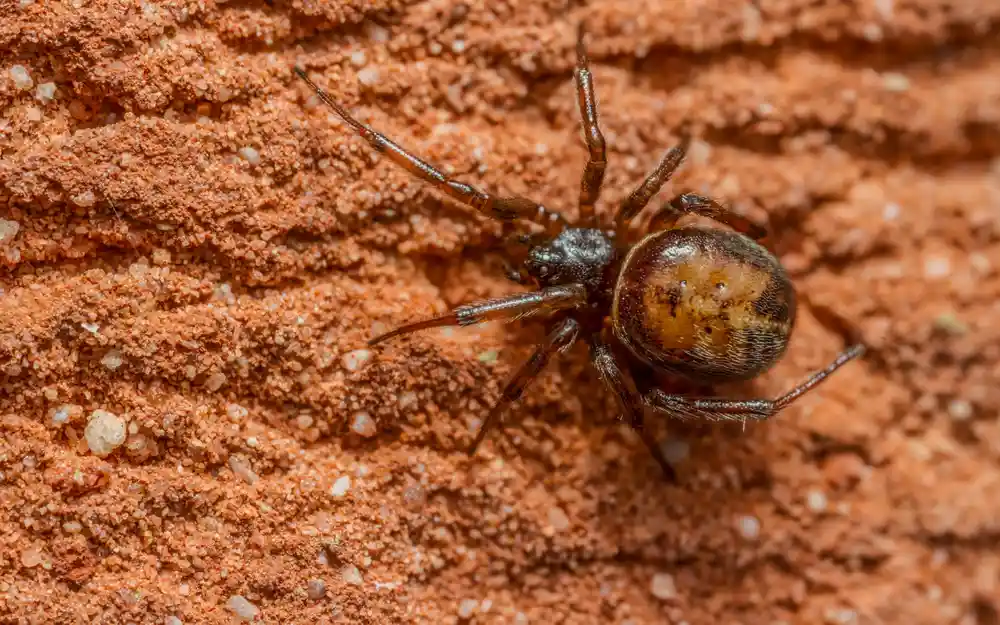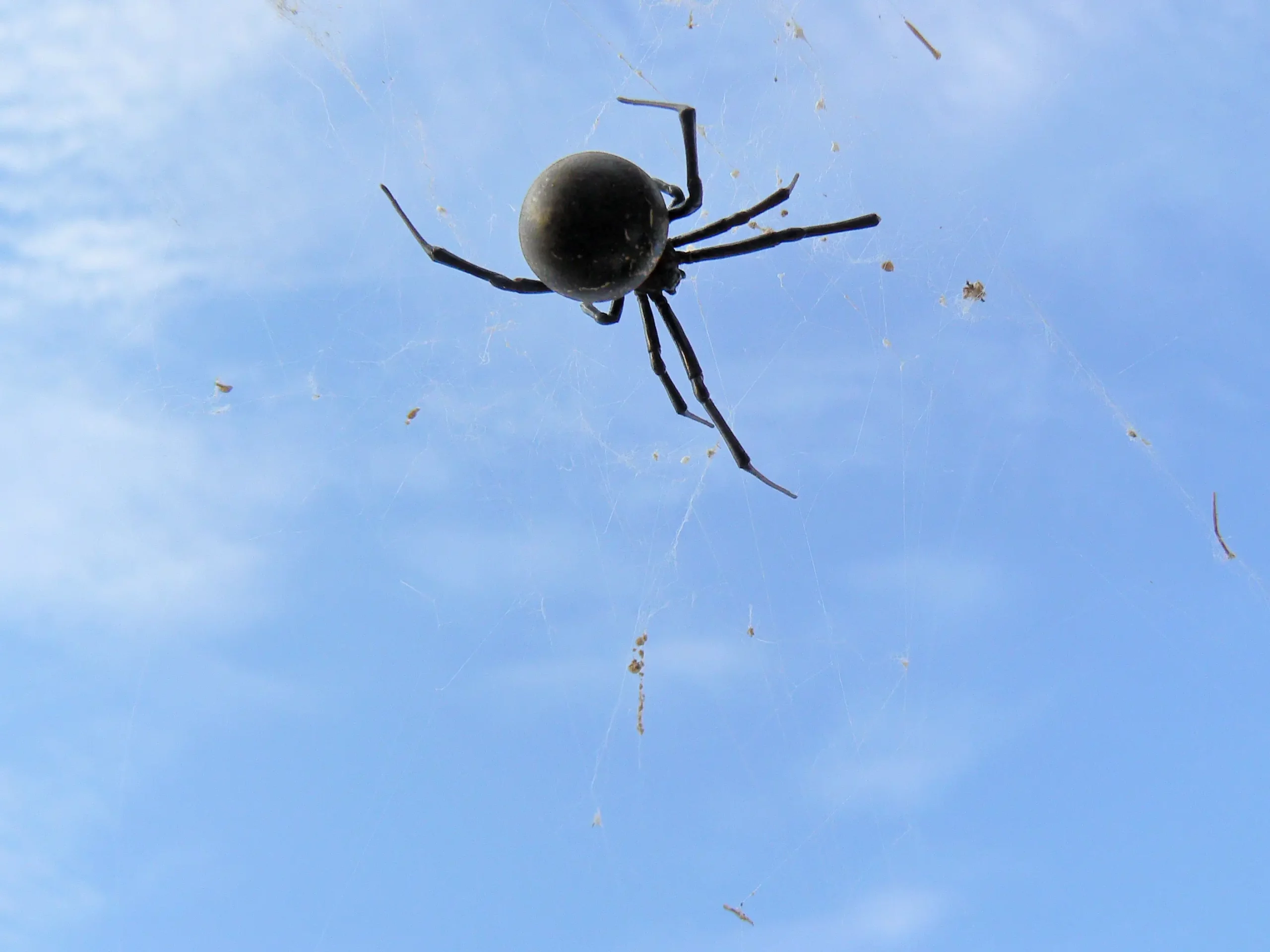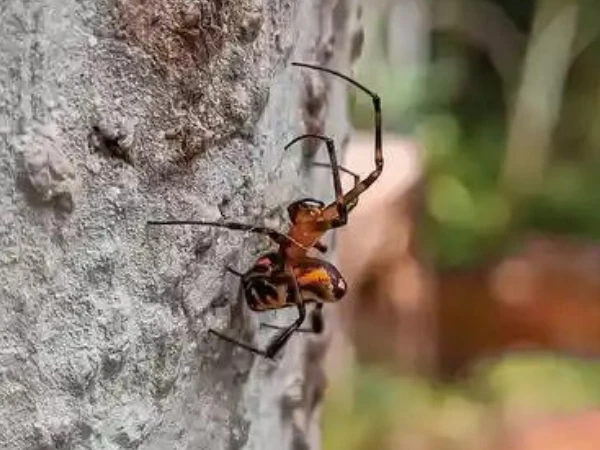


There aren’t many dangerous spiders present in the Philippines. The deadliest spider one can encounter is the redback, or Australian Black Widow, whose venom can cause human skin to decay. However, most spiders avoid humans and flee if discovered.
The smallest known species is the jumping spider Portia labiata at around 7-10 mm.
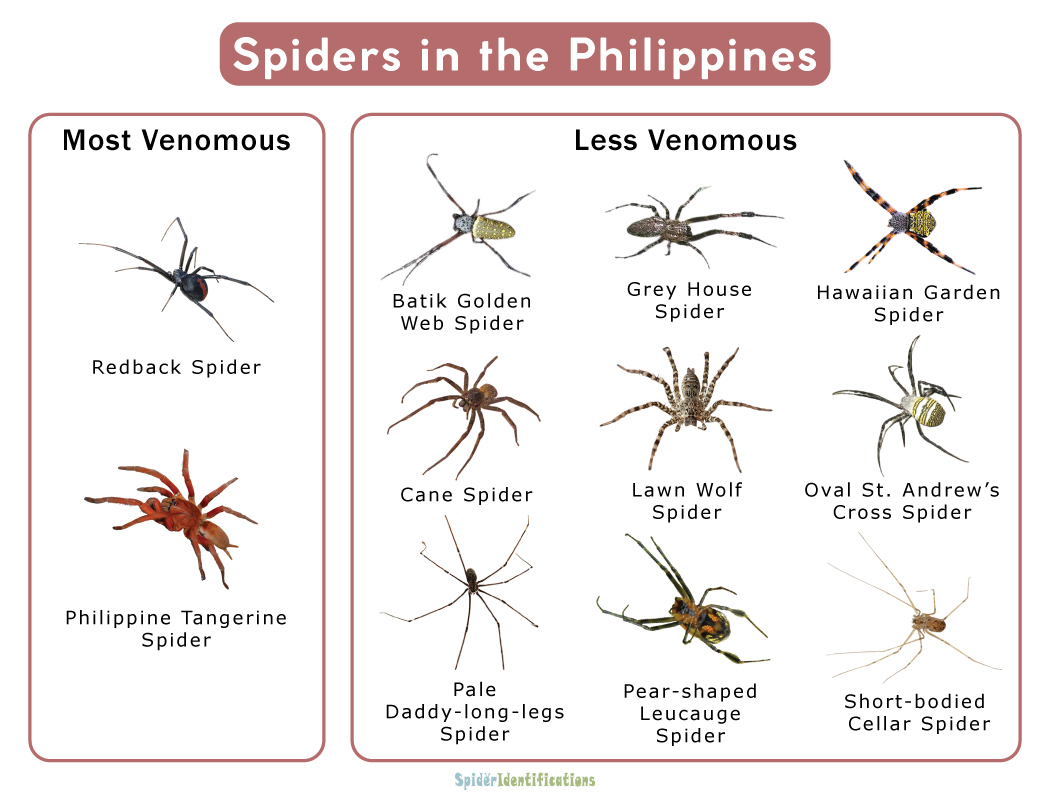
Spiders in Philippines Identification Chart
| Cane Spider | Oval St. Andrew’s Cross Spider | Hawaiian Garden Spider |
| Batik Golden Web Spider | Portia labiata | — |
| Cane Spider | — | — |
| Portia labiata | — | — |
| Redback Spider | Philippine Tangerine Spider | — |
 Redback Spider (Latrodectus hasseltii) - The Redback spider, often called the Australian black widow, comes from places in Australia. Nowadays, you can find it all over Australia and even in New Zealand.… Continue Reading >
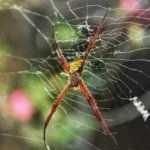 Hawaiian Garden (Argiope appensa) - The Hawaiian garden spider comes from places like Taiwan, Hawaii, Indonesia, and New Guinea. They're part of the orb-weaver spider family, known for their beautiful webs.… Continue Reading >
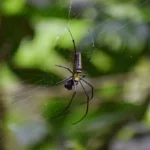 Giant Wood Spider (Nephila pilipes) - Meet the Nephila Pilipes! This golden orb-weaver spider calls many places home, from Asian countries like China and India to faraway Australia. It's one of the biggest orb-weaving spiders out there.… Continue Reading >
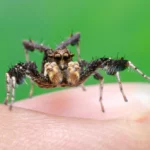 Portia Labiata - The Portia labiata spider is a really cool jumping spider that lives in many places in Asia, like Java, Malaysia, and Singapore. Jumping spiders are fun because, well, they jump!… Continue Reading >
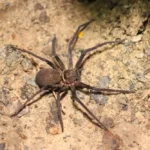 Cane (Heteropoda venatoria) - Picture a large spider called the Cane Spider. It lives in warm, tropical places and doesn't make webs. Instead, it hunts for food when the stars come out!… Continue Reading >
© 2024 (Spider Identifications). All rights reserved. Reproduction in whole or in part without permission is prohibited.
Follow us on: