
Spiders in California
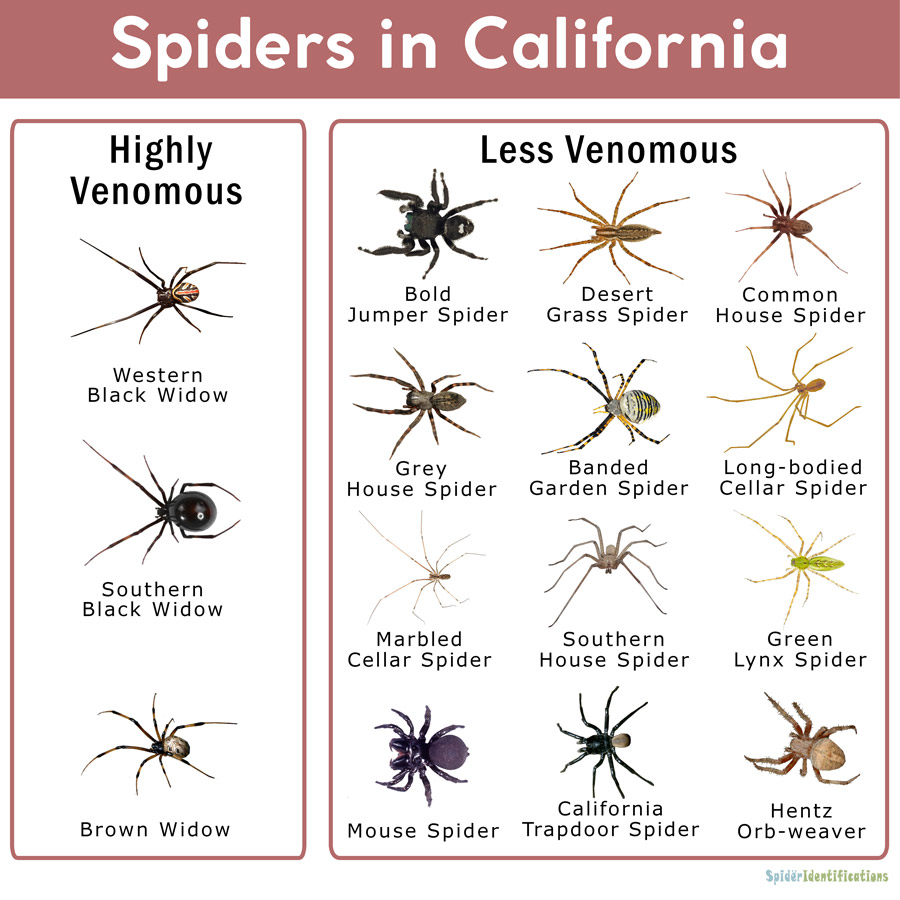
California's spider fauna is one of the richest in North America, but only one species here bites people in a way that matters medically: the western black widow. The brown recluse is not established anywhere in the state; the recluses that do occur are the desert recluse of the south-eastern deserts and a few building-bound colonies of the introduced Chilean recluse around Los Angeles. Everything else on this page is harmless.
On this page
- What spiders live in California?
- Which California spiders are dangerous?
- The brown recluse question in California
- Where you meet them
- Spider season in California
- Easy mix-ups in California
- Common Spiders in California
- Largest Spider in California
- Highly Venomous Spiders in California
- Less Venomous Spiders in California
- Living with California's spiders
- Frequently asked questions
What spiders live in California?
California packs more habitat into one state than anywhere else in the country: a fog-soaked redwood coast, the Central Valley, oak foothills, the high Sierra, and the Mojave and Colorado deserts in the south-east. Its spider fauna is correspondingly one of the richest in North America, running to many hundreds of species rather than the “about sixty” quoted by older versions of this page — that figure only ever covered the large, conspicuous spiders people actually notice.

Gardens and porch lights belong to the orb weavers from midsummer onwards: cat-faced spiders under eaves, banded and silver garden spiders in sunny borders, western spotted orb weavers along canal banks. Jumping spiders work the same walls in daylight, and lynx and crab spiders wait motionless on flower heads for bees.
Indoors the cast is short and largely introduced. The long-bodied cellar spider and its marbled relative hold garage and bathroom corners, the Australian grey house spider fills window frames and fence posts in coastal cities, and the triangulate cobweb spider tidies up behind furniture. Our guide to house spiders covers the wider indoor set.
Which California spiders are dangerous?
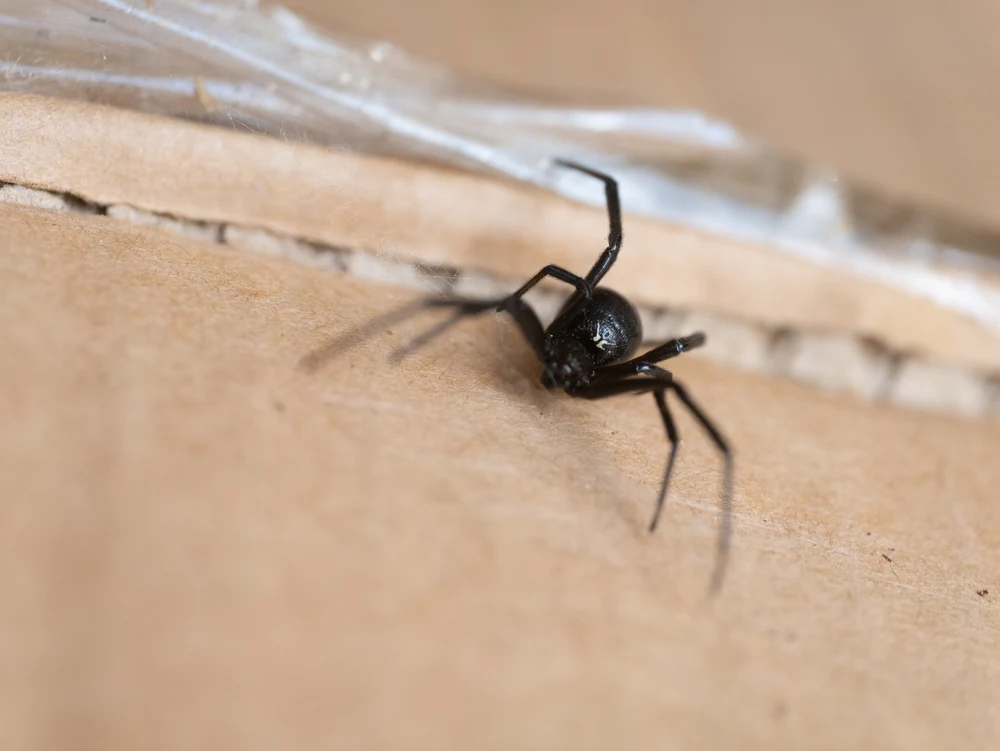
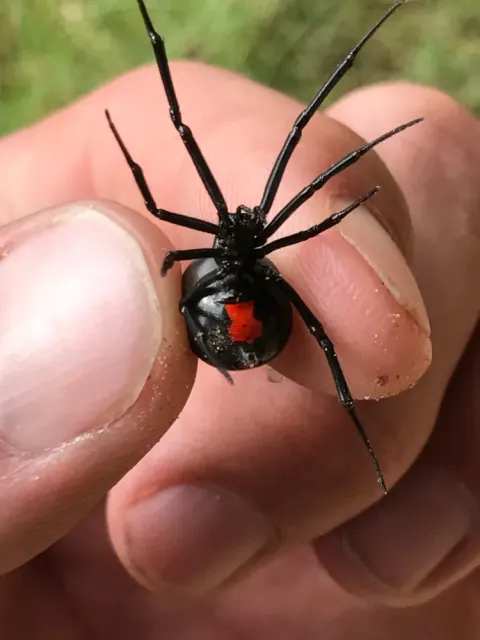
One species, and one only, is medically significant statewide: the western black widow (Latrodectus hesperus). The mature female is glossy black with a red hourglass beneath a globular abdomen, and she hangs upside down in a tangled web in the places people reach without looking — under patio furniture, in meter boxes, behind stacked pots and along the underside of outdoor steps. Her venom is neurotoxic rather than tissue-destroying: cramping pain spreading from the bite to the abdomen and back, sweating and nausea, peaking within hours and settling over a day or two. Antivenom exists and is seldom needed, and deaths are essentially unheard of today, so the “deadly” wording on the original list overstated the risk.
In southern California the introduced brown widow is now the commoner widow around houses, especially in San Diego, Orange and Los Angeles counties. It is tan to mottled grey with an orange hourglass and a spiky egg sac that gives it away instantly. It injects far less venom than its black cousin, and bites are usually no worse than a wasp sting. Note that the southern black widow carried on the original species list is an eastern species and does not occur in California.
Bitten? Wash with soap and water, apply a cold pack and keep the limb still. Photograph the spider if you can do so safely, since the identification changes what happens next. Go to an emergency department for spreading cramping pain, sweating, vomiting or an enlarging wound, and for any suspected widow bite in a child or an older adult. Do not cut, suck or apply a tourniquet.
The brown recluse question in California
This is the single most persistent error about California spiders. The brown recluse (Loxosceles reclusa) is a spider of the Midwest and the mid-South, and it has no established population anywhere in California — not in Los Angeles, not in the Central Valley, not on the coast. Single specimens occasionally arrive in freight, which is where the “twenty found over many decades” line comes from, but none founded a colony.

Two recluses genuinely do live here. The native desert recluse (Loxosceles deserta) occupies the Mojave and Colorado deserts and the dry inland edges of southern California, living under rocks and in packrat middens well away from towns. The Chilean recluse (Loxosceles laeta) was introduced decades ago and persists as a handful of building-bound colonies in the eastern Los Angeles basin; it has stayed put rather than spreading. Both are shy, six-eyed spiders that bite only when pressed against skin, and verified bites are rare enough that University of California entomologists treat almost every “recluse bite” diagnosed in the state as something else, usually a skin infection.
Where you meet them
House, garage and yard
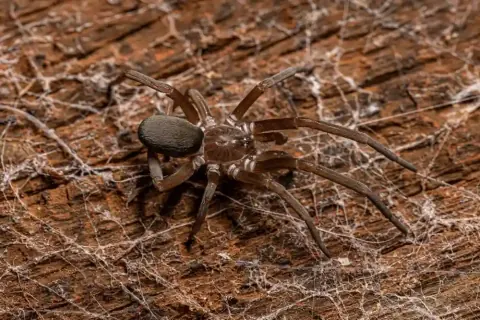
Widows and cellar spiders are the household regulars, joined in the south by the flat-bodied southern house spider, whose long-legged brown male is mistaken for a recluse more often than any other spider in the state.
Gardens and chaparral
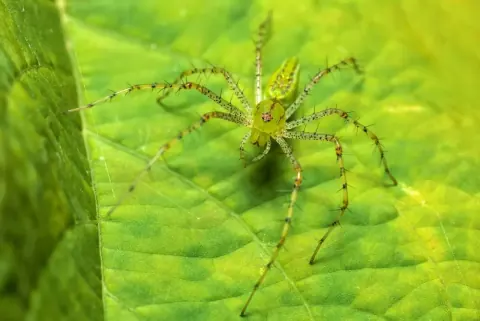
The bright green lynx spider ambushes bees on buckwheat and lavender and guards a papery egg sac with real determination, while goldenrod crab spiders change colour to match the flower they sit on.
Deserts, dunes and foothills
The California trapdoor spider holds a burrow with a cork-like lid in oak-woodland banks, and male tarantulas such as Aphonopelma johnnycashi cross foothill roads in autumn looking for mates. Beach wolf spiders are almost invisible on coastal and riverbank sand.
Spider season in California
The state has a long season rather than a short burst. Spiderlings hatched in spring reach full size from August onward, so orb webs appear across doorways almost overnight, mature males wander and end up indoors, and tarantula males walk the foothills through October. Mild coastal winters keep cellar spiders, grey house spiders and widows going year-round; inland and at altitude most species overwinter as eggs or juveniles under bark and litter, as our guide to where spiders go in the winter explains.
Easy mix-ups in California
Nearly every brown spider photographed in a Californian garage is reported as a recluse. The checks that matter are six eyes in three pairs, legs of one even colour with no bands or heavy spines, and a plain abdomen; a violin-shaped smudge on its own means little, because several harmless spiders show one. Male southern house spiders, wolf spiders and ground spiders account for most of these reports.
Dark glossy cobweb spiders without a red hourglass are usually Steatoda false widows. The big fast runner in a desert camp at night is a sun spider — a solifuge, not a spider, with no venom glands at all — and the long-legged clusters on shaded walls in autumn are harvestmen, which have a single fused body and make no silk.
Common Spiders in California
- Western Black Widow (Latrodectus hesperus)
- Brown Widow (Latrodectus geometricus)
- Long-bodied Cellar (Pholcus phalangioides)
Largest Spider in California
- Giant Crab (Olios giganteus)
Highly Venomous Spiders in California
Cobweb (Theridiidae)
 Cobweb SpidersSouthern Black Widow (Latrodectus mactans)Identify the southern black widow (Latrodectus mactans): the red hourglass, its tangled web, where it lives, and what a bite really does to
 Cobweb SpidersWestern Black Widow (Latrodectus hesperus)Identify the western black widow (Latrodectus hesperus): the red hourglass, the male and spiderling patterns, its web, range and how serious
 Cobweb SpidersBrown Widow (Latrodectus geometricus)Identify the brown widow (Latrodectus geometricus) by its orange hourglass and spiky egg sac, and learn how its bite compares with a black w
Less Venomous Spiders in California
Orb-weaver (Araneidae)
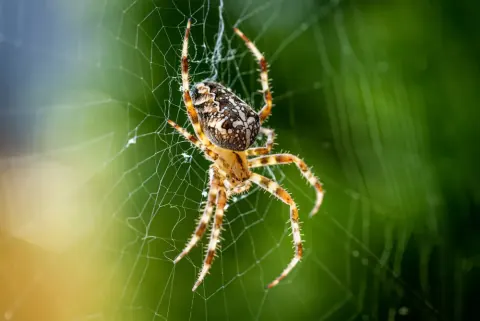 Orb WeaversCross Orb Weaver (Araneus diadematus)Identify the cross orb weaver (Araneus diadematus) by the white cross on its abdomen: size, colour, web, egg sac, range and whether the bite
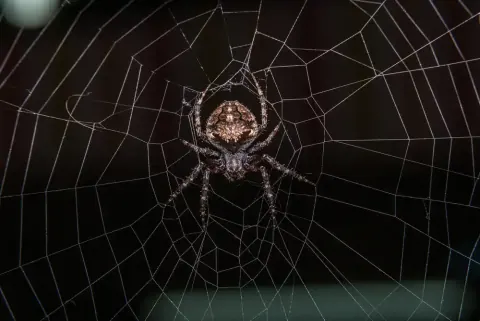 Orb WeaversArabesque Orb-weaver (Neoscona arabesca)Identify the arabesque orb-weaver (Neoscona arabesca): the scrolled abdomen pattern, size, its nightly orb web, range across the Americas an
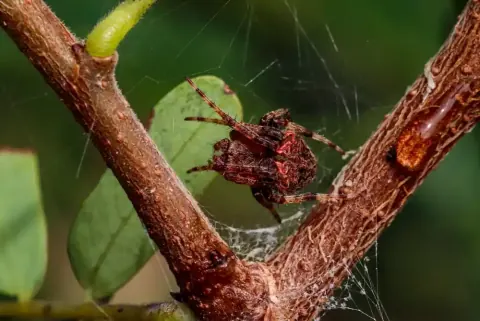 Orb WeaversSpotted Orb Weaver (Neoscona crucifera)Identify the spotted orb weaver (Neoscona crucifera): rusty hairy body, ringed legs, size, the web it rebuilds nightly, range and whether it
 Orb WeaversWestern Spotted Orbweaver Spider (Neoscona oaxacensis)Identify the western spotted orbweaver (Neoscona oaxacensis): size, mottled black-and-white abdomen, its nightly orb web, range and whether
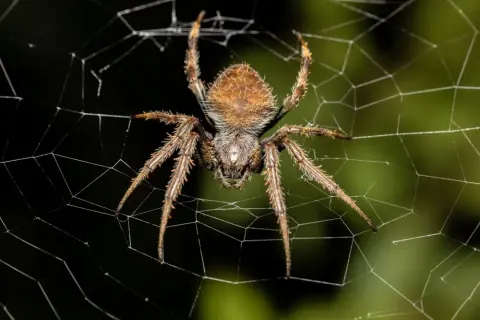 Orb WeaversTropical Orb-weaver (Eriophora ravilla)Identify the tropical orb-weaver (Eriophora ravilla): size, colour forms, the huge orb it builds and eats each night, its Gulf Coast range a
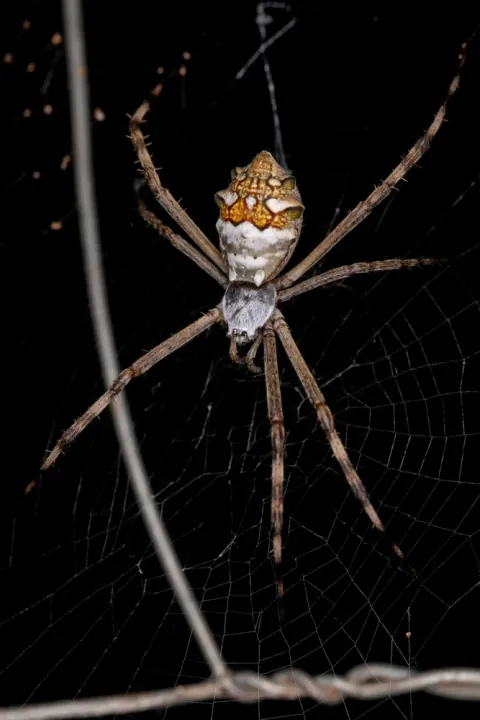 Orb WeaversSilver Garden (Argiope argentata)Identify the silver garden spider (Argiope argentata): silvery body, banded legs, the X-shaped silk cross in its web, range from Florida to
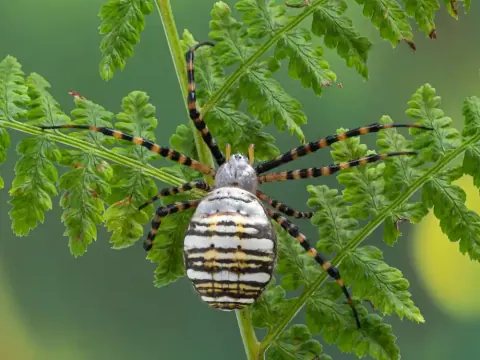 Orb WeaversBanded Garden (Argiope trifasciata)Identify the banded garden spider (Argiope trifasciata): silver banding, size, the zigzag in its web, egg sac, range, and whether its bite i
 Orb WeaversCat-Faced (Araneus gemmoides)Identify the cat-faced spider (Araneus gemmoides): the two abdominal horns, size, colour range, its nightly orb web, where it lives and whet
Jumping (Salticidae)
 Jumping SpidersGray Wall Jumping (Menemerus bivittatus)Identify the gray wall jumping spider (Menemerus bivittatus): size, the flattened grey-haired body, its walls-and-tree-trunks habitat, and w
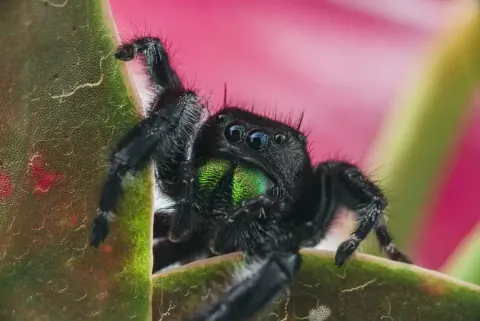 Jumping SpidersBold Jumping (Phidippus audax)Identify the bold jumping spider (Phidippus audax): size, the white triangle, green jaws, how it hunts without a web, and whether its bite iOrb WeaversCat-Faced (Araneus gemmoides)Identify the cat-faced spider (Araneus gemmoides): the two abdominal horns, size, colour range, its nightly orb web, where it lives and whet
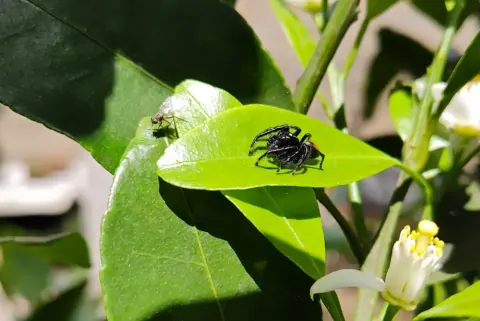 Jumping SpidersRed Back Jumping Spider (Phidippus johnsoni)Identify the red back jumping spider (Phidippus johnsoni): red abdomen, female black stripe, western range, silk nest, and whether the bite
Wolf (Lycosidae)

Tarantula (Theraphosidae)
Orb WeaversCat-Faced (Araneus gemmoides)Identify the cat-faced spider (Araneus gemmoides): the two abdominal horns, size, colour range, its nightly orb web, where it lives and whet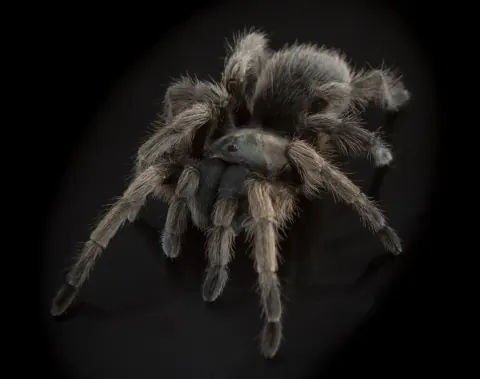 TarantulasAphonopelma johnnycashiAphonopelma johnnycashi, the Johnny Cash tarantula of California's Sierra Nevada foothills: black males, brown females, burrows, venom and b
Cobweb (Theridiidae)
Orb WeaversCat-Faced (Araneus gemmoides)Identify the cat-faced spider (Araneus gemmoides): the two abdominal horns, size, colour range, its nightly orb web, where it lives and whet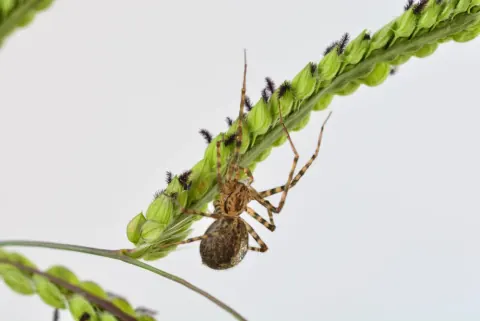 Cobweb SpidersCommon House (Parasteatoda tepidariorum)Identify the common house spider (Parasteatoda tepidariorum): size, mottled brown pattern, pear-shaped egg sacs, tangled web, and why its bi
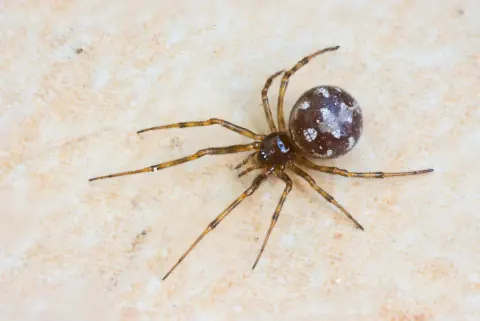 Cobweb SpidersTriangulate Cobweb (Steatoda triangulosa)Identify the triangulate cobweb spider (Steatoda triangulosa): the purple zigzag pattern, yellow legs, its tangle web, and whether the bite
Desidae
Trapdoor (Ctenizidae)
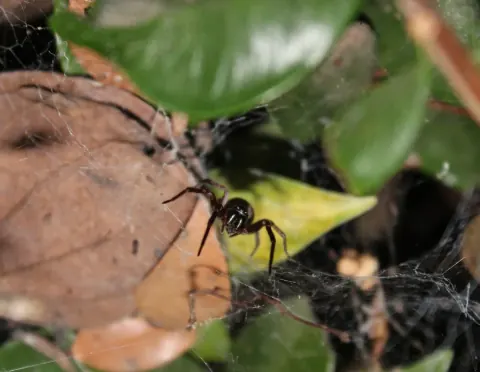 Desidae SpidersGrey House (Badumna longinqua)Identify the grey house spider (Badumna longinqua): size, grey markings, its lacy funnel web, where it now lives worldwide, and whether its
 Halonoproctidae SpidersCalifornia Trapdoor (Bothriocyrtum californicum)Identify the California trapdoor spider (Bothriocyrtum californicum): size, colour, its cork-lid burrow, range, and whether the bite is dang
Cellar (Pholcidae)
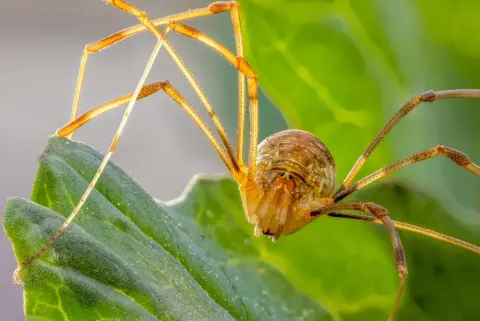 Cellar SpidersLong Bodied Cellar (Pholcus phalangioides)Identify the long-bodied cellar spider (Pholcus phalangioides): size, legs, web and eggs, plus the truth about the daddy-long-legs venom myt
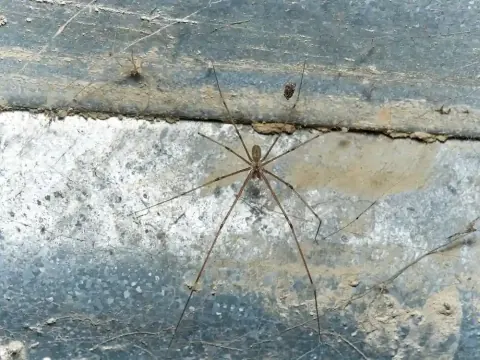 Cellar SpidersMarbled Cellar Spider (Holocnemus pluchei)Identify the marbled cellar spider (Holocnemus pluchei): the dark belly stripe, banded legs, shared webs, Mediterranean origin and its harml
Crevice Weaver (Filistatidae)
Crab (Thomisidae)
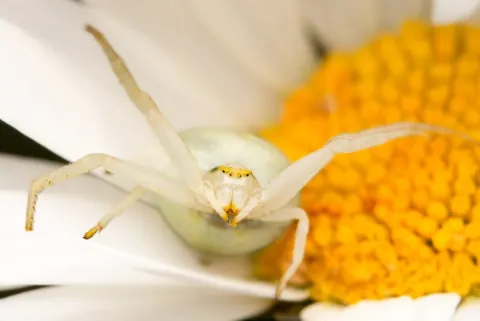 Crab SpidersGoldenrod Crab (Misumena vatia)Identify the goldenrod crab spider (Misumena vatia): size, the red abdominal streaks, how the female changes colour, where it lives and whetDesidae SpidersGrey House (Badumna longinqua)Identify the grey house spider (Badumna longinqua): size, grey markings, its lacy funnel web, where it now lives worldwide, and whether its
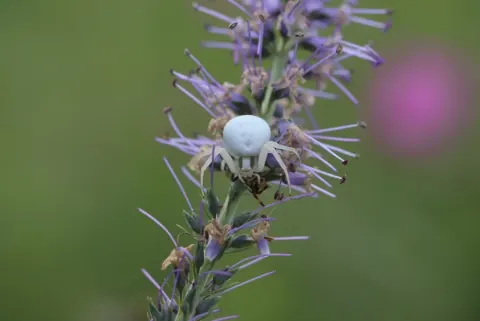 Cellar SpidersWhite Banded Crab (Misumenoides formosipes)Identify the white banded crab spider (Misumenoides formosipes): the white face ridge, colour change, huge size gap between sexes, and wheth
Lynx (Oxyopidae)
Trachelidae

Living with California's spiders
A handful of habits removes almost all of the genuine risk in the state:
- Wear gloves when moving woodpiles, pots, bricks, irrigation boxes and stored garden furniture — this is where widows sit.
- Shake out shoes, gloves and clothing left in a garage or shed.
- Store things in sealed plastic bins rather than cardboard.
- Knock down webs under eaves, railings and meter boxes in late summer, before the egg sacs are made.
- Fit door sweeps and repair screens; most indoor spiders simply walked in through a gap.
- Leave garden orb weavers alone — a single web removes hundreds of mosquitoes over a summer.
For comparison, see the desert fauna of Arizona, and our overview of the most venomous spiders in the world, which shows how modest California's list really is.
Frequently asked questions
What is the most dangerous spider in California?
The western black widow, Latrodectus hesperus. It is the only spider found statewide whose venom is medically significant to people. A bite causes cramping pain, sweating and nausea that peak within hours and usually settle within a day or two. Antivenom exists but is rarely required, and deaths are effectively unknown today.
Are there brown recluse spiders in California?
No. Loxosceles reclusa has no established population anywhere in California; the occasional specimen arrives in freight and does not breed. California does have the native desert recluse in its south-eastern deserts, and a few building-bound colonies of the introduced Chilean recluse in the eastern Los Angeles basin.
What is the largest spider in California?
Tarantulas are the heaviest and longest-legged spiders in the state, with leg spans above ten centimetres; Aphonopelma johnnycashi from the Sierra foothills is one of them. The giant crab spider of the south-eastern deserts looks large because of its flat, sprawling posture, but it is lighter and completely harmless.
How do I identify a western black widow?
Look for a glossy black, globe-shaped female about the size of a fingernail, hanging upside down in a tangled web with a red or orange hourglass on the underside of her abdomen. Males are smaller, paler, patterned along the sides and harmless. The egg sacs are smooth, pale and pear-shaped.
Which spiders are common inside California homes?
Long-bodied and marbled cellar spiders in garage and bathroom corners, the common house spider and triangulate cobweb spider behind furniture, and along the coast the introduced grey house spider around window frames. In southern counties, male southern house spiders wander across walls at night and are constantly mistaken for recluses.
How many spider species live in California?
Far more than the sixty often quoted: the state list runs to many hundreds of species, and it keeps growing as small ground-dwelling and sheet-web spiders are surveyed. The lower figure counts only the large, conspicuous spiders people photograph. This page profiles twenty-seven of the ones most often asked about.
Where do black widows hide around a California house?
In dry, dark, undisturbed places at ground level: under patio furniture and barbecues, inside meter and irrigation boxes, behind stacked pots and bricks, in woodpiles, crawl spaces, garage clutter and the underside of outdoor steps. They stay in the web and bite only when squeezed against skin, usually by a hand or a foot.
Are brown widow spiders in California dangerous?
Much less so than black widows. The brown widow is an introduced species now common around houses in southern California, recognisable by its mottled tan body, orange hourglass and spiky egg sac. It injects a very small quantity of venom, and most bites amount to local pain and redness rather than systemic illness.
Are tarantulas in California dangerous?
No. California's native Aphonopelma tarantulas have a painful, mechanically unpleasant bite but venom of no medical importance to people. The greater nuisance is their urticating abdominal hairs, which irritate skin and eyes. Males seen crossing foothill roads in autumn are wandering in search of females and should simply be left alone.
When are spiders most active in California?
From August into November. Spiders that hatched in spring reach adult size then, webs appear across paths and doorways, mature males wander in search of mates and end up indoors, and male tarantulas cross roads in the foothills. Mild coastal winters keep cellar spiders, widows and grey house spiders going all year.
Published February 25, 2020 · Last updated September 14, 2026