
Spiders in Iceland
Iceland has no medically significant spider at all. The island's fauna is short, hardy and dominated by tiny sheet-web money spiders, with a handful of house spiders in heated buildings and a few orb-weavers on window frames and fences. Nothing here can hurt you, and the barn funnel weaver so often called Iceland's dangerous spider is completely harmless.

On this page
What spiders live in Iceland?
Iceland sits just below the Arctic Circle on a young volcanic plateau that was under ice until a geological moment ago, and its land fauna shows it. There are no native land reptiles, no amphibians, no biting snakes and only one native land mammal. The spider list is correspondingly short — under a hundred species — but the ones that made it are genuinely tough, surviving on lava fields, heath and coastal grassland in a climate that keeps summer temperatures in single figures for much of the season.
The overwhelming majority belong to the Linyphiidae, the sheet-web spiders often called money spiders: animals two to four millimetres long that spin small horizontal hammocks in moss, grass tussocks and among lava rubble. On a still, damp morning their sheets cover whole slopes. Around them sit a thin scatter of orb-weavers, crab spiders ambushing insects on low flowers, wolf spiders running on open ground and wetland margins, long-jawed stretch spiders beside water, and a small group of household species living in heated buildings that would not last a winter outdoors.
Is any spider in Iceland dangerous?
No. Iceland has no medically significant spider — nothing in the widow, recluse, funnel-web or wandering-spider groups that appear on our most venomous spiders list occurs here, and no Icelandic hospital stocks or needs spider antivenom. Almost every species on the island is too small for its fangs to break human skin at all.

The claim you will see repeated everywhere is that the barn funnel weaver, Tegenaria domestica, is Iceland's dangerous spider. It is not. This is the ordinary brown funnel-web spinner of sheds, barns and cellars across Europe and North America, one of the least confrontational funnel weavers there is. It sits in a flat silk sheet with a tube retreat at the back, bolts into the tube at the slightest vibration, and bites so rarely that documented cases barely exist. When one does bite, the result is a pinprick and a little redness.
Bitten in Iceland? Wash the site with soap and water and apply a cold pack; that is the whole treatment. If a small skin wound becomes hot, swollen and weeping over the following days, see a doctor about infection — not about the spider. Skin lesions blamed on spiders in Iceland are never recluse bites, because no recluse lives here.
Species that do not live in Iceland
Iceland attracts more copied-and-pasted spider misinformation than almost anywhere, because writers reach for dramatic species to fill a list that is genuinely modest. The Goliath birdeater heads that list on several sites, sometimes filed under funnel weavers. It is a South American tarantula of the Guiana Shield and the northern Amazon, it needs constant warmth and humidity, and it has never lived wild on a sub-Arctic island. The starbellied orb-weaver is likewise a North American species of eastern meadows and old fields, not an Icelandic one.

The cross orb-weaver is a real European garden spider, but in Iceland it is at the very edge of what the climate allows and turns up only in the most sheltered, warm spots around habitation rather than in open country. Two more caveats: geothermally heated greenhouses occasionally shelter introduced tropical spiders arriving with imported plants or fruit, and these cannot survive a metre outside the glass; and ticks reach Iceland on migratory birds without establishing, so a slow-healing bite is far more likely to be an infection than anything arachnid.
Where you meet them
Houses, summer cabins and greenhouses
Heated buildings hold the species most Icelanders actually see: the barn funnel weaver in garages, sheds and stone-built cellars, the common house spider spinning a loose tangle in a corner, cellar spiders on bathroom ceilings and the missing sector orb-weaver on window frames, easily recognised by the wedge of web it leaves blank above the hub. Our house spiders guide covers the same indoor set across northern Europe.
Lava fields, heath and moss
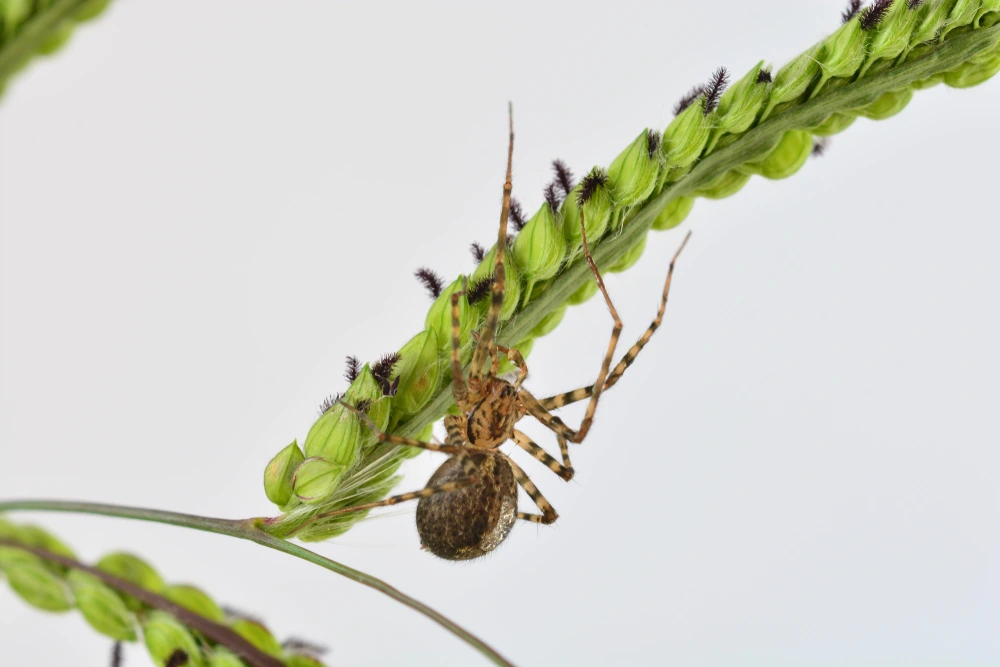
This is money-spider country. Lift a flat stone on old lava or brush a hand through thick moss and you will find dozens of tiny sheet weavers with their silk stretched between stems. Crab spiders wait on low flowering plants, and the marbled orb-weaver is the most eye-catching orb spinner of low scrub and fence lines.
Wetlands, lake shores and rivers
Damp ground and reed margins hold wolf spiders hunting on the surface and among litter, and long-jawed stretch spiders that lie along a stem with their legs drawn out in a line until they look like part of the plant.
Spider season in Iceland
Iceland's spider year is compressed into a short, bright summer. Adults mature through July and peak in August and September, which is when webs are largest, egg sacs are guarded and dispersal is most visible. On a calm, sunny late-summer day you can see ballooning in action — young spiders climbing to a high point, tipping up the abdomen and releasing silk into the rising air. It is the same mechanism that helped spiders colonise the island across open ocean after the last glaciation.
From October the outdoor fauna shuts down: spiders overwinter as eggs, juveniles or adults sheltering under stones, in moss and in litter, insulated once the snow settles. Indoors the household species stay active all winter in heated rooms. If you want the wider picture, see where spiders go in winter.
Common Spiders in Iceland
- Common House Spider (Parasteatoda tepidariorum)
- Common Crab Spider (Xysticus cristatus)
- Household Fine Sheet weaver (Lepthyphantes leprosus)
- Eastern Whiskered Money Spider (Islandiana princeps)
- Marbled Orb weaver spider (Araneus marmoreus)
Biggest Spiders in Iceland
- Silver-sided Sector Spider (Zygiella x-notata)
Less Venomous Spiders in Iceland
Funnel Weaver Spiders
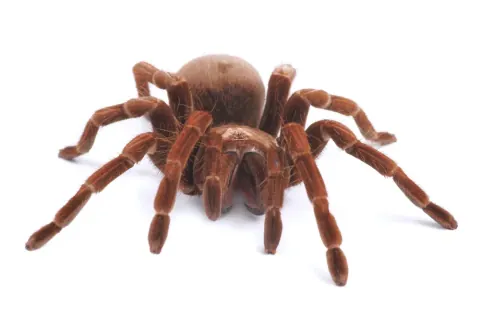 TarantulasGoliath Birdeater (Theraphosa blondi)Identify the Goliath birdeater (Theraphosa blondi): true size and weight, urticating hairs, burrow, range in the Guianas, and how bad its bi
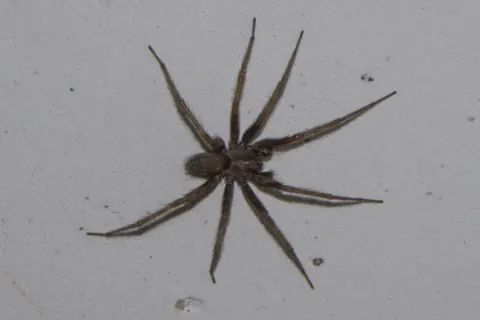 Funnel Weaver SpidersBarn Funnel Weaver (Tegenaria domestica)Identify the barn funnel weaver (Tegenaria domestica): size, banded legs, its flat funnel web, where it lives indoors, and whether the bite
Orb Weaver
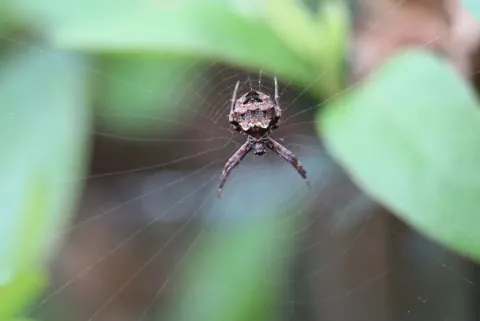 Orb WeaversStarbellied Orb-weaver (Acanthepeira stellata)Identify the starbellied orb-weaver (Acanthepeira stellata): the spiked star-shaped abdomen, size, its grassland orb web, range and whether
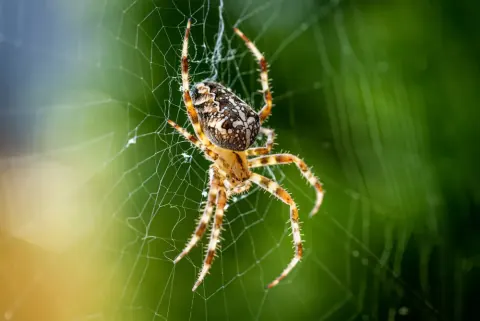 Orb WeaversCross Orb Weaver (Araneus diadematus)Identify the cross orb weaver (Araneus diadematus) by the white cross on its abdomen: size, colour, web, egg sac, range and whether the bite
Sac Spiders
Living with spiders in Iceland
There is no risk to manage in Iceland, only a habit to build: leave them alone. The spiders in an Icelandic house are eating the flies, midges and silverfish already inside, and the sheet weavers outdoors are a major part of what keeps grassland invertebrate numbers in balance in a place with very few other predators.
- Remove a spider from a room with a glass and a card rather than a spray; insecticides indoors are pointless here and target nothing dangerous.
- Brush window-frame webs off if you dislike them, but expect them rebuilt within a night or two while insects still gather at the glass.
- Check imported houseplants and fruit if you run a greenhouse, since that is the only realistic route for a foreign species to arrive.
- Take photographs rather than specimens: the Icelandic list is still being refined, and clear photos of date and place are genuinely useful.
For the nearest comparable faunas see our guide to Norway.
Frequently asked questions
Are there any dangerous spiders in Iceland?
No. Iceland has no medically significant spider of any kind. There are no widows, no recluses and no funnel-webs on the island, and no Icelandic hospital stocks spider antivenom because none is needed. Most Icelandic spiders are too small to break human skin at all.
Is the barn funnel weaver in Iceland dangerous?
No, despite what many pages claim. The barn funnel weaver is the ordinary brown spider of sheds, barns and cellars across Europe and North America. It flees into its silk tube at the slightest vibration and bites almost never. A bite, if one ever happened, would amount to a pinprick and a little redness.
How many spider species are there in Iceland?
Fewer than a hundred species are recorded, which is a very short list by European standards. The island was covered by ice until recently in geological terms, and everything present arrived afterwards, much of it by ballooning on the wind or as a stowaway in cargo and building materials.
What is the most common spider in Iceland?
Sheet-web spiders of the family Linyphiidae, the tiny animals often called money spiders, outnumber everything else. They are two to four millimetres long and spin small horizontal hammocks in moss, grass and lava rubble. On a damp, still morning their sheets can cover an entire hillside.
What is the biggest spider found in Iceland?
One of the orb-weavers, with a body about the size of a fingernail and a legspan you could cover with a coin. That is modest by world standards and tiny compared with the tropical spiders often pictured on Iceland lists. No large hunting spider or tarantula lives anywhere on the island.
Which spiders live inside Icelandic homes?
The barn funnel weaver in garages, sheds and cellars, the common house spider spinning loose tangles in corners, cellar spiders on bathroom ceilings and the missing sector orb-weaver on window frames. All are harmless, and all survive the winter only because the building is heated.
Do Goliath birdeaters live in Iceland?
No, and the idea is a copying error that has spread across many websites. The Goliath birdeater is a South American tarantula of the Guiana Shield and northern Amazon that needs constant warmth and humidity. It has never lived wild anywhere near the Arctic and could not survive an Icelandic day outdoors.
Are there wolf spiders in Iceland?
Yes. Wolf spiders hunt on open ground, heath and damp wetland margins rather than building webs, and females carry the egg sac attached to the spinnerets and then the spiderlings on their backs. They are harmless, and they are among the easiest Icelandic spiders to watch in summer.
Do orb-weaver spiders live in Iceland?
Yes, but only a few species and never in tropical numbers. The missing sector orb-weaver is the one most people notice, on window frames and outdoor fittings, and the marbled orb-weaver is the most colourful spinner of low scrub. Stretch spiders build small horizontal orbs near water.
When are spiders most visible in Iceland?
August and September. Adults mature through the short summer and peak in late season, when webs are largest and young spiders balloon away on warm, calm days. From October the outdoor fauna shelters under stones, moss and litter, while household species stay active indoors all winter.
Published November 30, 2023 · Last updated September 14, 2026