
Spiders in New Zealand
New Zealand has roughly 1,100 named spider species and only two that matter medically: the native katipo, now rare and legally protected, and the Australian redback that has established itself in dry inland and coastal sites. Everything else - white-tailed spiders, tunnelwebs, Avondale spiders, sheetwebs - is painful at worst. There are no funnel-webs and no recluses in the country.

On this page
- What spiders live in New Zealand?
- The katipo and the redback
- White-tailed spiders do not cause flesh-eating wounds
- New Zealand has no funnel-web spiders
- Where you meet them
- Spider season in New Zealand
- Common Spiders in New Zealand
- Biggest Spiders in New Zealand
- Most Venomous Spiders in New Zealand
- Less Venomous Spiders in New Zealand
- Living with spiders in New Zealand
- Frequently asked questions
What spiders live in New Zealand?
New Zealand's spider fauna is what you would expect from an old, isolated group of islands: around 1,100 described species, the large majority found nowhere else, plus a scattering of Australian and European arrivals that came in with cargo. There are no native tarantulas, no recluses and - despite the persistent myth - no Australian funnel-webs.
The everyday cast is easy to learn. Sheetweb spiders of the genus Cambridgea hang large horizontal sheets under bush canopy and across garages, and their long-legged males wander indoors at night. Black tunnelweb spiders, Porrhothele antipodiana, live in silk tubes under logs. Native jumping spiders of the genus Trite hunt inside rolled flax leaves, and nursery web spiders - the local Dolomedes minor - build the white silk tents you see over gorse in summer. Along sandy beaches, in dune grass and driftwood, lives the one native spider with a genuine medical reputation.
The katipo and the redback
The katipo, Latrodectus katipo, is New Zealand's only dangerous native spider and it is now a conservation case rather than a public health one. It is a small black cobweb spider, the northern form carrying a red or orange stripe down the back of the abdomen, living almost exclusively in the driftwood and spinifex of open sandy beaches. Coastal development, vehicles on dunes and invasive marram grass have shrunk its habitat so far that the species is legally protected under the Wildlife Act - it is illegal to kill or collect one - and confirmed bites are now extremely rare. When they happen the venom produces classic latrodectism: severe cramping pain spreading from the bite, sweating, nausea and agitation. Antivenom exists, and no confirmed spider-bite death has been recorded here for well over a century.
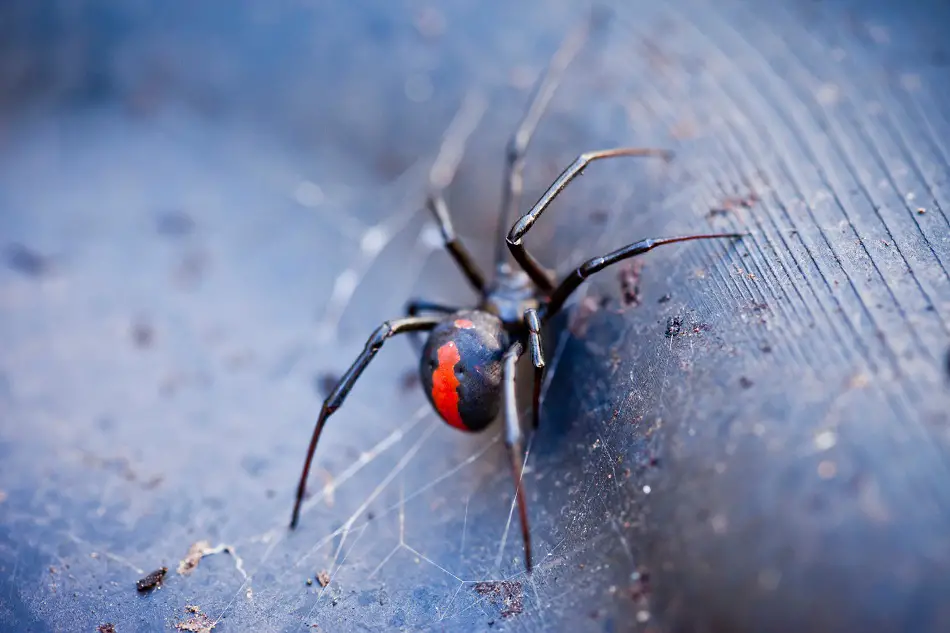
The redback, Latrodectus hasselti, is the introduced Australian relative and the one more likely to be met today, with established populations in Central Otago and around New Plymouth. The female is black with a bold red stripe on top of the abdomen and an hourglass beneath, and she builds a messy tangle web low down in sheltered, sun-warmed spots: under outdoor furniture, in pipe ends and in stacked timber. Her bite causes the same latrodectism and responds to the same antivenom.
Bitten by a widow? Keep the person calm and still, wash the site, apply a cold pack and take a simple painkiller. Do not apply a pressure bandage or tourniquet, and do not cut or suck the wound. Photograph the spider if you safely can. Go to hospital or call Healthline if pain spreads beyond the bitten limb or if there is sweating, nausea, abdominal cramping or agitation. For every other New Zealand spider, soap, water and a cold pack are enough.
White-tailed spiders do not cause flesh-eating wounds
The white-tailed spider, Lampona murina and Lampona cylindrata, is the most feared spider in New Zealand and the reputation is not supported by evidence. These are slim, dark grey Australian arrivals with a cream spot at the tip of the abdomen, members of the family Lamponidae, and they are specialist spider hunters that wander through houses at night after other spiders.

For decades they were blamed for necrotic ulcers, amputations and "flesh-eating" wounds. Prospective studies that followed people with definite, expert-identified white-tail bites found nothing of the kind: the typical result is burning local pain, a red mark and itching that fades within a day, with no ulceration in any case. The wounds that started the myth are now understood to be bacterial infections, along with conditions such as pyoderma gangrenosum and vascular ulcers. If a wound is spreading, hot and weeping, the answer is a doctor and probably antibiotics, not spider blame.
New Zealand has no funnel-web spiders
This is the single most common misunderstanding about New Zealand spiders, and it comes from a name. The country's black tunnelweb, Porrhothele antipodiana, and the banded tunnelweb, Hexathele hochstetteri, are burrowing mygalomorphs that build silk tubes under logs, banks and stones. They are stout, glossy mygalomorphs with visible fangs, and they are not related to the Australian funnel-web spiders of the family Atracidae, which include the Sydney funnel-web. Nothing in the Atracidae occurs in New Zealand.
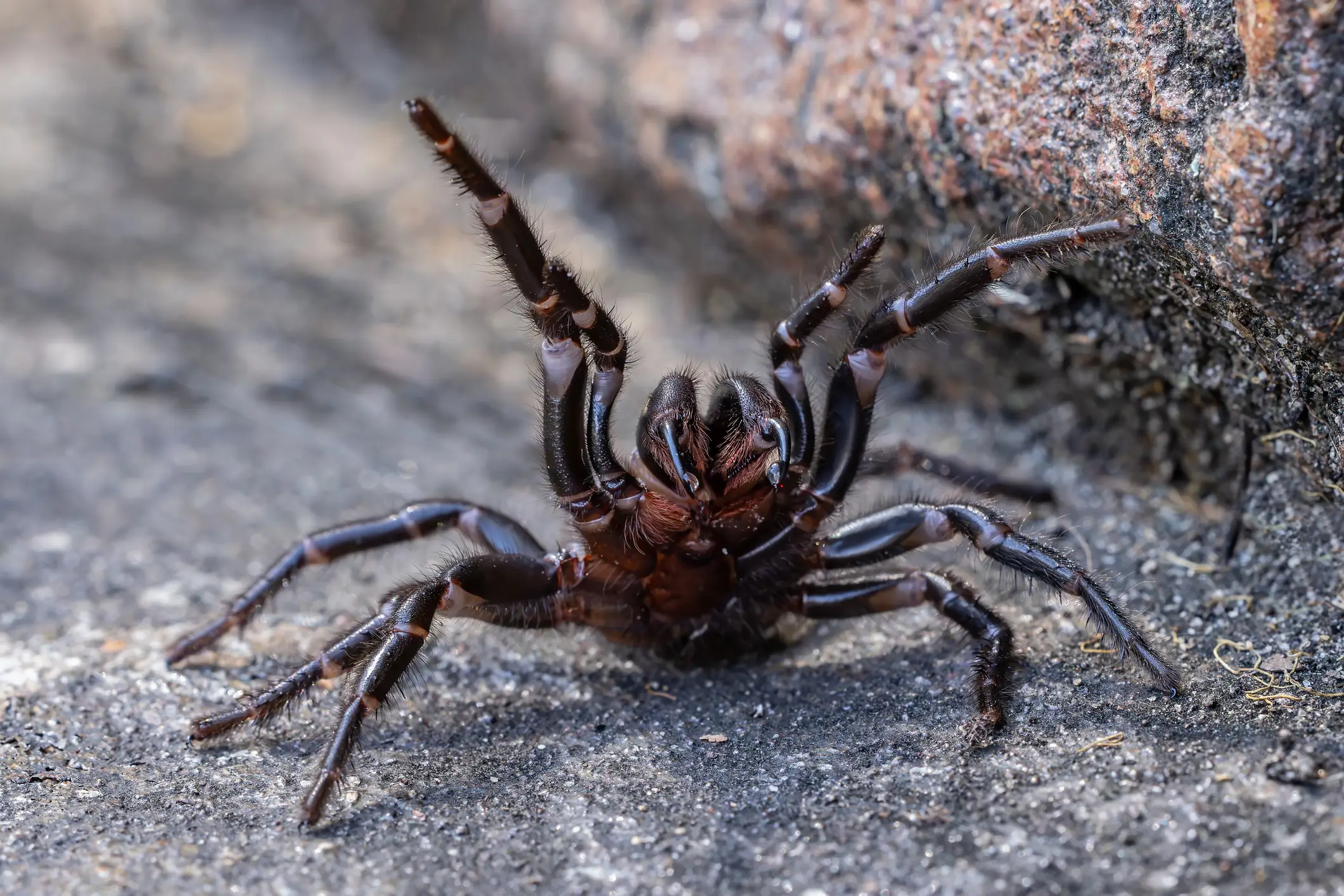
A tunnelweb bite is a mechanical event more than a toxic one: the fangs are long, so it hurts and may bleed and swell, but there is no dangerous venom effect and no antivenom is needed. Note too that Hexathele hochstetteri is often written with "Ausserer" after it; that is the scientist who described the species, not part of the name. The Avondale spider, Delena cancerides, is another import that looks alarming and is not: a flat, socially living Australian huntsman established around the Auckland suburb it is named after, and famous for supplying the spiders used in the film Arachnophobia.
Where you meet them
In and around the house
Sheetweb males on the ceiling in late summer, cellar spiders in bathroom corners, the small grey house spider Badumna longinqua in lacy retreats around window frames, and white-tailed spiders inside curtains or clothing left on the floor. Our house spiders guide covers the same group.
Beaches and dunes
Katipo territory is driftwood, dune hollows and the base of spinifex and pingao on open sandy beaches. If you find one, leave it alone - it is protected by law.
Bush, caves and gardens
Tunnelwebs under logs and banks, Dolomedes minor nursery tents on gorse and manuka, and orb webs across bush tracks. The Nelson cave spider, Spelungula cavernicola, is the country's largest spider by leg span, lives in a few Kahurangi cave systems and is also protected.
Spider season in New Zealand
Spider activity peaks in late summer and early autumn, roughly February to April, when the season's young reach adult size and males start wandering to find mates. That is when sheetweb spiders appear on ceilings, when redback webs around Central Otago sheds are most obvious, and when nursery tents show up across scrubland.
Winter does not empty the country of spiders; it pushes them into sheltered retreats under bark, in wall cavities and under stones, where many overwinter as juveniles or egg sacs. Our guides to where spiders go in the winter and the spider life cycle explain the pattern.
Common Spiders in New Zealand
- Black-Headed Jumping Spider (Trite planiceps)
- Golden-Brown Jumping Spider (Trite auricoma)
- Black Tunnel Web Spiders (Porrhothele antipodiana)
Biggest Spiders in New Zealand
- Nelson Cave Spider (Spelungula cavernicola)
- Banded Tunnelweb Spider (Hexathele hochstetteri ausserer)
- Golden Orb Weaver Spider (Nephila edulis)
- Sheetweb Spider (Cambridgea foliata)
- Vagrant spider (Uliodon albopunctatus)
Most Venomous Spiders in New Zealand
Cobweb Spiders/Tangle Web Spiders (Theridiidae)
White-Tailed Spider (Lamponidae)
 Cobweb SpidersRedback Spider (Latrodectus hasseltii)Identify the redback spider (Latrodectus hasseltii): the female's red stripe, the gum-footed web, where it lives, and how dangerous its bite
 Lamponidae SpidersWhite-tailed (Lampona cylindrata & Lampona murina)Identify the white-tailed spider (Lampona cylindrata and L. murina), see where it lives, what it hunts, and why the flesh-eating bite claim
Less Venomous Spiders in New Zealand
Huntsman Spiders (Sparassidae Family)
Cobweb SpidersRedback Spider (Latrodectus hasseltii)Identify the redback spider (Latrodectus hasseltii): the female's red stripe, the gum-footed web, where it lives, and how dangerous its bite Huntsman SpidersAvondale (Delena cancerides)Identify the Avondale spider (Delena cancerides): its flat body, huge leg span, life in bark colonies, range in Australia and New Zealand, a
Living with spiders in New Zealand
With only two medically significant species in the country, and one of them protected and disappearing, the practical advice is short.
- Wear gloves when moving timber, bricks, pot plants and machinery outdoors, especially in Central Otago and around New Plymouth where redbacks are established.
- Shake out shoes, gloves and clothing left on the floor, and check bedding in baches shut up for a while.
- Leave katipo alone; killing or collecting one is an offence, so report sightings to the Department of Conservation instead.
- Vacuum webs and egg sacs indoors rather than spraying insecticide.
- Treat a spreading, hot, weeping wound as a bacterial infection needing a doctor, not as a spider bite.
For the spiders across the Tasman see our guides to Australia and Sydney, where the real funnel-webs live, and to Fiji. Only the widows put New Zealand anywhere near our most venomous spiders shortlist.
Frequently asked questions
What is the most venomous spider in New Zealand?
The katipo, Latrodectus katipo, a native widow of sandy beaches. Its bite causes latrodectism - cramping pain that spreads from the bite, with sweating, nausea and agitation - and antivenom exists. The spider is now rare and legally protected, so the introduced Australian redback is more likely to be encountered.
Are there deadly spiders in New Zealand?
No. No confirmed spider-bite death has been recorded in New Zealand in well over a century. The katipo and the introduced redback can cause serious illness that needs hospital treatment, but both are treatable with antivenom, and every other spider in the country produces nothing worse than local pain.
Do white-tailed spider bites cause necrosis?
No. Prospective studies of definite, expert-identified white-tail bites found burning local pain, a red mark and itching that settled within a day, with no ulceration in any case. The flesh-eating reputation came from misattributed bacterial infections and other skin conditions. A spreading, weeping wound needs a doctor and probably antibiotics.
Are there funnel-web spiders in New Zealand?
No. New Zealand has tunnelweb spiders, including the black tunnelweb Porrhothele antipodiana and the banded tunnelweb Hexathele hochstetteri, but these are unrelated to the Australian funnel-webs of the family Atracidae. A tunnelweb bite hurts because the fangs are long, not because the venom is dangerous.
What is the biggest spider in New Zealand?
The Nelson cave spider, Spelungula cavernicola, which lives in a small number of cave systems in the Kahurangi area and can span around 13 centimetres across the legs. It is a protected species. The Avondale spider and large sheetweb spiders are the biggest ones people are likely to meet.
How do you identify a katipo spider?
A small black widow with a globular abdomen, found on open sandy beaches among driftwood, dune hollows and the base of spinifex. Northern females carry a red or orange stripe down the back of the abdomen; southern ones can be all black. Never handle it - the species is legally protected.
Is the Avondale spider dangerous?
No. Delena cancerides is a flat, fast Australian huntsman established around Avondale in Auckland, and it is unusual among spiders for living in family groups under bark. It has no medically significant venom, builds no web, and bites only if pressed against skin. It supplied the spiders used in the film Arachnophobia.
Are redback spiders established in New Zealand?
Yes. Redbacks arrived from Australia and have established populations in Central Otago and around New Plymouth, with occasional finds elsewhere in imported machinery and cargo. They favour dry, sun-warmed shelter such as pipe ends, stacked timber and the undersides of outdoor furniture, and their bite is treated the same way as a katipo bite.
What are the most common spiders in New Zealand homes?
Sheetweb spiders of the genus Cambridgea, whose long-legged males wander indoors in late summer, the grey house spider Badumna longinqua in lacy retreats near window frames, cellar spiders in ceiling corners, jumping spiders on sunny walls and white-tailed spiders hunting those other spiders at night.
What should you do after a spider bite in New Zealand?
Wash with soap and water, apply a cold pack and take a simple painkiller. Do not use a pressure bandage or tourniquet. Seek hospital care or call Healthline if cramping pain spreads beyond the bitten limb, or if there is sweating, nausea or abdominal pain, which suggests a katipo or redback bite.
Published August 15, 2023 · Last updated September 14, 2026