
Spiders in Norway
Norway has no spider that is dangerous to people. There are no widows, no recluses and no funnel-webs here, and the biggest species you will meet — the giant house spider in a cellar, a raft spider on a bog pool — are impressive rather than risky. The fauna is a northern European one: money spiders, orb-weavers, funnel weavers and wolf spiders, thinning out as you climb towards the fjell and the Arctic.

On this page
- What spiders live in Norway?
- Is any spider in Norway dangerous?
- Spiders in Norwegian houses
- Gardens, forest, bog and fjell
- Spider season in Norway
- Common Spiders in Norway
- Biggest Spiders in Norway
- Most Venomous Spiders
- Less Venomous Spiders in Norway
- Old claims about Norwegian spiders that are wrong
- Frequently asked questions
What spiders live in Norway?
Norway is long, narrow and cold at the top, and its spiders follow that gradient. The mild, rainy south-west around Bergen and Stavanger and the sheltered Oslofjord lowlands hold the widest variety; the boreal forest of Trøndelag and inland Norway is dominated by ground-living hunters and sheet-web builders; and above the treeline, on the fjell and north into Finnmark, only a hardy set of wolf spiders and money spiders persists, active during the short bright summer.

Numerically, the fauna is not what most people picture. The dominant family by far is the money spiders, Linyphiidae — thousands of specks a few millimetres long whose horizontal hammock sheets frost every meadow and heather slope on a dewy September morning. They are also the great balloonists, drifting in on silk threads and recolonising bare ground after snowmelt.
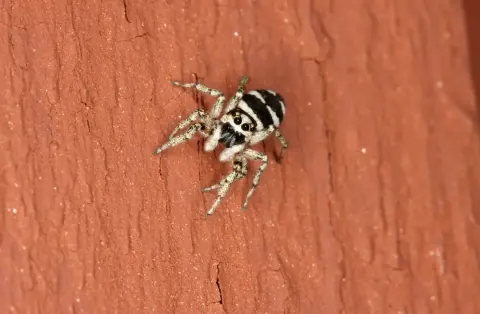
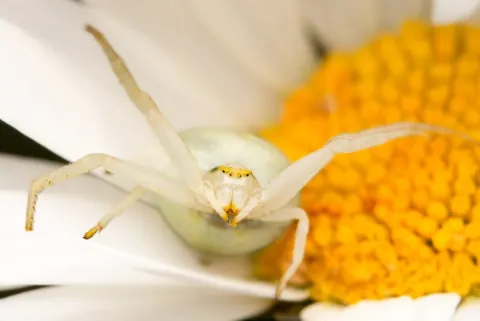
The spiders you actually notice are bigger. Orb-weavers such as the cross orb-weaver string wheel webs across gateposts and garden fences from midsummer. Funnel weavers line cellars and woodpiles with flat sheets and a retreat tube. The black-and-white zebra spider stalks sunlit stone in short jerky runs. And ambush hunters — goldenrod crab spiders motionless in flowers, nursery web spiders in tall grass — do without silk traps altogether.
Is any spider in Norway dangerous?
No. This is the clearest answer on any page in this series: Norway has no spider of medical significance. The genera that matter elsewhere are simply not part of the Norwegian fauna — no Latrodectus widows, no established Loxosceles recluses, no Australian funnel-webs, no wandering spiders. Our guide to the world's most venomous spiders lists none from Scandinavia.
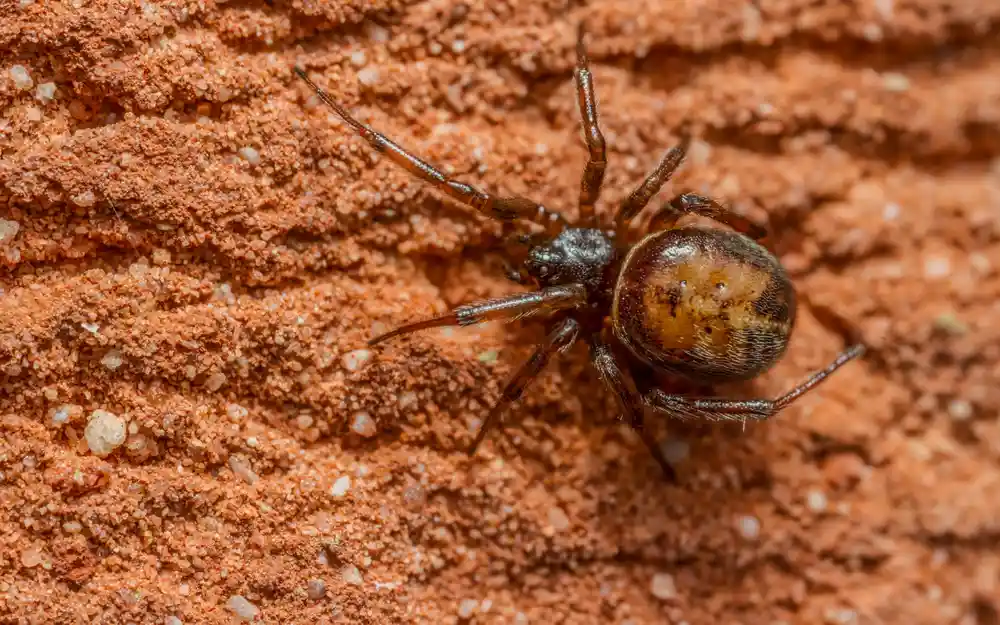
Norwegian spiders do have venom; almost all spiders do. It is dosed for flies and springtails, and the great majority of Norwegian species cannot even pierce human skin. The handful large enough to try — the giant house spider, a raft spider, a big wolf spider — bite only if squeezed, and the result is a pinprick with an hour or two of local soreness, comparable to a nettle sting.
The false widows of the genus Steatoda occur here, including the rabbit hutch spider, Steatoda bipunctata, and the white-spotted Steatoda albomaculata. They are relatives of true widows and share the glossy build, but their venom is far weaker and Norwegian bites amount to short-lived local pain. The noble false widow that generates headlines in Britain is not an established part of Norway's fauna.
Bitten? Wash with soap and water and use a cold pack; that is the whole treatment for a Norwegian spider bite. See a doctor only if the site becomes hot, swollen and increasingly painful over the following days — that is a bacterial skin infection, not venom, and it needs antibiotics rather than a spider identification.
Spiders in Norwegian houses
Cellars, sheds, boathouses and hytte crawlspaces are the classic indoor habitat. The giant house spider, Eratigena atrica, is Norway's largest by legspan: a dark, long-legged funnel weaver that builds a dusty sheet in a corner and bolts for its tube when disturbed. The smaller barn funnel weaver, Tegenaria domestica, does the same job in warmer, drier rooms and is the one most often found in an old farmhouse.

Alongside them come the cobweb spiders: untidy tangles in window frames and ceiling corners, usually Parasteatoda or Steatoda. Long-legged cellar spiders occupy heated buildings in the south. Our general house spiders guide covers the group, and the honest advice for Norway is to leave them: an indoor spider is eating the flies and mosquitoes that came in with you.
Gardens, forest, bog and fjell
Garden fences, raspberry canes and cabin railings carry orb webs from July onward, mostly the cross orb-weaver and its relatives, with the small bright-green cucumber spider Araniella cucurbitina on leaves. Flower heads hide the goldenrod crab spider, which can shift between white and yellow over several days to match its petal and takes bees far larger than itself.
Damp ground is where the big ones live. The raft spider, Dolomedes fimbriatus, hunts at the edges of bog pools and ditches, resting with its front legs on the surface film to feel the ripples of an insect, and it will dive and stay under when alarmed. Around it, wolf spiders of the genus Pardosa sprint over moss and warm rock, females carrying an egg sac at the spinnerets and later a mass of spiderlings on the abdomen. Those same wolf spiders reach the high fjell and the Arctic coast, where summer is a few frantic weeks long.
Spider season in Norway
The visible season is short and sharp. Spiders grow through spring and early summer, and from late August to October they are adult, largest and most obvious: orb webs at their biggest, meadows sheeted with money-spider silk, and male giant house spiders wandering across cellar floors in search of females. That autumn wandering is why Norwegians notice "more spiders indoors" — the spiders were already there, the males are simply moving.
Winter is not the mass die-off people assume. Eggs, juveniles and some adults overwinter in litter, bark and cellars, insulated by snow rather than killed by it, and several northern species tolerate freezing directly. Our guide to where spiders go in the winter explains the strategies.
Common Spiders in Norway
- Common House Spider (Parasteatoda tepidariorum)
Biggest Spiders in Norway
- Giant House Spider (Eratigena atrica)
Most Venomous Spiders
- Cucumber Green Spider - Araniella cucurbitina
Less Venomous Spiders in Norway
Funnel Weaver Spiders
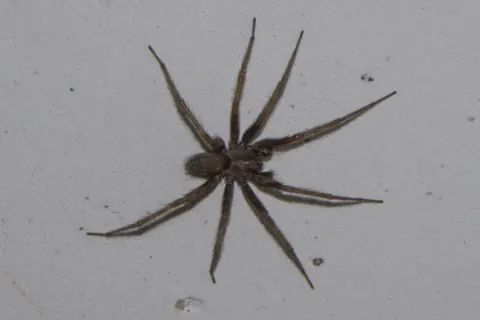 Funnel Weaver SpidersBarn Funnel Weaver (Tegenaria domestica)Identify the barn funnel weaver (Tegenaria domestica): size, banded legs, its flat funnel web, where it lives indoors, and whether the bite
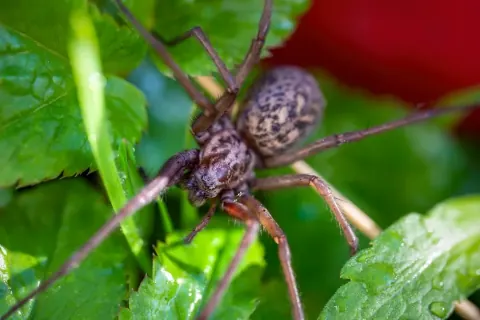 Funnel Weaver SpidersGiant House (Eratigena atrica)Identify the giant house spider (Eratigena atrica): size, banded legs, funnel web, why it appears in autumn, and whether its bite is dangero
Orb Weavers
Comb-footed Spiders
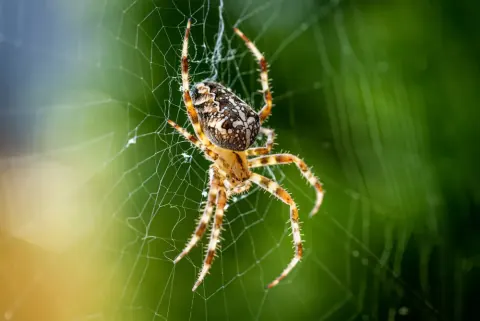 Orb WeaversCross Orb Weaver (Araneus diadematus)Identify the cross orb weaver (Araneus diadematus) by the white cross on its abdomen: size, colour, web, egg sac, range and whether the bite
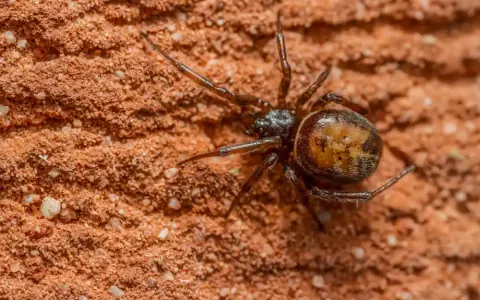 Cobweb SpidersRabbit Hutch Spider (Steatoda bipunctata)Identify the rabbit hutch spider (Steatoda bipunctata): glossy brown body, pale stripe, tangle web in sheds and hutches, and why its bite is
Jumping Spiders
Crab Spiders (Thomisidae)
Old claims about Norwegian spiders that are wrong
Earlier versions of this page carried three errors worth naming. First, the claim that Norway has "a few types that are dangerous to humans" — it does not, and no Norwegian spider bite has any recognised medical significance. Second, the cucumber green spider, Araniella cucurbitina, was listed as the country's most venomous spider; it is a harmless orb-weaver about five millimetres long that eats aphids and midges. Third, the cross orb-weaver was filed under comb-footed spiders: it belongs to Araneidae, the orb-weavers, and builds a wheel web rather than a tangle.
Two things often reported as dangerous Norwegian spiders are not spiders. Harvestmen have a single fused oval body, no silk and no venom glands. Ticks are arachnids too, but they are parasites — and in coastal and southern Norway a tick bite is the one arachnid bite actually worth a doctor's attention.
- Vacuum cellar webs if you want to, but there is no health reason to spray anything.
- Shake out boots and gloves left in a shed or boathouse over winter.
- Move an indoor spider outside with a glass and card; in autumn it is usually a male with a few weeks left.
- Check yourself for ticks after walking in long grass — that is the real arachnid risk in Norway.
For comparison across the region, see our guide to the spiders of Sweden.
Frequently asked questions
Are there any dangerous spiders in Norway?
No. Norway has no spider of medical significance — no widows, no established recluses, no funnel-webs. A few of the larger species can pierce skin if squeezed, and the result is a brief pinprick with local soreness. No Norwegian spider bite requires antivenom, and none has caused a recorded serious injury.
What is the biggest spider in Norway?
By legspan, the giant house spider, Eratigena atrica, a dark long-legged funnel weaver of cellars, sheds and boathouses. By body size the raft spider, Dolomedes fimbriatus, of bog pools and ditches is comparable and heavier-bodied. Both look alarming and both are harmless to people.
Is the cucumber green spider Norway's most venomous spider?
No, and that claim comes from an error in older lists. Araniella cucurbitina is a bright green orb-weaver about five millimetres long that sits on leaves in gardens and woodland, eating aphids and midges. It cannot meaningfully bite a person and has no medical significance whatsoever.
Are false widow spiders found in Norway?
Steatoda species occur here, including the rabbit hutch spider, Steatoda bipunctata, and the white-spotted Steatoda albomaculata. They are glossy relatives of true widows with far weaker venom, and a bite causes short-lived local pain at most. The noble false widow of British headlines is not established in Norway.
What is the most common spider in Norwegian homes?
Funnel weavers dominate cellars and outbuildings — the giant house spider in cool damp spaces, the barn funnel weaver in warmer rooms. Cobweb spiders such as Parasteatoda build untidy tangles in window frames and ceiling corners, and long-legged cellar spiders occupy heated buildings in the south.
Why do I see more spiders indoors in autumn?
Because male house spiders mature in late summer and walk. From late August to October they leave their retreats and cross floors looking for females, which makes them suddenly visible. The spiders were living in the building already; the population has not increased, only its behaviour has changed.
Where do raft spiders live in Norway?
At the edges of bogs, ditches, ponds and slow marshy water. Dolomedes fimbriatus rests with its front legs on the surface film, feeling ripples from insects, and it can run across water or dive and stay submerged when alarmed. It is large, striking and harmless to people.
How do nursery web spiders look after their young?
The female Pisaura mirabilis carries her egg sac in her fangs, holding it under her body as she walks. When hatching nears she builds a silk tent among tall grass, fastens the sac inside and stands guard on the outside until the spiderlings disperse a few days later.
Do spiders in Norway survive the winter?
Many do. Eggs and juveniles overwinter in leaf litter, moss and bark where snow acts as insulation, and some northern species tolerate freezing directly using antifreeze compounds in the body. Others complete their life cycle in a single summer and leave only egg sacs behind.
Are harvestmen and ticks spiders?
No. Harvestmen have one fused oval body, no silk and no venom glands, so nothing they do resembles a spider bite. Ticks are arachnids too but are parasites, not spiders — and in coastal and southern Norway a tick bite is genuinely worth medical attention, unlike any spider bite here.
Published November 30, 2023 · Last updated September 14, 2026