
Spiders in Tasmania
Tasmania is the mildest part of Australia for anyone nervous about spiders. The island has no Sydney funnel-web, no mouse spiders and no recluses, and of the four species profiled here only the redback matters medically. What it does have is an ancient endemic fauna, headed by a cave spider whose lineage predates the break-up of Gondwana.

On this page
- What spiders live in Tasmania?
- Which Tasmanian spiders are dangerous?
- The island's own spiders
- Where you meet them
- Spider season in Tasmania
- Common Spiders in Tasmania
- Biggest Spider in Tasmania
- Most Dangerous Spiders in Tasmania
- Less Venomous Spiders
- Most Venomous Spiders in Tasmania
- Living with Tasmania's spiders
- Frequently asked questions
What spiders live in Tasmania?
Tasmania sits far enough south, and stayed isolated long enough, that its spider fauna reads differently from the mainland's. Cool temperate rainforest, buttongrass moorland, dolerite scree and a long agricultural midlands support wolf spiders, orb-weavers, huntsmen, cobweb spiders and a striking number of ancient endemic lineages found nowhere else on earth.
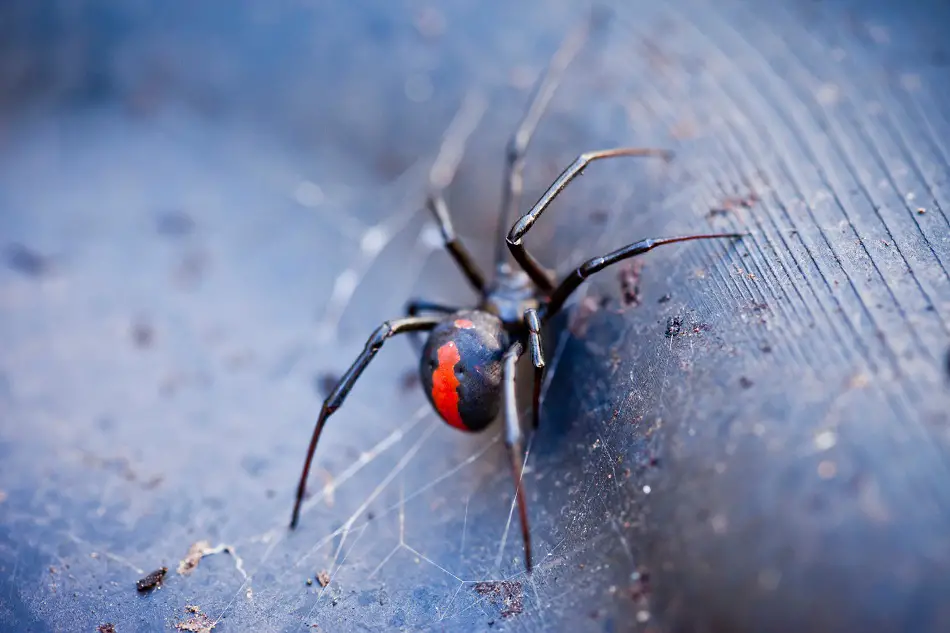
What the island lacks matters just as much. The Sydney funnel-web, Atrax robustus, does not occur here, Missulena mouse spiders are a mainland group, and no Loxosceles recluse is established in Tasmania. The island does have one funnel-web of its own, the Tasmanian funnel-web (Hadronyche venenata) of the damp eastern forests, but it is seldom encountered and no severe envenomation has been documented from it. In practice the redback is behind virtually every Tasmanian spider bite that needs a hospital, a much shorter list than most visitors expect from Australia.
Which Tasmanian spiders are dangerous?
The redback accounts for nearly every serious spider bite recorded on the island. Females are glossy black, roughly the size of a pea, with a red or orange stripe along the top of the abdomen and an hourglass mark below. They are strongly associated with human structures: sheds, woodpiles, outdoor furniture, water meters and the undersides of seats in caravan parks. Their venom causes latrodectism, with pain that climbs over hours, sweating around the bite and nausea. Antivenom exists and is used for severe cases; no confirmed Australian death has followed a redback bite since 1956.

Tasmania does have a true member of the Atracidae, the Tasmanian funnel-web (Hadronyche venenata), a dark mygalomorph of wet eastern forests. Bites are rarely reported and its venom has never been shown to cause the syndrome that makes its Sydney relatives lethal, but because the family includes species that have killed, a bite from any large glossy black burrowing spider is treated as a funnel-web bite: pressure-immobilisation bandage, keep still, call 000.
The source material for this page also lists the Lake Fenton trapdoor spider (Plesiothele fentoni) as deadly. That is wrong, and worth stating plainly. It is a small mygalomorph confined to alpine moorland around Lake Fenton in Mount Field National Park, there is no record of medically significant envenomation from it, and it is not an Australian funnel-web in the dangerous Atracidae sense. Its scientific interest is its restricted alpine range, not its venom.
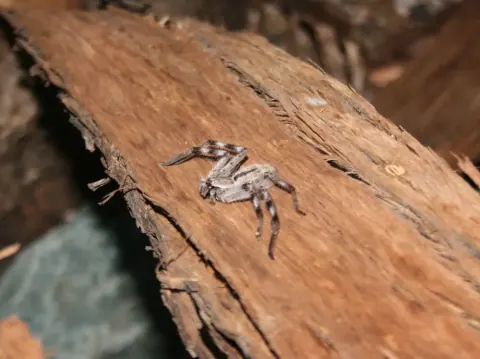
The other species here are harmless. A black house spider bite can be sharply painful with local swelling, and a white-tailed spider bite burns and itches for a day or two, but a study of 130 verified white-tail bites found no case of the flesh-eating ulcer the species is blamed for.
Bitten? Wash the area, apply a cold pack and keep the limb still. Do not use a pressure bandage for a redback bite. If the spider was a large black burrowing one, do the opposite: pressure-immobilisation bandage over the bite and along the whole limb, splint it, keep still and call 000. Go to an emergency department if pain spreads and intensifies, if sweating and nausea develop, or if the person bitten is a young child. Photograph the spider if you safely can.
The island's own spiders
Tasmania's headline arachnid is the Tasmanian cave spider, Hickmania troglodytes. With a leg span approaching eighteen centimetres it is the largest spider on the island, and it belongs to a family whose closest relatives live in South America, making it a living reminder of Gondwana. It hangs beneath a loose sheet web in caves, old mine adits, culverts and damp forest overhangs, grows slowly, and guards a rigid, thimble-like egg sac for months before the spiderlings emerge.
Other endemics include Plomley's trapdoor spider (Migas plomleyi), which builds a silk tube against a tree trunk rather than a burrow, the Tasmanian red and black spider (Novodamus nodatus), and peacock spiders such as Maratus proszynskii, males of which display with raised, patterned abdomens. None of them is dangerous; they are the reason Tasmanian arachnology matters internationally.
Where you meet them
Around the house
Black house spiders occupy window frames, eaves and brickwork, spinning untidy lacy sheets with a funnel retreat; the paler grey house spider does the same on fences and garden walls. Cellar spiders hang in garages and under sinks. Redbacks pick the dry, undisturbed spots nobody checks.
Gardens, paddocks and bush
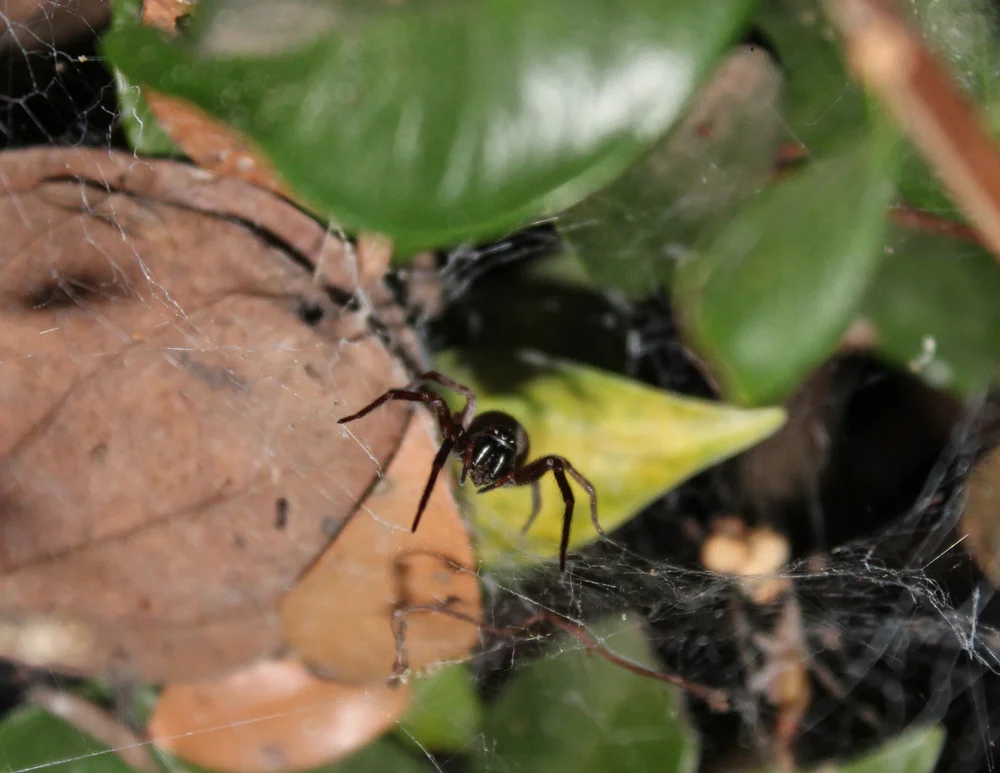
Garden wolf spiders (Tasmanicosa godeffroyi) hunt on open ground at night, and a torch held beside your eyes reveals their eyeshine across a lawn. Orb-weavers rebuild wheel webs across gateways each evening, and Tasmania holds only a couple of huntsman spiders. One is the badge huntsman (Neosparassus), a stocky, banded hunter of foliage and bark named for the marking under its abdomen. The other is the flat huntsman Delena cancerides — the Avondale spider of this page — which lives in colonies under loose bark, flattened to fit those spaces, and is the one most often found indoors behind a picture frame. Its name comes from a colony introduced to Avondale in New Zealand.
Caves and wet forest
Cave spiders, harvestmen and glow-worms share the same cool, saturated air in Tasmania's limestone systems. Cave populations are fragile: touching the webs or handling the spiders costs them energy they cannot easily replace, so look and leave.
Spider season in Tasmania
The island's short, cool summer compresses everything. Most sightings fall between December and April, when orb-weavers reach full size, wolf spiders carry spiderlings on their backs and huntsmen move about after dark. Cold, wet springs delay the whole cycle by weeks, and at altitude the season is shorter still.
Winter drives spiders into bark crevices, log piles, sheds and wall cavities rather than killing them; many overwinter as eggs or part-grown juveniles under leaf litter and snowmelt, a strategy described in our guide to where spiders go in the winter. Cave spiders, buffered by constant underground temperatures, are active all year.
Common Spiders in Tasmania
- Black House Spider
- Garden Wolf Spider
Biggest Spider in Tasmania
- Tasmanian Cave Spider
Most Dangerous Spiders in Tasmania
- Redback Spider
- Lake Fenton Trapdoor Spider
Less Venomous Spiders
- Badge Huntsman Spider (Neosparassus diana)
- Tasmanian Red and Black Spider (Novodamus nodatus)
- Tasmanian Cave Spider (Hickmania troglodytes)
- Plomley's Trapdoor Spider (Migas plomleyi)
- Maratus proszynskii
Most Venomous Spiders in Tasmania
Comb-Footed Spiders
Huntsman Spiders
White‐Tailed Spiders

House Spiders
Living with Tasmania's spiders
The practical advice is short, because the risk is small:
- Wear gloves when handling firewood, and shake out boots stored in the shed.
- Check under outdoor seats, trailers and water meters before reaching in, which is where redbacks sit.
- Leave webs on eaves alone through summer; they intercept the flies and mosquitoes you would otherwise swat.
- Never collect or disturb cave spiders, and keep to marked routes in show caves.
For comparison with the mainland, the same house species turn up in Victoria and Melbourne, while the redback has also reached New Zealand. General identification help for indoor species is in our guide to house spiders, and the hunting families are covered under wolf spiders.
Frequently asked questions
What is the most dangerous spider in Tasmania?
The redback spider is the only Tasmanian species of real medical concern. Its bite causes increasing pain, sweating and nausea, and antivenom is available for severe cases. Bites are uncommon because the spider is timid and stays in its web, but it likes sheds, furniture and machinery, so accidental contact does happen.
Is the Lake Fenton trapdoor spider deadly?
No. Despite its reputation online, Plesiothele fentoni has no record of causing serious envenomation in humans. It is a small burrowing mygalomorph restricted to alpine moorland in Mount Field National Park, and its scientific importance lies in that narrow range rather than in its venom. Treat any bite with a cold pack and medical review.
Are there funnel-web spiders in Tasmania?
Yes, but not the dangerous Sydney one. Tasmania has its own funnel-web, Hadronyche venenata, in the damp forests of the east, while Atrax robustus is a mainland animal. No severe human envenomation has been documented from the Tasmanian species, but since the family includes deadly relatives, any bite from a large black burrowing spider is treated as an emergency.
What is the biggest spider in Tasmania?
The Tasmanian cave spider, Hickmania troglodytes, with a leg span that can approach eighteen centimetres. It lives in caves, mine tunnels, culverts and damp forest overhangs, hanging below a loose sheet of silk. It is harmless to people, grows slowly and belongs to a lineage whose nearest relatives are South American.
Which spiders are found only in Tasmania?
Several species are endemic, including the Tasmanian cave spider, Plomley's trapdoor spider, the Tasmanian red and black spider and a number of peacock spiders. The island's long isolation and cool wet forests preserved ancient lineages that vanished elsewhere, which is why Tasmania is disproportionately important to Australian spider research.
Are mouse spiders found in Tasmania?
Mouse spiders of the genus Missulena are a mainland Australian group and are not part of the Tasmanian fauna people encounter. Large, dark, burrowing spiders reported in Tasmania are usually trapdoor spiders or wolf spiders. This absence is one reason the island has a much shorter list of medically significant species.
What spiders live in Tasmanian houses?
The black house spider is the usual resident, building lacy webs with a funnel retreat in window frames and brickwork, alongside grey house spiders on fences and cellar spiders in garages. Huntsmen wander inside on warm nights. None of these is dangerous, and all of them prey on household insects.
How venomous are huntsman spiders in Tasmania?
Huntsman venom is not dangerous to humans. A bite from a large individual can be painful because the fangs are big, and it may leave brief swelling, but there is no systemic effect. Huntsmen are reluctant to bite and usually run rather than stand their ground when disturbed indoors.
Do white-tailed spiders in Tasmania cause skin ulcers?
No. Research following 130 verified white-tailed spider bites recorded pain, redness and itching, but not a single case of tissue death. Ulcers attributed to white-tails are typically bacterial infections or other skin conditions, so a wound that worsens over days should be examined by a doctor rather than blamed on a spider.
Published April 26, 2022 · Last updated September 14, 2026