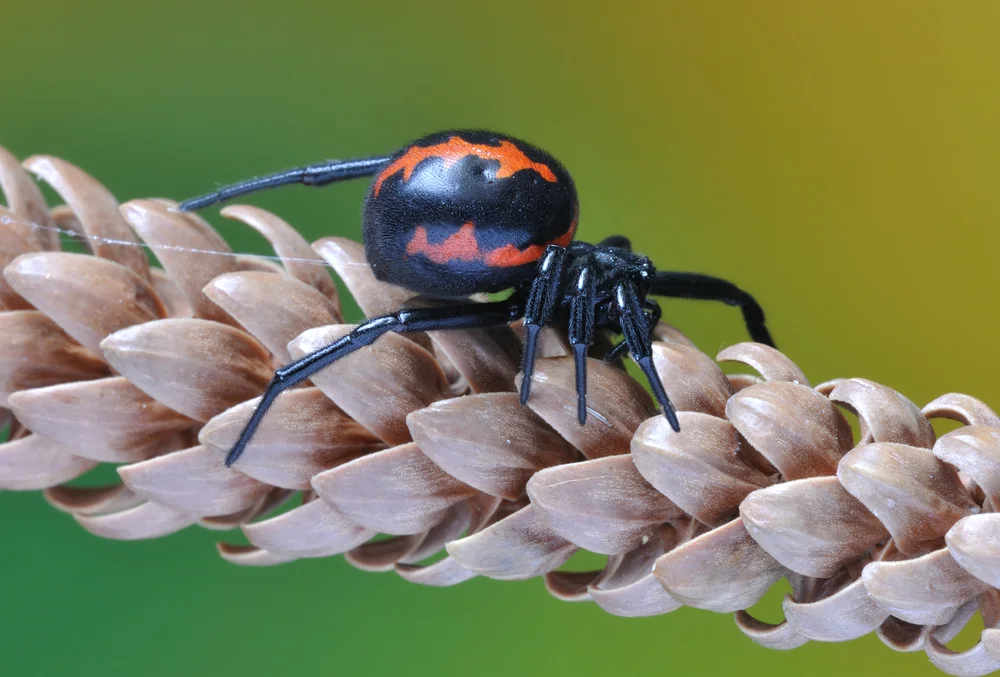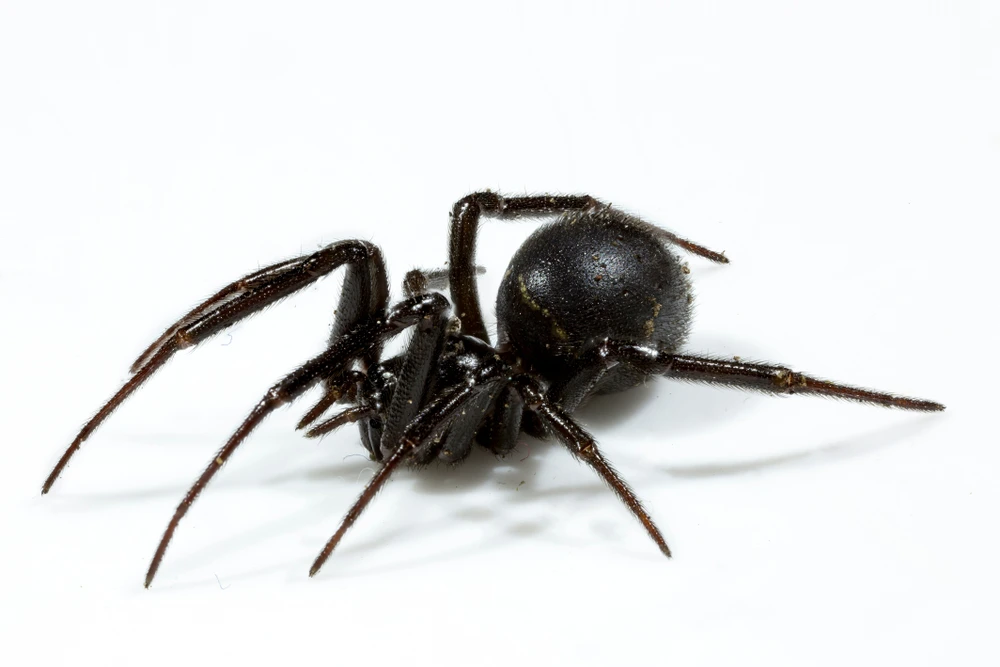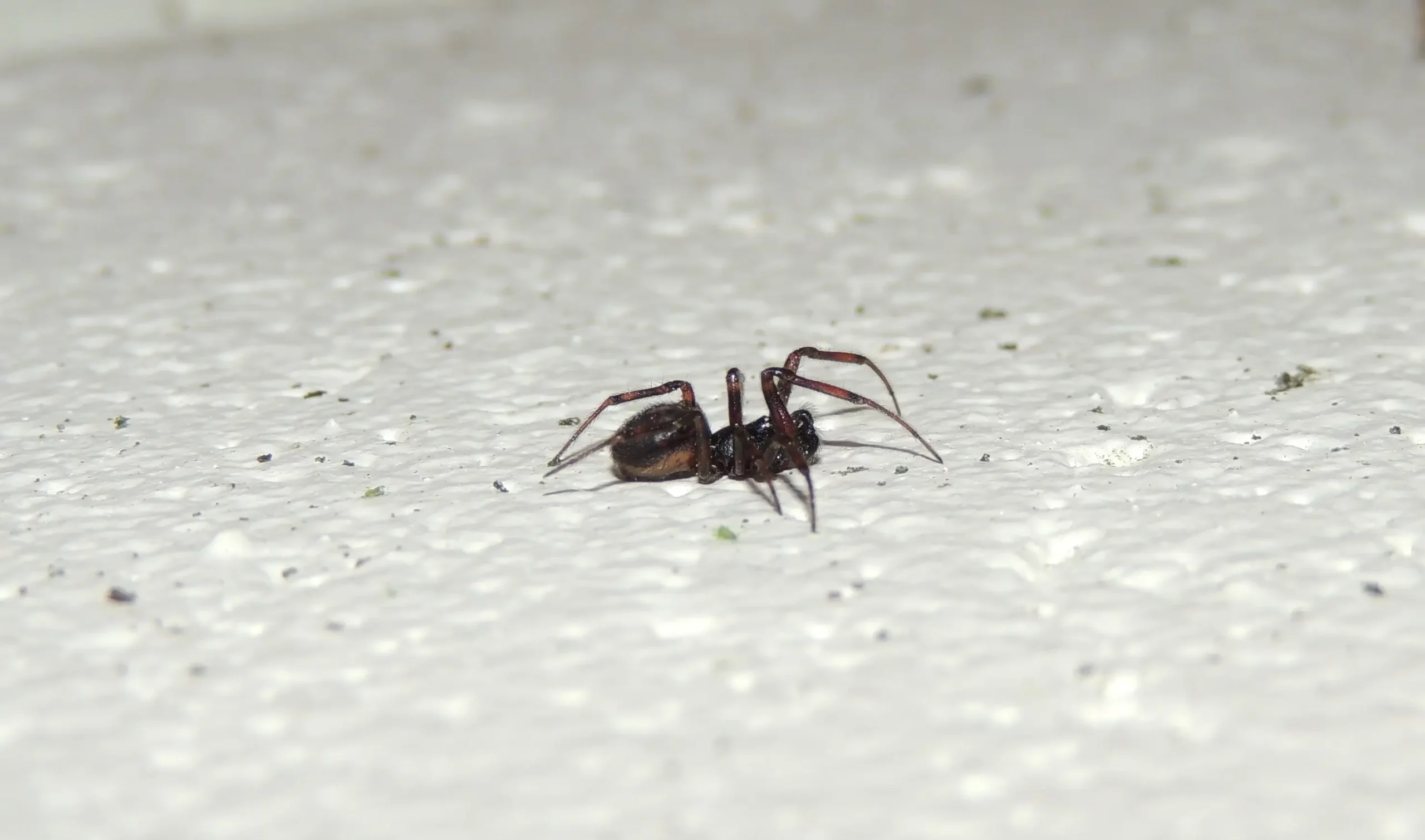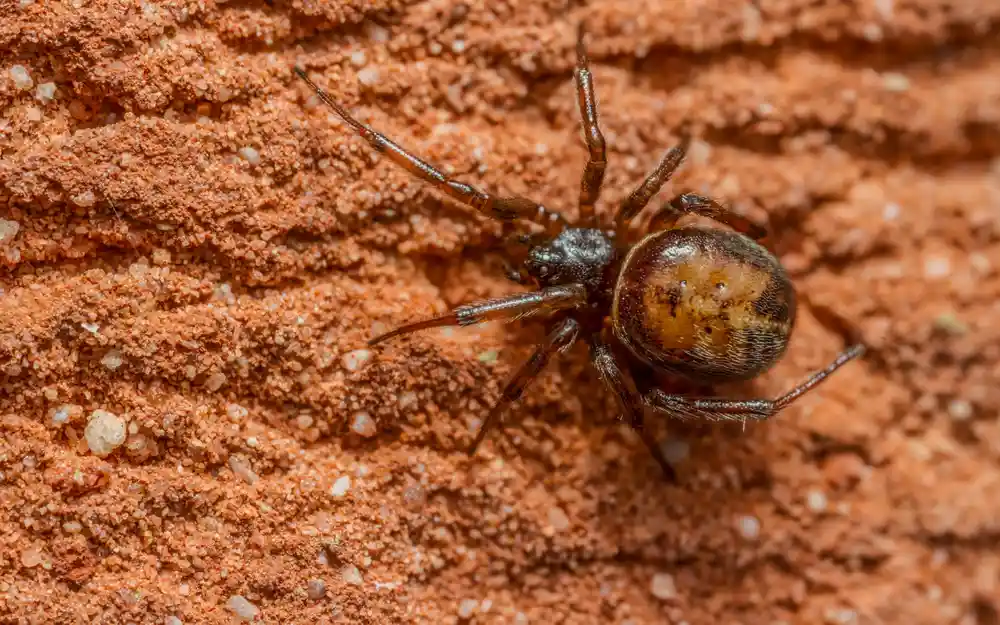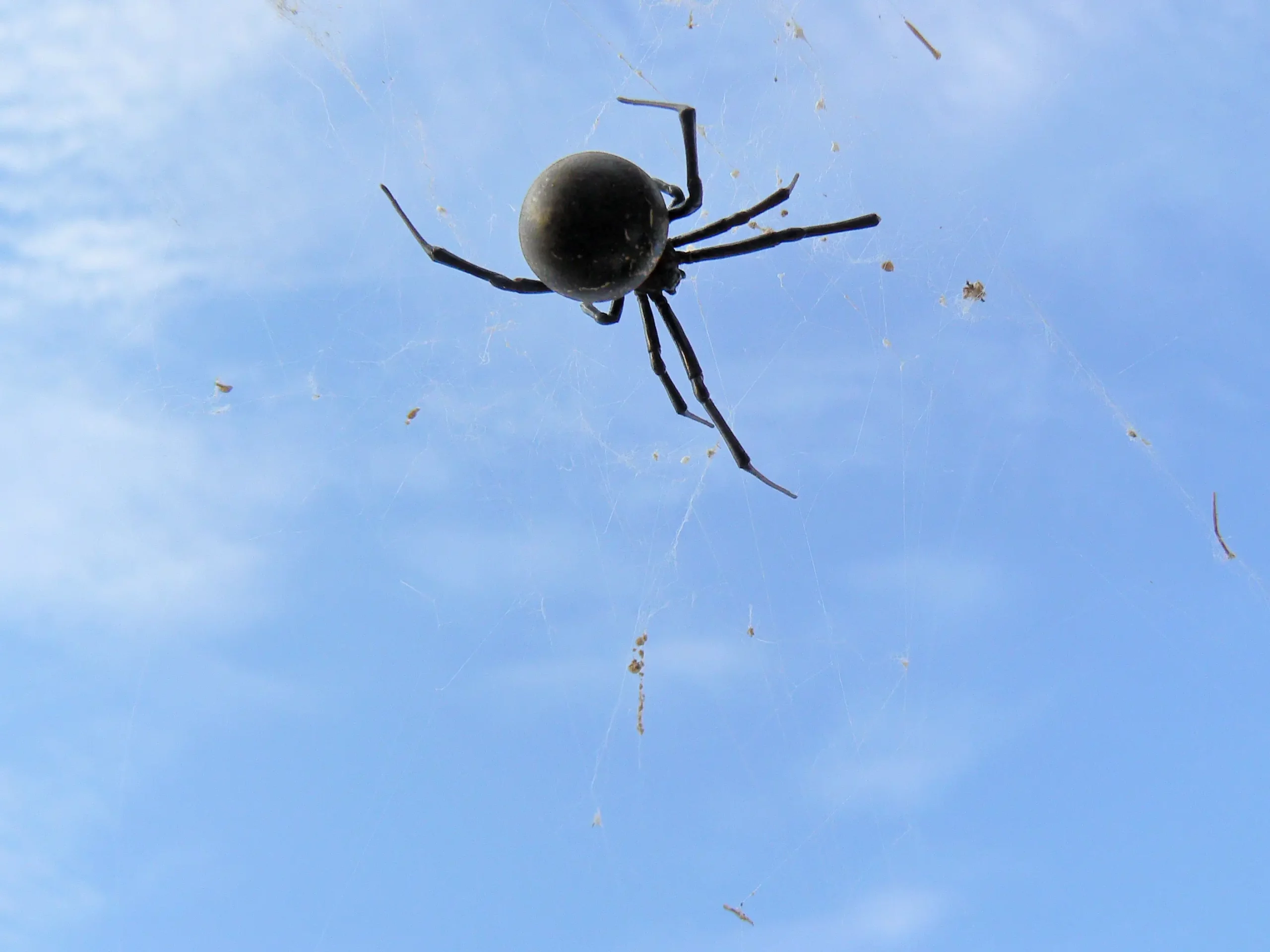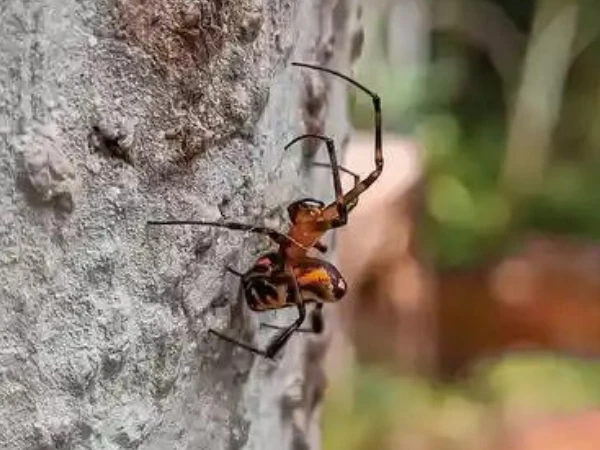


Spiders are seen in greater numbers during summertime in Manitoba, even around the Winnipeg area. While most are harmless and avoid contact if possible, it is wise to be wary of the black widow, whose venom is quite potent and can cause severe damage.

Spiders in Manitoba Identification Chart
| Sand Bear Wolf Spider | Cross Orb-weaver Spider | — |
| Striped Fishing Spider | Dark Fishing Spider | — |
| Western Black Widow Spider | Hobo Spider | — |
 Western Black Widow (Latrodectus hesperus) - Have you ever heard about the Western Black Widow spider? It's a special spider found mostly in the western areas of North America. They are closely related to the northern black widow.… Continue Reading >
 Hobo (Eratigena agrestis) - The Hobo spider is different from the Australian funnel-web, even though they both belong to the funnel-web spider group. With various scientific names like Philoica agrestis and Tegenaria rhaetica, these spiders can be found in Europe, Central Asia, and North America.… Continue Reading >
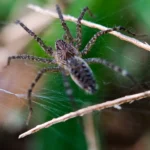 Striped Fishing (Dolomedes scriptus) - Discover the Striped Fishing Spider! This big spider is part of the Pisauridae family and lives in both the United States and Canada. With its striking patterns and unique habits, it has become a topic of interest.… Continue Reading >
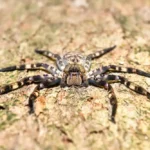 Dark Fishing (Dolomedes tenebrosus) - The Dark Fishing Spider is a special spider from the Pisauridae family. It looks a lot like the striped fishing spider. Here's something wild: after these spiders mate, the male often becomes a meal for the female!… Continue Reading >
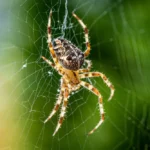 Cross Orb Weaver (Araneus diadematus) - Did you know the Cross Orb Weaver spider comes from Europe and North America? Their legs are super cool because they can spin special round webs.… Continue Reading >
© 2024 (Spider Identifications). All rights reserved. Reproduction in whole or in part without permission is prohibited.
Follow us on: