
Spiders in Cayman Islands
The Cayman Islands have no deadly spider. The only group worth treating with respect is the widows, and the brown widow is the one you are actually likely to meet, usually under a garden chair or a window ledge rather than indoors. Everything else on the islands, including the large golden silk orb-weavers strung across bush paths and the dark tarantula that wanders at night, causes nothing worse than a sore spot.

On this page
- What spiders live in the Cayman Islands?
- Which Cayman spiders are actually dangerous?
- Where you meet them on the islands
- When spiders are most obvious in Cayman
- Look-alikes, misnames and non-spiders
- Common Spiders in Cayman Islands
- Biggest Spiders in Cayman Islands
- Most Venomous Spiders in the Cayman Islands
- Less Venomous Spiders in the Cayman Islands
- Living with Cayman's spiders
- Frequently asked questions
What spiders live in the Cayman Islands?
Three low limestone islands, a dry shrubland interior, mangrove fringes and a thin band of gardens and resorts along the coast: that is the whole habitat map, and the spider fauna matches it. Caribbean islands of this size carry a short species list, made up of wide-ranging tropical web-builders, hunters of leaf litter and rock crevices, and tramp species that reached Grand Cayman, Cayman Brac and Little Cayman in cargo and now live around people.

The animals people photograph are nearly all web-builders. Big female golden silk orb-weavers hang in yellow-tinted webs across gaps in the bush, small spinybacked orbweavers decorate hedges and garden shrubs with hard, spiny, white-and-black bodies, and the tangled cobwebs in porch corners belong to household cobweb spiders. A dark, heavy-bodied tarantula lives in burrows and rock cavities in the dry forest and is occasionally found crossing a road after rain; it is the biggest spider on the islands and one of the least dangerous.
Which Cayman spiders are actually dangerous?
One group, and it is a small one. Widow spiders of the genus Latrodectus are the only spiders on the islands whose venom has a real effect on people. In practice that means the brown widow, a tan to charcoal spider with an orange hourglass and a spiky, golf-ball-shaped egg sac, which has spread through the whole Caribbean and thrives in exactly the places Cayman gardens offer: the underside of plastic furniture, meter boxes, rolled hoses, the lip of a planter and the rim of a boat trailer. The larger, glossy black southern black widow group is scarce here by comparison.

Widow venom is a neurotoxin. A real bite gives a sharp pinprick, then cramping muscle pain over the next hour or two that spreads to the abdomen, back or thighs, with sweating, nausea and restlessness in stronger cases. Brown widow bites are usually milder than black widow bites and often stay local. Most people recover with pain relief, and antivenom is reserved for severe cases, so the sensible response is the hospital rather than waiting it out at home.
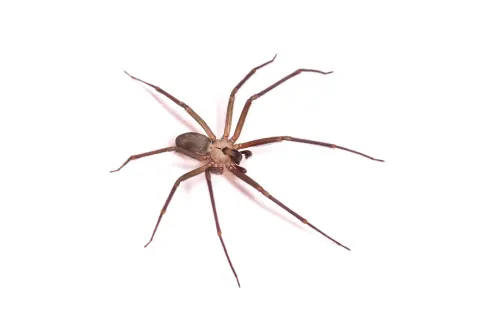
The original version of this page listed the brown recluse among Cayman's spiders. That is wrong on the facts. Loxosceles reclusa is a spider of the central and southern United States, and no recluse population is established in the Cayman Islands. Necrotic wounds blamed on recluses on the islands are, as elsewhere in the Caribbean, almost always bacterial skin infections, insect bites or other conditions.
Bitten? Wash the site with soap and water, apply a cold pack and keep the limb still. Photograph the spider if you can do it safely. Go to the hospital straight away for spreading cramping pain, sweating or vomiting, and for any bite on a small child. Do not cut, suck or apply heat to the wound.
Where you meet them on the islands
Around the house
Air-conditioned interiors are dry and poor in insects, so most Cayman spiders live on the outside of buildings rather than in them. Cobweb spiders take ceiling corners, cellar spiders hang in bathrooms and laundry rooms, and jumping spiders hunt on sunlit walls and screens. Widows sit under anything raised a few centimetres off the ground outside, which is why gloves matter when you move pots or lift patio cushions. Our guide to house spiders covers the indoor group in more detail.
Gardens and dry shrubland
Orb webs are strung wherever there is a gap between plants. Golden silk orb-weavers pick the sunniest lanes through sea grape and logwood and rebuild the same web for weeks, while spinybacked orbweavers build small, tidy wheels in hedges. Both are harmless; the golden silk spider in particular would rather drop out of the web than bite. The wider orb-weaver family accounts for most of the webs people notice on the islands.
Ironshore, mangrove and bush
Away from the coast road, ground hunters shelter in limestone potholes, under fallen palm fronds and in dry-forest leaf litter, and the tarantula uses the same crevices. The karst ironshore along the shoreline gives crevice dwellers the deep, humid cracks they need through the dry season.
When spiders are most obvious in Cayman
There is no autumn peak here of the kind northern countries see; the rhythm follows rainfall. The wet season from roughly May to November brings the insect flush that feeds spiders, and webs are largest and most numerous from late summer into early autumn, when female orb-weavers are fully grown. The dry months from December to April push many species into crevices and shaded litter.
Storms matter more than temperature. A tropical system strips webs, floods burrows and pushes ground spiders indoors for a few days, which is why reports of spiders inside houses spike after heavy weather rather than at any fixed time of year.
Look-alikes, misnames and non-spiders
Two species that appear on older Cayman lists do not belong there. The starbellied orb-weaver is an eastern North American spider of meadows and old fields, and the grass spider genus Agelenopsis is likewise continental North American; the funnel-shaped sheet webs seen on Cayman walls and grass belong to other builders. A European labyrinth spider on the same list is a straightforward error.
The animal most often reported as a giant venomous spider is not a spider at all. Tailless whip scorpions, flat brown arachnids with long feeler-like front legs, live behind shutters and in rock crevices throughout the Caribbean; they have no venom glands and no silk. Harvestmen are not spiders either. Among true spiders, pale immature cobweb spiders are constantly mistaken for widows: a widow female is glossy and globular with the hourglass underneath, and her egg sac is the surest clue of all.
Common Spiders in Cayman Islands
- Common House Spiders
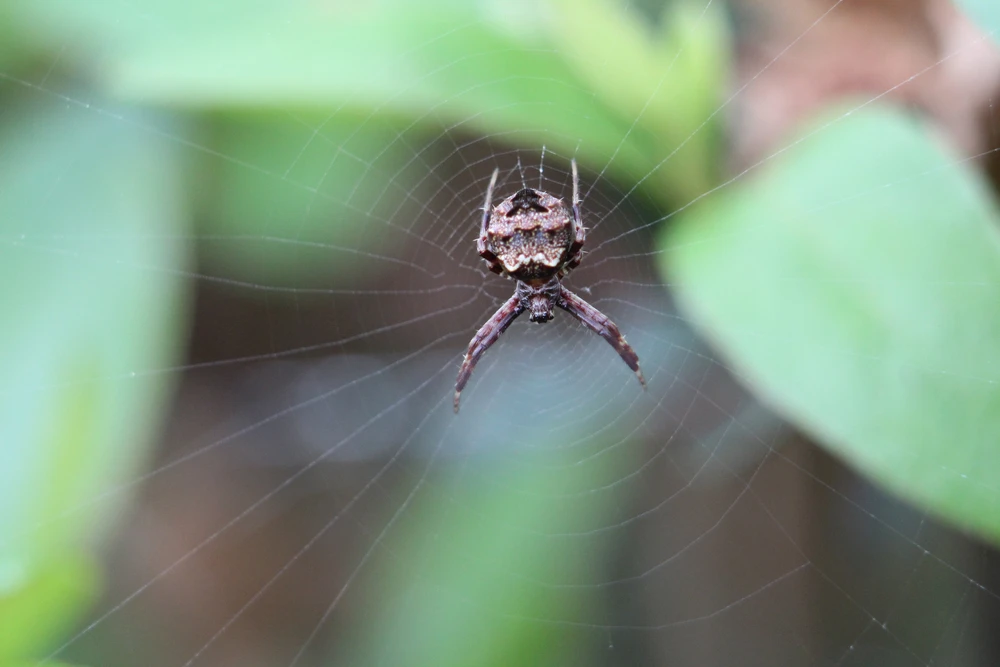
- Acacesia hamata or Typical Orb Weaver
- Gorse Orb Weaver
Biggest Spiders in Cayman Islands
- Cayman Tarantula
- Female Golden Orb Weaver
- Golden Silk Orb Weaver
Most Venomous Spiders in the Cayman Islands
Sicariidae
Cobweb Spiders/Tangle Web Spiders (Theridiidae)
 Cobweb SpidersWidow (Latrodectus)A guide to the widow spiders (Latrodectus): how to identify the genus, the species you may meet, the gumfoot web, and how serious a widow bi
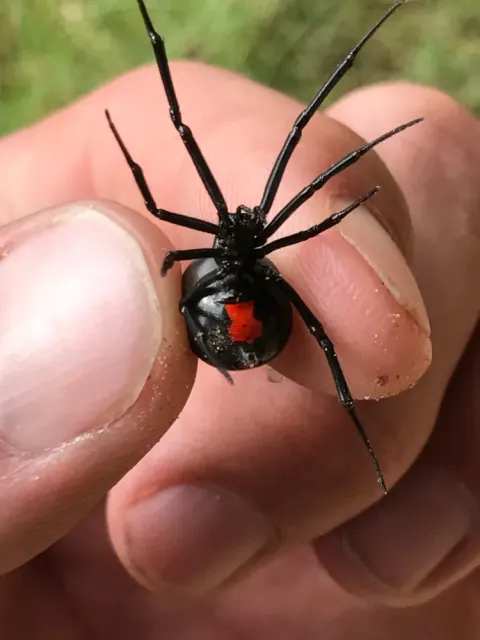 Cobweb SpidersSouthern Black Widow (Latrodectus mactans)Identify the southern black widow (Latrodectus mactans): the red hourglass, its tangled web, where it lives, and what a bite really does to
 Cobweb SpidersBrown Widow (Latrodectus geometricus)Identify the brown widow (Latrodectus geometricus) by its orange hourglass and spiky egg sac, and learn how its bite compares with a black w
Less Venomous Spiders in the Cayman Islands
Orb Weaver
 Orb WeaversGolden Silk Orb-Weaver (Nephila)Golden silk orb-weavers (Nephila): huge females, tiny males, giant golden webs, where they live, what they eat and whether their bite is dan
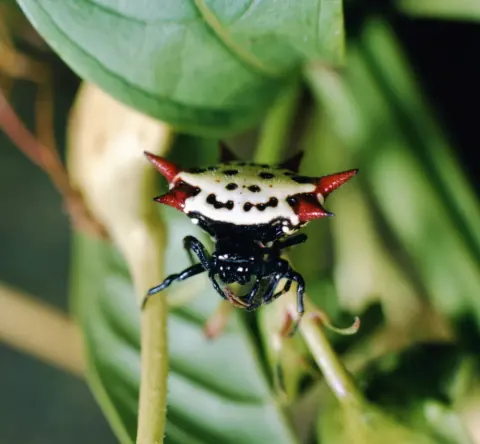 Orb WeaversSpinybacked Orbweaver (Gasteracantha cancriformis)Spinybacked orbweaver (Gasteracantha cancriformis) identification: six abdominal spines, colour forms, the silk-tufted web, range and whethe
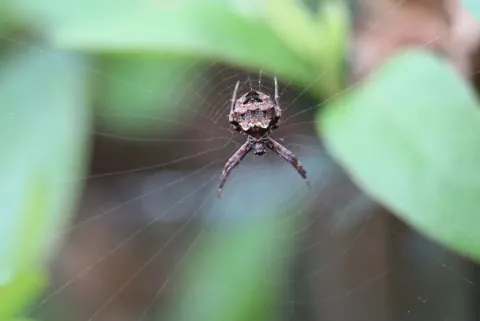 Orb WeaversStarbellied Orb-weaver (Acanthepeira stellata)Identify the starbellied orb-weaver (Acanthepeira stellata): the spiked star-shaped abdomen, size, its grassland orb web, range and whether
Funnel Weaver (Agelenidae)
Orb WeaversStarbellied Orb-weaver (Acanthepeira stellata)Identify the starbellied orb-weaver (Acanthepeira stellata): the spiked star-shaped abdomen, size, its grassland orb web, range and whether 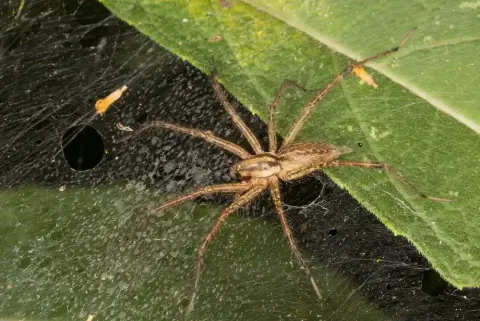 Funnel Weaver SpidersGrass Spider (Agelenopsis)Identify American grass spiders (Agelenopsis): eyes in three rows, long spinnerets, the sheet-and-funnel lawn web, and whether a grass spide
Living with Cayman's spiders
The risk here is low enough that spraying is rarely justified. These spiders eat mosquitoes, midges, roaches and moths, and clearing a web simply invites another spider into the same corner.
- Wear gloves for garden furniture, meter boxes, hoses, pot rims and anything stored outside; that is where widows sit.
- Knock down widow webs and their spiky egg sacs with a stick and dispose of the sacs rather than leaving them on the ground.
- Shake out shoes, towels and beach bags left outdoors overnight.
- Leave orb webs in the garden alone through the wet season. A single large golden silk orb-weaver removes a remarkable number of mosquitoes.
For the wider Caribbean picture, the lists for Jamaica, Cuba and the Dominican Republic overlap heavily with Cayman's, and our round-up of the world's most venomous spiders puts island widows in context.
Frequently asked questions
Are the spiders in the Cayman Islands dangerous?
Almost none of them. Widow spiders are the only group on the islands with medically significant venom, and the brown widow is the one usually involved. Its bite causes local pain and sometimes cramping, and hospital care resolves it. Every other Cayman spider, including the tarantula, causes no more than a sore spot.
What is the biggest spider in the Cayman Islands?
The island tarantula, a dark, heavy, ground-dwelling spider that shelters in burrows and limestone crevices in the dry forest. Female golden silk orb-weavers look larger because of their leg span, but the tarantula is far bulkier. Neither is aggressive, and neither has venom that is dangerous to people.
Are there brown recluse spiders in the Cayman Islands?
No. The brown recluse is a spider of the central and southern United States, and no recluse population is established in the Cayman Islands. Necrotic sores blamed on recluses here are usually bacterial skin infections, insect bites or other medical conditions, and they should be assessed by a doctor rather than self-diagnosed.
What are the most common house spiders in the Cayman Islands?
Cobweb spiders in porch and ceiling corners, cellar spiders in bathrooms and laundry rooms, and jumping spiders on sunlit walls and screens. Outside the door, small orb-weavers build in hedges and garden plants. All of them are harmless and all of them feed on the mosquitoes and roaches people want gone.
How dangerous is the golden silk orb-weaver in Cayman?
Not dangerous. Despite the size of the female and her large yellow-tinted web, this spider is extremely reluctant to bite and normally drops out of the web when disturbed. On the rare occasions it does bite, the result is brief local pain and redness comparable to a bee sting, with no lasting effects.
Does the Cayman Islands have tarantulas?
Yes. A dark ground-dwelling tarantula lives in burrows and rock cavities in the dry shrubland of the islands and is sometimes seen crossing roads at night after rain. It is not aggressive, its venom is medically insignificant, and its main defence is to retreat into cover rather than to bite.
How do I recognise a brown widow?
Look for a tan to dark grey spider with faint banded legs, a bright orange hourglass on the underside of the abdomen and a globular body. The clinching feature is the egg sac: brown widows build a pale sac covered in short silk spikes, unlike the smooth sacs of every other local spider.
What should you do if a spider bites you in the Cayman Islands?
Wash the bite with soap and water, apply a cold pack and keep the area still. Photograph the spider if it is safe to do so. Go to the hospital immediately if cramping pain spreads from the bite, or if there is sweating, vomiting or chest tightness, and for any bite on a young child.
When are spiders most active in the Cayman Islands?
During the May to November wet season, when insect numbers peak and female orb-weavers reach full size. Webs are largest from late summer into early autumn. Tropical storms temporarily strip webs and drive ground spiders indoors for a few days, which is when most reports of spiders inside houses arrive.
Published December 17, 2023 · Last updated September 14, 2026