
Spiders in Panama
Panama is the land bridge between two continents, and its spider fauna is correspondingly rich. Only three groups are medically significant here: widow spiders around buildings, recluses in stored material, and wandering spiders in the warm lowlands. The tarantulas, huntsman spiders, bromeliad spiders and enormous golden silk orb-weavers that alarm visitors are all harmless.

On this page
- What spiders live in Panama?
- Which spiders in Panama are dangerous?
- The big spiders that are not dangerous
- Where you actually meet them
- Spider season in Panama
- Misidentifications and species that are not here
- Common Spiders in Panama
- Biggest Spiders in Panama
- Most Venomous Spiders in Panama
- Less Venomous Spiders in Panama
- Living with Panama's spiders
- Frequently asked questions
What spiders live in Panama?
Panama is the isthmus that joins North and South America, and its arachnid list reads like both continents poured into one narrow country. Lowland rainforest on both slopes, cloud forest along the cordillera in Chiriquí, the drier Azuero savannas and the mangrove-and-concrete edge of Panama City each hold a different community. Barro Colorado Island is one of the most intensively surveyed tropical arthropod sites anywhere.

Almost everything visitors notice is harmless. Female golden silk orb-weavers hang in tall, yellow-tinted webs across forest gaps; arrow-shaped micrathenas and arrowhead orb-weavers stretch small, surprisingly strong webs across trails at face height; tropical orb-weavers rebuild on porch lights every evening. By day the hunters take over: green lynx spiders ambush bees on flower heads, while gray wall jumping spiders and the metallic emerald jumping spider stalk across walls and leaves in full sun.
Which spiders in Panama are dangerous?
Widow spiders
Widow spiders in the genus Latrodectus are the group people meet most often around buildings. They sit in messy, strong tangle webs under garden furniture, inside meter boxes, woodpiles and outbuildings, and the females carry the familiar red or orange marking on a glossy abdomen. A bite gives cramping pain that spreads from the limb into the abdomen and back, with sweating and a racing heart. It responds to pain control, and Latin American anti-latrodectus serum exists for severe cases. Deaths are very rare.

Recluses
Here the original list needs a correction. The brown recluse itself, Loxosceles reclusa, is a spider of the central and southern United States and does not live in Panama. Other members of the same genus do occur in the region, indoors and in stored material, and their bite can produce a slowly enlarging, painful sore that sometimes ulcerates. Cases are uncommon, but a suspected recluse bite needs a clinic rather than home treatment.
Wandering spiders
The species of greatest medical importance in the warm lowlands is Phoneutria boliviensis, a large nocturnal hunter that builds no capture web and lifts its front legs in an unmistakable warning posture when cornered. Despite the headlines, most wandering spider bites cause intense local pain and swelling that settle with analgesia and a few hours of observation; serious envenomation is uncommon and mainly affects small children. Brazilian anti-arachnid serum is the regional product for the genus.
Bitten? Wash the site with soap and water, apply a cold pack, keep the limb still and get to a clinic; photograph the spider if you can do it safely. Go immediately if cramps spread, if there is sweating, vomiting or a racing heart, or if a child was bitten. Never cut, suck, burn or tourniquet a bite.
The big spiders that are not dangerous
Panama's tarantulas are the animals people photograph and worry about, and not one of them is medically significant. The Panama blonde, Psalmopoeus pulcher, is a slender, fast arboreal species; ground-dwellers line road cuttings and forest banks with silk-rimmed burrows and sit at the entrance after dark. Like other New World tarantulas they defend themselves by flicking barbed urticating hairs, which itch badly on skin and are painful in the eyes, so the rule is to look and never handle.
The pantropical huntsman, Heteropoda venatoria, is the big flat spider that sprints across a hotel wall. Huntsman spiders have no venom of medical importance and are efficient cockroach hunters. The bromeliad or banana spiders of the genus Cupiennius, including the spot-legged and red-thighed species listed above, are the most misidentified spiders in the country: large, long-legged and nocturnal like Phoneutria, but not dangerous to people.
Where you actually meet them
In and around buildings
Indoors the cast is dull and harmless: cellar spiders on ceilings, small cobweb spiders in corners, jumping spiders on window frames and a huntsman behind the furniture. Our guide to house spiders covers that group. Widows take the outdoor margins, which is why gloves matter more than insecticide when you move stacked timber or a meter box lid.
Gardens, plantations and trail edges
Green lynx spiders sit on flower heads and orb-weavers rebuild across paths every evening. Banana and plantain plots and their packing sheds are where wandering spiders and people genuinely overlap, so most local bites happen at work rather than on holiday.
Forest and bromeliads
Away from settlements the diversity is enormous: tank bromeliads hold specialists in their water-filled leaf axils, and tarantulas and trapdoor spiders burrow in banks and leaf litter.
Spider season in Panama
There is no winter here, so the calendar is written by rain. The dry season runs from mid-December to April on the Pacific side and thins webs noticeably; the rainy season from May to December is when insect numbers climb and female orb-weavers reach full size. The Caribbean slope stays wet most of the year.
Heavy rain floods leaf litter, burrows and plantation debris and pushes ground hunters, wandering spiders included, into sheds, crates and houses for a day or two. Male tarantulas also walk in the open looking for females during and after the wettest months.
Misidentifications and species that are not here
The word "banana spider" causes more confusion here than any other. Locally it means a Phoneutria or a Cupiennius; in North American usage it means a harmless golden silk orb-weaver. Ask what the spider was doing rather than what it was called: a big spider hanging in a web is not a wandering spider.
Two animals reported as dangerous spiders are not spiders at all. Tailless whip scorpions, common on cave walls and behind shutters, look alarming but have no venom glands whatsoever. Harvestmen, abundant in leaf litter, have a single fused body and no silk. And the Goliath birdeater, regularly attributed to Panama online, is a species of the Guiana Shield in northern South America; Panama's big tarantulas belong to other genera. Our round-up of the most venomous spiders puts the real risks in global context.
Common Spiders in Panama
- Pretty Orb Weaver (Eriophora nephiloides)
- Spot-legged Bromeliad Spider (Cupiennius getazi)
Biggest Spiders in Panama
- Red-thighed Bromeliad Spider (Cupiennius coccineus)
- Female Pantropical Huntsman Spider (Heteropoda venatoria)
- Amazon Thorn Spider (Micrathena schreibersi)
Most Venomous Spiders in Panama
Cobweb Spiders/Tangle Web Spiders (Theridiidae)

Sicariidae
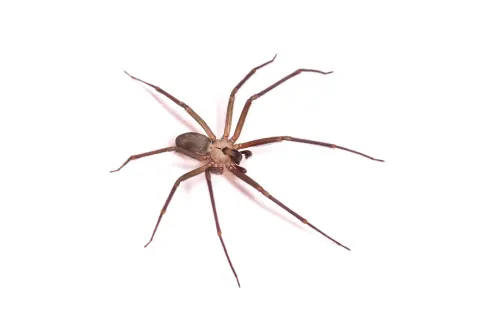
Less Venomous Spiders in Panama
Jumping Spiders
 Jumping SpidersGray Wall Jumping (Menemerus bivittatus)Identify the gray wall jumping spider (Menemerus bivittatus): size, the flattened grey-haired body, its walls-and-tree-trunks habitat, and w
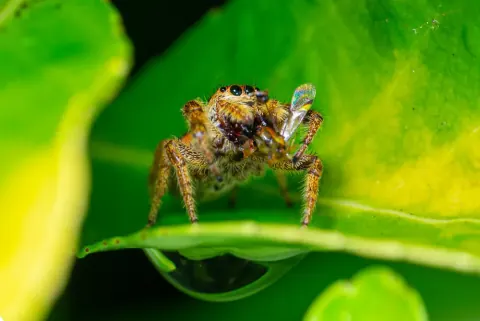 Jumping SpidersEmerald Jumping Spider (Paraphidippus aurantius)Identify the emerald jumping spider (Paraphidippus aurantius): its iridescent green scales, real size, range from the USA to Panama, and whe
Lynx (Oxyopidae)
Jumping SpidersGray Wall Jumping (Menemerus bivittatus)Identify the gray wall jumping spider (Menemerus bivittatus): size, the flattened grey-haired body, its walls-and-tree-trunks habitat, and w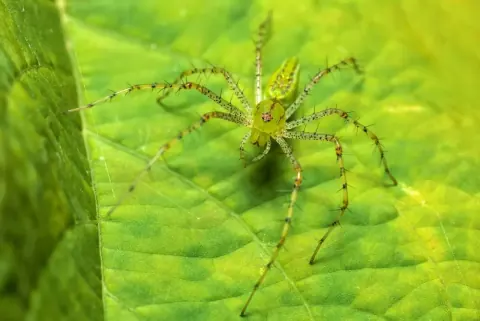 Lynx SpidersGreen Lynx (Peucetia viridans)Identify the green lynx spider (Peucetia viridans): bright green body, spined legs, orange eggs, where it lives and whether its bite is dang
Orb-weaver (Araneidae)
Jumping SpidersGray Wall Jumping (Menemerus bivittatus)Identify the gray wall jumping spider (Menemerus bivittatus): size, the flattened grey-haired body, its walls-and-tree-trunks habitat, and w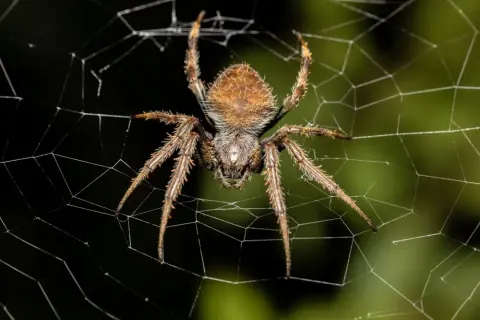 Orb WeaversTropical Orb-weaver (Eriophora ravilla)Identify the tropical orb-weaver (Eriophora ravilla): size, colour forms, the huge orb it builds and eats each night, its Gulf Coast range a
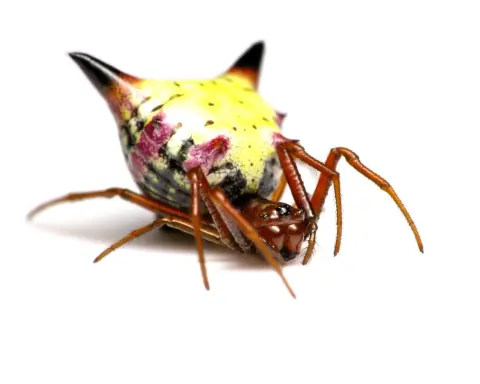 Orb WeaversArrow-shaped Micrathena (Micrathena sagittata)Identify the arrow-shaped micrathena (Micrathena sagittata): the yellow arrowhead abdomen, its two long rear spines, web, range, season and
 Orb WeaversGolden Silk Orb-Weaver (Nephila)Golden silk orb-weavers (Nephila): huge females, tiny males, giant golden webs, where they live, what they eat and whether their bite is dan
Cobweb Spiders/Tangle Web Spiders (Theridiidae)
Orb WeaversGolden Silk Orb-Weaver (Nephila)Golden silk orb-weavers (Nephila): huge females, tiny males, giant golden webs, where they live, what they eat and whether their bite is dan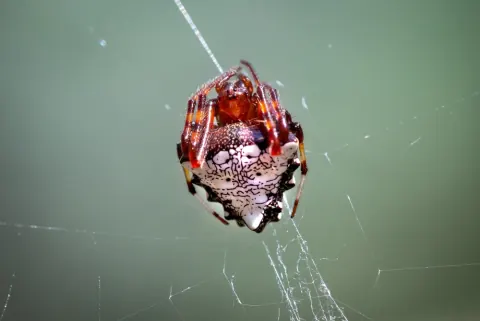 Orb WeaversArrowhead (Verrucosa arenata)Identify the arrowhead orb weaver (Verrucosa arenata): the white triangle, its head-up posture in the web, range, habitat and whether the bi
Living with Panama's spiders
The risk is low and a few habits cover it. Fogging a house or garden achieves little and removes the animals that eat mosquitoes and cockroaches.
- Shake out boots, shoes, clothing and bedding, especially in the lowlands and after heavy rain.
- Wear gloves for firewood, crates, banana bunches, stored timber and garden furniture.
- Carry a torch on paths after dark, when ground hunters are active.
- Never handle a tarantula; the urticating hairs cause far more trouble than the fangs.
- Hold a stick ahead of you at face height on forest trails to clear orb webs without destroying the spider.
- Repair screens, seal gaps under doors and keep vegetation off exterior walls.
Neighbouring Costa Rica shares almost the same species list.
Frequently asked questions
What are the most common spiders in Panama?
Orb-weavers dominate what people see: golden silk orb-weavers in forest gaps, tropical orb-weavers on porch lights and micrathenas across trails. Around houses you meet cellar spiders, cobweb spiders and jumping spiders, and in gardens the green lynx spider on flower heads. All of these are harmless to people.
Are there dangerous venomous spiders in Panama?
Yes, but only three groups. Widow spiders live around buildings and give a painful, cramping bite. Recluses in the genus Loxosceles can cause a slowly ulcerating sore. Phoneutria boliviensis, a lowland wandering spider, causes intense local pain. Everything else you are likely to meet, tarantulas included, is not medically significant.
Are there brown recluse spiders in Panama?
Not the North American brown recluse, Loxosceles reclusa, which lives in the central and southern United States. Other recluse species in the same genus do occur in the region, usually indoors or in stored material. Their bites are uncommon but can leave a slow-healing wound, so any suspected bite needs medical assessment.
What is the biggest spider in Panama?
Tarantulas have the greatest body mass, while the pantropical huntsman has one of the widest leg spans, reaching roughly twelve centimetres. The red-thighed bromeliad spider and large female golden silk orb-weavers also look enormous. None of these species is dangerous, however impressive the size.
Are Panamanian tarantulas dangerous to humans?
No. No tarantula in Panama has venom of medical significance. Their defence is to flick barbed urticating hairs from the abdomen, which itch on skin and are painful in the eyes, or simply to retreat into the burrow. A bite hurts because the fangs are large, not because the venom is potent.
How do you recognise a Panama blonde tarantula?
Psalmopoeus pulcher is slender and long-legged compared with ground-dwelling tarantulas, with a pale golden sheen that is brightest just after a moult. It is arboreal and fast, living in silk retreats in trees and buildings rather than in burrows. It lacks urticating hairs but will bite defensively if handled.
Why does Panama have so many spider species?
Because it is a biological land bridge. North and South American faunas meet along the isthmus, and a narrow country packs in Caribbean and Pacific rainforest, cloud forest, dry savanna and mangrove within a couple of hours' drive. That range of habitats, plus a wet tropical climate, supports enormous arthropod diversity.
Is the spot-legged bromeliad spider dangerous?
No. Cupiennius getazi and its relatives are large, nocturnal, web-free hunters that look very much like the medically important Phoneutria, which is why they are constantly confused with it. Their venom is not significant to humans. They live on bromeliads, banana plants and low vegetation and hunt insects.
What should you do if a black widow bites you in Panama?
Wash the bite, apply a cold pack, keep the limb still and go to a clinic. Widow venom causes cramping pain that spreads to the abdomen and back, with sweating and agitation. Pain relief handles most cases and anti-latrodectus serum is available regionally for severe ones. Do not cut or tourniquet the wound.
When are spiders most visible in Panama?
Through the rainy season from May to December, when insects are abundant and female orb-weavers reach full size, so trail-edge webs are at their largest late in the year. Heavy downpours briefly drive ground hunters indoors, and male tarantulas wander in the open during and after the wettest months.
Published September 4, 2023 · Last updated September 14, 2026