
Spiders in Melbourne
Melbourne's cool-temperate climate gives it a smaller spider list than subtropical Australia, and only one species here is a common cause of medically significant bites: the redback. Huntsmen, black house spiders and white-tails account for most indoor encounters, and none of them is dangerous.

On this page
- What spiders live in Melbourne?
- Which Melbourne spiders are actually dangerous?
- Two Melbourne spiders with an unearned reputation
- Where you meet them in Melbourne
- Spider season in Melbourne
- Common Spiders in Melbourne
- Biggest Spiders in Melbourne
- Most Dangerous Spiders in Melbourne
- Most Venomous Spiders in Melbourne
- Less Venomous Spiders in Melbourne
- Living with spiders in Melbourne
- Frequently asked questions
What spiders live in Melbourne?
Melbourne has a cool-temperate, oceanic climate with mild wet winters and warm, comparatively dry summers — a very different setting from the subtropical east coast, and one that supports a shorter, more predictable list of spiders. Web builders around buildings, ground-hunting wolf spiders in lawns and parkland and huntsmen under bark dominate, while the wetter ranges to the east hold species that never reach the inner suburbs.

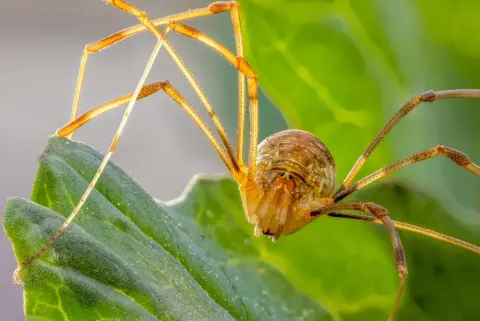
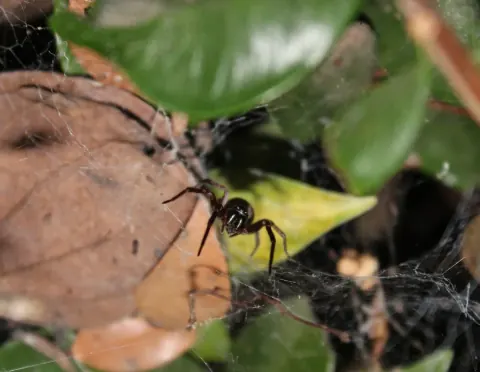
The spiders residents actually see are few in number. The black house spider and the paler grey house spider fill window frames, fence posts and brickwork with untidy funnel-shaped lace. The long-bodied cellar spider hangs beneath eaves, in garages and behind laundry doors. The white-tailed spider is a wandering night hunter that specialises in eating other spiders and so is drawn into houses where house spiders live. Garden wolf spiders patrol open ground and carry their spiderlings on their backs, and the flat, socially living Avondale or flat huntsman shelters in colonies under loose bark.
Which Melbourne spiders are actually dangerous?
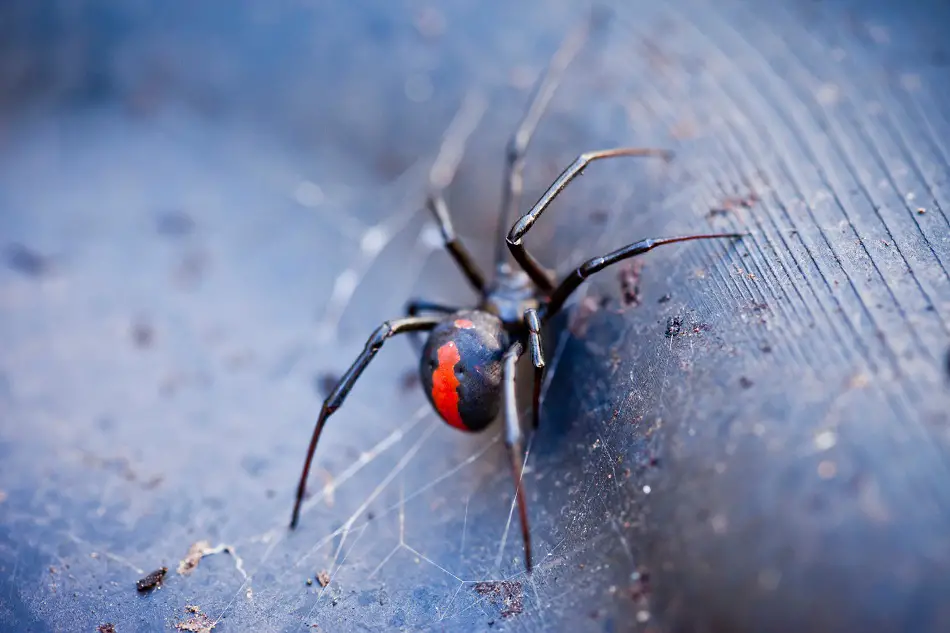
One species accounts for nearly all medically significant bites in the city: the redback. Females are glossy black, pea-shaped and about a centimetre long, with a red or orange stripe on top of the abdomen, and they thrive in exactly the dry sheltered spaces a suburb provides — the underside of garden furniture, meter boxes, letterboxes, the rims of pot plants and the corners of sheds. A bite produces burning pain that spreads over hours, with sweating, nausea and restlessness. Antivenom has existed since 1956 and no confirmed Australian death has followed a redback bite since, but the pain warrants a hospital assessment.
The funnel-web question is more nuanced here than headlines suggest. The Victorian funnel-web, a Hadronyche species, lives in the damp gullies of the Dandenong Ranges and the forested country east of the city rather than in suburban gardens, and confirmed severe envenomations are very rare. It is still a member of the family for which antivenom exists, so a bite is treated as an emergency. The red-headed mouse spider, genus Missulena, also occurs in Victoria and responds to the same antivenom; wandering males in autumn are the ones usually found.
Bitten by a large, glossy black spider with downward-pointing fangs? Apply a pressure-immobilisation bandage over the bite and up the whole limb, splint it, keep the person still and call 000. For a redback bite do the opposite — no bandage, a cold pack instead, and go to a hospital, because the venom acts slowly and the problem is pain.
Two Melbourne spiders with an unearned reputation
The black house spider is routinely listed among Melbourne's most dangerous spiders. It is not. Its bite is genuinely painful and can bring on sweating or brief nausea, but there is no antivenom because none is needed, and no lasting harm has ever been documented. The spider is also strongly sedentary, sitting in its funnel retreat and only biting a finger pushed into the web.

The white-tailed spider carries the heavier myth. A prospective Australian study that followed 130 confirmed white-tail bites recorded local pain, a red mark and sometimes itching, and not a single case of the necrotic ulcer the species is blamed for. Skin ulcers attributed to it almost always turn out to be bacterial infections, vascular disease or other dermatological conditions. Wash a white-tail bite, use a cold pack, and see a doctor only if it becomes infected.
Huntsman spiders round out the list: large, flat and fast, they arrive indoors chasing insects and cause alarm out of proportion to a bite that is a shallow puncture with brief local pain. The tropical lichen huntsman sometimes attached to Melbourne lists does not occur here at all; the genuinely big local species is the flat huntsman, genus Delena, which lives in colonies of dozens under a single slab of bark.
Where you meet them in Melbourne
Around the house
Window frames, weep-holes, fence posts and the underside of decking hold house spiders; garages and bathrooms hold cellar spiders; huntsmen turn up behind curtains, on ceilings and — memorably — on car sun visors. None of these needs action beyond a broom or a container.
Sheds, garages and the neglected corners
This is the redback zone. Anything dry, dark and undisturbed for a season is a candidate: stacked pots, the barbecue cover, the letterbox, the wheelie bin rim, the underside of a garden bench. Wearing gloves for that work removes most of the risk in a single step.
Parks, gardens and the ranges
Wolf spiders hunt on open lawns and creek lines and are easiest to find by torchlight, their eyes reflecting back as green points. In the wetter hills east of the city, trapdoor spiders and the Victorian funnel-web live in burrows under logs and leaf litter, where humidity stays high all year.
Spider season in Melbourne
Melbourne's spider year is sharply seasonal. Activity climbs through spring, peaks between December and March, and falls away through the cold, wet winter when most orb-weavers have died and only the sheltered web builders remain visible. The late-summer surge has nothing to do with an invasion: spiderlings hatched in spring have finally grown large enough to notice, and adult males abandon their retreats to walk in search of females.
Two weather patterns drive the encounters people remember: hot northerly days push huntsmen and wandering males into cooler buildings, and heavy rain floods burrows, bringing wolf spiders and mouse spiders to the surface. That is why the spider on the hallway floor usually turns up after a change in the weather.
Common Spiders in Melbourne
- Black House Spider
- Garden Wolf Spider
- Long Bodied Cellar Spider
Biggest Spiders in Melbourne
- Flat Huntsman Spider
- Lichen Huntsman Spider
Most Dangerous Spiders in Melbourne
Most Venomous Spiders in Melbourne
Comb-Footed Spiders
Huntsman Spiders
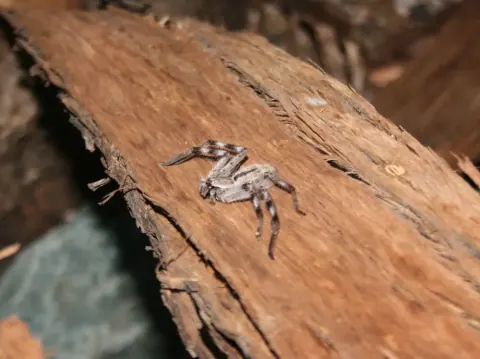
House Spiders
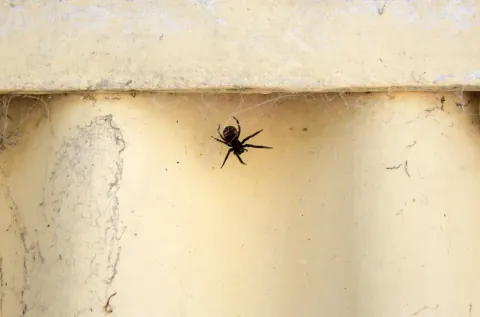
White‐Tailed Spiders

Less Venomous Spiders in Melbourne
Cellar Spiders
House Spiders
Living with spiders in Melbourne
The practical goal is to avoid the handful of places where bites actually happen, not to clear the garden of spiders that are quietly removing flies and mosquitoes:
- Wear gloves when gardening, moving pots, handling firewood or tidying the shed.
- Check under outdoor furniture, letterbox rims and bin handles before grabbing them, especially after a dry spell.
- Shake out shoes, gloves and clothing left in a garage or on a line overnight.
- Keep a pressure-immobilisation bandage in the first-aid kit and know it is for funnel-web and mouse spider bites only.
- Guide huntsmen outside with a container rather than killing them — they hunt cockroaches for free.
- Seal gaps around doors and vents if indoor webs bother you; it is more effective and more durable than spraying.
For any bite other than a suspected funnel-web or mouse spider, wash the site, apply a cold pack, take a simple painkiller and watch it for a day. The surrounding state fauna is covered in the guide to spiders in Victoria, with a closely related list across Bass Strait in Tasmania. See also the family pages for huntsman spiders and wolf spiders, and the wider roundup of the most venomous spiders.
Frequently asked questions
What are the most common spiders in Melbourne homes?
Black house spiders and grey house spiders in window frames and brickwork, long-bodied cellar spiders in garages and bathrooms, huntsman spiders that wander in chasing insects, and white-tailed spiders hunting the house spiders at night. All four are harmless. Between them they account for the large majority of indoor spider sightings across the city.
Which Melbourne spider is genuinely dangerous?
The redback. It is common in sheds, letterboxes and under garden furniture, and its bite causes severe spreading pain with sweating and nausea. Antivenom has been available since 1956 and no confirmed Australian death has followed a redback bite since. The Victorian funnel-web and the red-headed mouse spider are significant but very rarely encountered.
Are funnel-web spiders found in Melbourne?
The Victorian funnel-web lives in the damp forested gullies east and south of the city, including the Dandenong Ranges, rather than in suburban gardens. Confirmed severe bites are very rare and it is less aggressive than its Sydney relative. Any bite from a large glossy black spider should still be treated as an emergency.
Do white-tailed spider bites cause skin ulcers?
No. A prospective study of 130 confirmed white-tail bites found local pain, a red mark and occasional itching, with no cases of necrosis. Ulcers blamed on the species almost always prove to be bacterial infections or other skin disease. Clean the bite, apply a cold pack, and see a doctor only if it becomes infected.
What is the biggest spider in Melbourne?
The flat huntsman, Delena cancerides, with a legspan of roughly twelve centimetres. It is unusual among spiders for living in social colonies of dozens under a single piece of loose bark. The tropical lichen huntsman that appears on some Melbourne lists is a north Queensland rainforest species and does not occur here.
Are huntsman spiders dangerous to humans?
No. Huntsman bites are shallow punctures that cause brief local pain and swelling and occasionally a headache, with no lasting effect. Their size and speed make them frightening indoors, especially inside a car, but they have no medically significant venom and they are efficient predators of cockroaches and moths.
Why do I see more spiders in Melbourne in summer?
Spiderlings hatched in spring reach adult size by midsummer, and mature males stop sitting in their retreats and start walking to find females. Warm weather also multiplies flying insects. Hot northerly days push huntsmen indoors toward shade, and heavy rain floods burrows and brings ground hunters to the surface.
Is the black house spider dangerous?
No, despite appearing on lists of Melbourne's most dangerous spiders. Its bite is painful and can cause sweating or brief nausea, but it produces no lasting harm and no antivenom exists because none is required. The spider is sedentary and bites only when a finger is pushed into its funnel retreat.
What should I do if a spider bites me in Melbourne?
If the spider was large, glossy black and burrowing in type, use a pressure-immobilisation bandage over the bite and the whole limb, splint it, stay still and call 000. For a redback, use a cold pack rather than a bandage and go to hospital. For anything else, wash, cool and monitor the site.
Are there redbacks in Melbourne gardens?
Yes, and they are common. Redbacks prefer dry, sheltered, undisturbed spots close to people, which in Melbourne means sheds, meter boxes, letterboxes, stacked pots and the underside of outdoor furniture. They almost never enter living areas. Wearing gloves for garden and shed work prevents the great majority of bites.
Published April 26, 2022 · Last updated September 14, 2026