
Spiders in Barbados
Barbados has no deadly spider. The island carries a modest, largely pantropical fauna: tent-web and silver garden orb-weavers in the hedges, huntsman and cellar spiders indoors, jumping spiders on sunlit blockwork, and the introduced brown widow in dry rubble and garden clutter. The dramatic names that circulate on Barbados spider lists, from funnel-webs to mouse spiders, belong to Australia and have never lived here.

On this page
- What spiders live in Barbados?
- What most Barbados spider lists get wrong
- Are any Barbados spiders dangerous?
- Where you meet them in Barbados
- Is there a spider season in Barbados?
- Look-alikes and things that are not spiders
- Common Spiders in Barbados
- Biggest Spiders in Barbados
- Most Venomous Spiders in Barbados
- Less Venomous Spiders in Barbados
- Living with spiders in Barbados
- Frequently asked questions
What spiders live in Barbados?
Barbados is a low coral-limestone island on the eastern rim of the Caribbean, and its spider fauna matches that geography. With no rainforest and no recent land bridge to a continent, it carries a modest species list rather than the hundreds recorded in Trinidad or Guyana, and most of it is pantropical stock that arrived with ships, timber and potted plants.

That means wheel-web builders along garden edges and cane margins, colonial tent-web spiders draping hedges in grey scaffolding silk, flat huntsman spiders on walls after dark, cellar spiders in bathroom corners and jumping spiders on sunlit blockwork. One species is worth learning by sight, and it is not any of the giants: the brown widow, Latrodectus geometricus, common across the Caribbean and living exactly where people put their hands.
What most Barbados spider lists get wrong
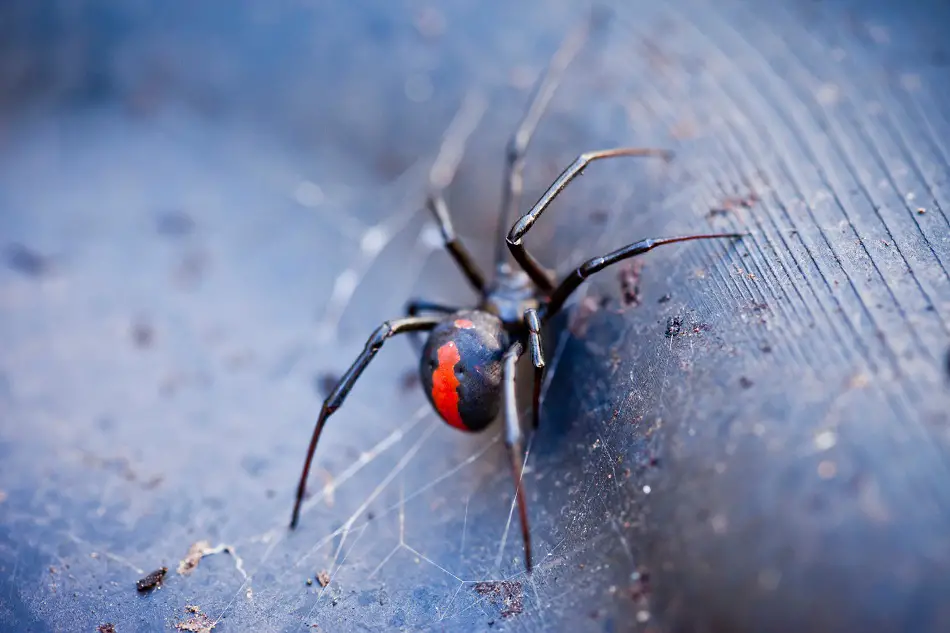
Nearly every Barbados spider list online, including the article this page replaces, is assembled from Australian species. The redback, the northern tree funnel-web, the white-tailed spider, the black house spider Badumna insignis, the trapdoor spider Misgolas rapax and the red-headed mouse spider Missulena occatoria all live in eastern and southern Australia and have no population here. Australian funnel-webs belong to the family Atracidae, which is absent from the Americas, so the claim that a highly venomous funnel-web waits in Barbadian gardens is simply false.
Two other entries are misplaced. The king baboon tarantula is an East African burrower. The St Andrew's cross spider is Australasian; the Caribbean spider that draws the same bold X of zig-zag silk is the harmless silver garden orbweaver, Argiope argentata. Phalangium opilio is not a spider at all but a harvestman, with one fused body, no silk glands and no venom.
Treat the cards below as a reference gallery rather than a Barbados checklist: of them, only the long-bodied cellar spider is genuinely common here.
Are any Barbados spiders dangerous?
No Barbadian spider can kill a healthy adult, and the island has no established recluse. Loxosceles occurs on parts of the Greater Antilles and arrives occasionally in cargo, but no breeding population is known here. A slow-healing ulcer in Barbados is far more likely to be a bacterial skin infection than a recluse bite, and calling it a spider bite delays the antibiotics that help.
The one species that deserves care is the brown widow: a small, round-bodied cobweb spider, tan to nearly black, mottled along the sides, with an hourglass on the underside that is orange rather than red. Its egg sac is the giveaway, a pale ball covered in blunt silk spikes unlike the smooth sacs of other cobweb spiders. The venom is potent in the laboratory, but the spider is timid and injects little, so bites usually give sharp local pain and a cramping ache that settles within a day or two.
Everything else here is painful at worst: a huntsman can pinch, an orb-weaver almost never bites, and no Barbadian spider has tissue-damaging venom. Nothing on our most venomous spiders shortlist lives on the island.
Bitten? Wash with soap and water, hold a cold pack on the site and keep the limb still. Photograph the spider if you safely can. Go to a polyclinic or emergency department for spreading cramps, sweating or vomiting, for any bite on a small child, or if the skin turns hot and weeping after two days, which signals infection rather than venom.
Where you meet them in Barbados
In and around the house
Cellar spiders own the still corners of bathrooms and store rooms, shaking their webs into a blur when disturbed. Huntsman spiders are the flat, fast animals that appear on a bedroom wall at night, and the velvety crevice weaver known regionally as the southern house spider packs wall cracks with ragged silk; its long-legged wandering males are the ones most often mistaken for recluses. Our house spiders guide covers the indoor group.
Gardens, cane and gully
Hedges, bougainvillea and citrus carry the heaviest traffic. Tent-web spiders build colonies of overlapping sheets that can smother a hedge, and spinybacked orb-weavers sit like enamelled shells between branches. The wooded gullies are cooler and damper than the cane and hold the richest fauna, including large orb-weavers that rebuild across the path nightly.
Coast, rock and ruins
On the dry east and south coast, spiders shelter from salt spray under coral rock, old walls and beach vegetation. This is brown widow country, along with wolf spiders whose eyes reflect torchlight on open sand; chattel-house undersides, disused sheds and stacked blocks are the classic widow sites.
Is there a spider season in Barbados?
Not in the sense a temperate country means it. Barbados is warm all year, so spiders breed continuously and nothing overwinters or moves indoors in autumn. What changes is insect abundance. The wet season from roughly June to November brings mosquitoes, moths and flying ants; webs grow larger and orb-weavers reach adult size, which is when people notice heavy silk across gateways and gully paths.
The dry season from December to May reverses it: prey grows scarce and spiders concentrate around irrigated gardens, tanks and lit verandas. After heavy rain, ground-living species are flooded out of rubble and turn up indoors for a few days, and that short pulse is the closest thing the island has to a spider season.
Look-alikes and things that are not spiders
Several Barbadian arachnids get reported as dangerous spiders. Harvestmen have a single oval body, no waist, no silk and no venom glands, and cannot bite a person. Whip spiders, the flat amblypygids that sit motionless on gully rock with two enormously long feeler legs, look alarming and are equally harmless.
Among true spiders the confusion is usually with the brown widow: wandering male crevice weavers, immature cobweb spiders and small wolf spiders all get named as widows or recluses on sight. The reliable checks are the underside hourglass and the spiky egg sac, since body colour ranges from cream to almost black and tells you nothing.
Common Spiders in Barbados
- Common House Spiders
- Garden Orb-Weaving Spider
- Harvestman Spider (Phalangium Opilio)
Biggest Spiders in Barbados
- Black House Spiders (Badumna insignis)
- Trap Door Spider (Misgolas rapax)
Most Venomous Spiders in Barbados
Funnel Web Spiders
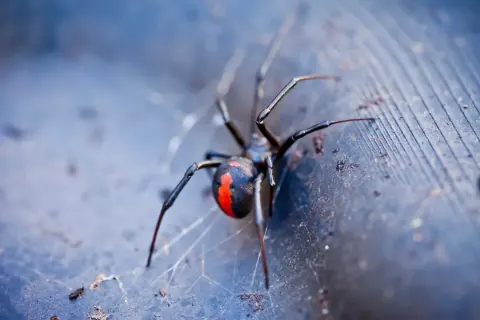 Cobweb SpidersRedback Spider (Latrodectus hasseltii)Identify the redback spider (Latrodectus hasseltii): the female's red stripe, the gum-footed web, where it lives, and how dangerous its bite
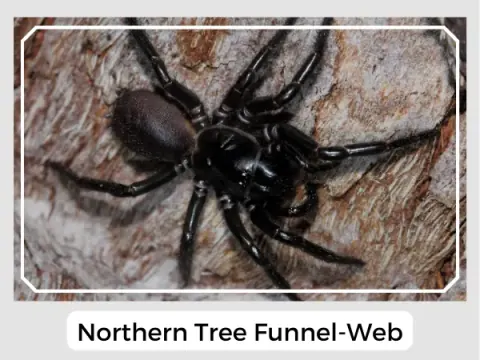 Australian Funnel-Web SpidersNorthern Tree Funnel-web (Hadronyche formidabilis)Identify the northern tree funnel-web (Hadronyche formidabilis): Australia's largest funnel-web, its tree hollows, venom and bite first aid.
Cobweb Spiders/Tangle Web Spiders (Theridiidae)
White-Tailed Spider (Lamponidae)

Less Venomous Spiders in Barbados
Cellar Spiders
 TarantulasKing Baboon Tarantula (Pelinobius muticus)Identify the king baboon tarantula (Pelinobius muticus): rusty colour, deep burrows, its warning hiss, and why an Old World bite hurts far m
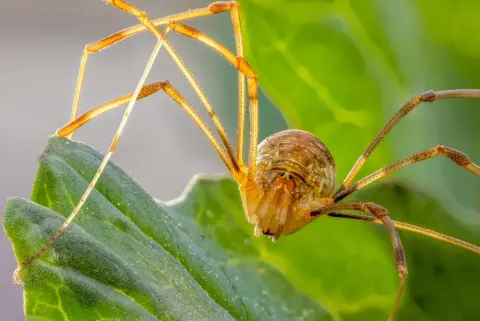 Cellar SpidersLong Bodied Cellar (Pholcus phalangioides)Identify the long-bodied cellar spider (Pholcus phalangioides): size, legs, web and eggs, plus the truth about the daddy-long-legs venom myt
Orb-Weaver Spiders
TarantulasKing Baboon Tarantula (Pelinobius muticus)Identify the king baboon tarantula (Pelinobius muticus): rusty colour, deep burrows, its warning hiss, and why an Old World bite hurts far m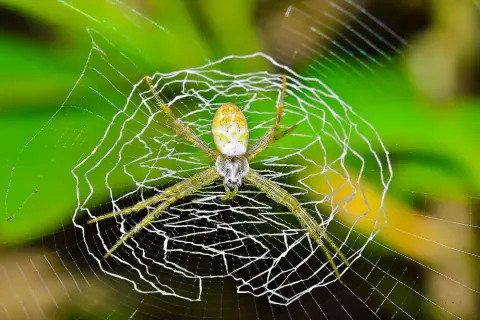 Orb WeaversSt. Andrews Cross (Argiope keyserlingi)Identify the St. Andrews cross spider (Argiope keyserlingi): size, colours, the X-shaped web decoration, where it lives and whether its bite
Living with spiders in Barbados
The island's spiders are unpaid mosquito and moth control. Clearing a corner achieves nothing durable, because the insects that drew the spider there remain.
- Wear gloves when moving stacked blocks, timber, plant pots and garden furniture, which is where brown widows actually live.
- Shake out shoes, beach bags and folded outdoor cushions that have stood unused.
- Brush webs off the undersides of chairs, railings and meter boxes monthly rather than spraying, and widows will not settle.
- Screen louvres and fit door brushes: that cuts the insects first and the spiders second.
- Leave gully and hedge webs alone; they belong to species that never enter buildings.
For the wider region see Jamaica and Puerto Rico, while Australia is where the funnel-webs and mouse spiders of the old Barbados list really belong. To see what all that silk is for, read how spider webs work.
Frequently asked questions
Are there any dangerous spiders in Barbados?
Not in the life-threatening sense. The only species of medical interest is the introduced brown widow, whose bite causes local pain, redness and a cramping ache that usually settles within a day or two. Funnel-webs and mouse spiders, which older lists name for Barbados, are Australian and do not occur anywhere on the island.
Is there a funnel-web spider in Barbados?
No. Australian funnel-webs belong to the family Atracidae, which lives only in eastern Australia and occurs nowhere in the Americas. Barbadian spiders sometimes called funnel-webs are harmless funnel weavers or crevice weavers that build a sheet of silk with a tube retreat, a web shape many unrelated families share.
Are there brown recluse spiders in Barbados?
There is no established recluse population in Barbados. Recluses occur on parts of the Greater Antilles and occasionally arrive in cargo, but they do not breed here. A slowly worsening sore is far more likely to be a bacterial skin infection, an infected insect bite or a burn, and should be shown to a doctor rather than blamed on a spider.
What is the most common spider inside Barbadian houses?
Long-bodied cellar spiders take most ceiling and bathroom corners, and are the harmless long-legged spiders people see daily. Huntsman spiders are the large flat ones that appear on walls at night, and the velvety crevice weaver known as the southern house spider fills wall cracks with ragged silk. All three are harmless to people.
How do I identify a brown widow in Barbados?
Look for a round-bodied cobweb spider with an hourglass on the underside that is orange rather than red, and mottled banding along the sides. The clearest sign is the egg sac: a pale ball covered in blunt silk spikes. Check the undersides of garden furniture, plant-pot rims, meter boxes and stacked timber.
What spider builds large circular webs in Barbadian gardens?
Orb-weavers do. The silver garden orbweaver hangs head-down in the middle with its legs paired into an X above a bold zig-zag of silk, and spinybacked orb-weavers look like small enamelled shells on webs between branches. Both are non-aggressive, rarely bite and remove large numbers of flying insects.
Are white-tailed spiders found in Barbados?
No. White-tailed spiders are Australian members of the family Lamponidae and have no population in Barbados. The claim that their bite causes flesh-destroying ulcers was tested in a large Australian clinical study and not supported; those wounds are bacterial infections. Neither the spider nor the ulcer story applies here.
What is the biggest spider in Barbados?
The pantropical huntsman is the biggest spider most people meet, a flat, fast wall-hunter with a legspan approaching ten centimetres. It looks alarming, runs rather than fights, and its bite amounts to a short-lived sting. Barbados has no giant burrowing tarantula comparable to those of mainland South America.
Do trapdoor spiders live in Barbados?
Not the species usually listed. Misgolas rapax is an Australian trapdoor spider and does not occur here. Burrowing spiders with silk-lined tubes do exist in Caribbean soils, but they are reclusive, rarely seen above ground and of no medical importance to people.
When are spiders most visible in Barbados?
During the wet season, roughly June to November, when insect numbers rise and orb-weavers reach adult size, so webs get larger and more obvious. Spiders breed all year in the island's warm climate. Short bursts of indoor sightings also follow heavy rain, when ground-living species are flooded out of rubble and leaf litter.
Published November 30, 2023 · Last updated September 14, 2026