
Spiders in Maldives
The Maldives has no spider whose bite is medically significant. The big flat hunter on a villa wall at night is a pantropical huntsman, harmless despite its size, and the striking webs in resort gardens belong to signature orb-weavers. The only widow that might reach the atolls is the introduced brown widow, whose bite is usually a local reaction rather than a serious envenomation.

On this page
- What spiders live in the Maldives?
- Are any Maldivian spiders dangerous?
- Where you meet them in the Maldives
- When spiders are most obvious on the atolls
- Chart species that do not live here, and other look-alikes
- Common Spiders in Maldives
- Biggest Spiders in Maldives
- Most Venomous Spiders in the Maldives
- Less Venomous Spiders in the Maldives
- Living with spiders on a coral island
- Frequently asked questions
What spiders live in the Maldives?
The Maldives is a chain of roughly 1,190 low coral islands scattered across the equatorial Indian Ocean, and hardly any of it rises more than two metres above the sea. There are no rivers, no hills and no forest interior — only beach crest, coconut and screwpine scrub, a little mangrove and a great deal of built environment. Every land animal arrived on the wind, on driftwood or in cargo, so the spider fauna is small, tropical, and made up largely of wide-ranging species shared with Sri Lanka, southern India and the coasts of East Africa.

The animal most visitors actually meet is a huntsman. The pantropical Heteropoda venatoria, a flat, tan, palm-sized member of the genus Heteropoda, sits head-down on a wall after dark and has slipped behind a mirror by breakfast. It builds no web at all; it runs down cockroaches, crickets and the occasional gecko, which is why it likes kitchens and open-sided villas.
Outdoors, the silk belongs to orb-weavers. Argiope females — chiefly the Indian Ocean signature spider Argiope anasuja — hang head-down at the centre of a wheel marked with a bold white zigzag, strung between hibiscus, sea lettuce and garden fencing, while tent-web spiders throw dense horizontal sheets over shrubs. Closer to people, jumping spiders such as Plexippus paykulli patrol sunlit walls, lynx spiders perch on flower heads, and the long-bodied cellar spider hangs in bathrooms and store rooms.
Are any Maldivian spiders dangerous?
No. There is no spider in the Maldives with venom of real medical significance, and that is the most useful fact on this page. It contradicts the older travel advice that black widows and "brown huntsman spiders" make the atolls risky. No true black widow is established on the islands, and the huntsman's reputation is borrowed from its size rather than earned by its venom.

The only Latrodectus worth naming here is the brown widow, Latrodectus geometricus, a tramp species moved around the tropics in cargo and nursery plants and now recorded on islands right across the Indian Ocean. If a widow does turn up in a Maldivian garden or harbour yard it will almost certainly be this one — mottled tan to charcoal, with an orange hourglass beneath and a spiky, golf-ball-textured egg sac. Its bite generally produces pain, redness and cramping around the site rather than the body-wide syndrome caused by its Mediterranean and American relatives.
The pantropical huntsman can pinch if trapped against skin, and because its fangs are large the pinch stings for a few minutes. There is no tissue damage and no systemic reaction. Everything else you are likely to see — the orb-weavers, the jumping spiders, the lynx spiders on the bougainvillea, the cellar spiders in the shower room — is harmless. For the global picture, see our round-up of the most venomous spiders; none of them lives on these atolls.
Bitten? Wash the site with soap and water, apply something cold and keep still. Photograph the spider if you can do it safely. Speak to the resort doctor or go to the nearest health centre if cramping pain spreads away from the bite, if sweating or vomiting follow, or for any bite on a small child. Do not cut, suck or burn the wound.
Where you meet them in the Maldives
Villas and open-air bathrooms
Maldivian rooms are warm and often deliberately open to the outside, so a certain amount of wildlife is part of the design. Huntsmen cross walls at night, cellar spiders take the damp corners of garden showers, and small jumping spiders hunt on sunlit window frames and terrace rails. Our guide to house spiders covers the same cast worldwide.
Gardens, coconut palms and beach scrub
This is where the webs are. Signature spiders and tent-web spiders build between garden shrubs and along fence lines, lynx spiders ambush bees on flowering plants, and the litter under coconut palms and screwpine holds small ground hunters nobody notices.
Uninhabited islands and mangrove
The least disturbed islands carry the largest webs, because nobody clears them. Mangrove edges and the scrub behind the beach crest are the best places to see a full-sized orb web with its owner in the middle.
When spiders are most obvious on the atolls
There is no winter here to shut anything down. The Maldives sits close to the equator and spiders breed all year, so what changes through the calendar is visibility rather than abundance.
The southwest monsoon from roughly May to November brings rain, wind and a surge of flying insects, and that is when garden webs are largest and most obvious. The drier northeast monsoon from December to April is calmer, webs last longer and stay cleaner, and the hunters become more noticeable indoors as they move out of the heat. Huntsmen appear inside all year; the difference between a quiet month and a busy one is usually how much insect life the island's lighting has drawn in.
Chart species that do not live here, and other look-alikes
Several of the spiders on the old identification chart below are not Maldivian at all, and it is worth saying so plainly. The Avondale spider is an Australasian social huntsman; Phonognatha leaf-curling orb-weavers are Australian; the star-bellied orb-weaver is North American; and the goldenrod crab spider belongs to cool northern grassland. Treat them as stand-ins for the family, not as residents: the huntsman on your wall is Heteropoda, the ambusher on a Maldivian flower is a tropical crab spider, and the big garden wheel web is an Argiope.

Two other confusions come up constantly. Harvestmen — long-legged, single-bodied, with no silk and no venom — are not spiders and cannot bite. Nor are the small brown scorpions that turn up under coconut husks on some islands; they sting rather than bite, and are unpleasant rather than dangerous.
Common Spiders in Maldives
- Black Widows
- Brown Huntsman Spider
- Pantropical jumping spider
- Lynx spiders
- Signature spiders
- Orb weaver spiders
Biggest Spiders in Maldives
- Giant Crab Spider in the family Sparassidae
- Daddy long legs (Long-Bodied Cellar Spider)
- Giant Banded Huntsman Spider (Holconia immanis)
Most Venomous Spiders in the Maldives
Cobweb spiders

Crab Spider
 Orb WeaversPhonognathaA guide to Phonognatha, the leaf-curling orb weavers of Australia: the curled-leaf retreat, the open-sector web, the four species and the ha
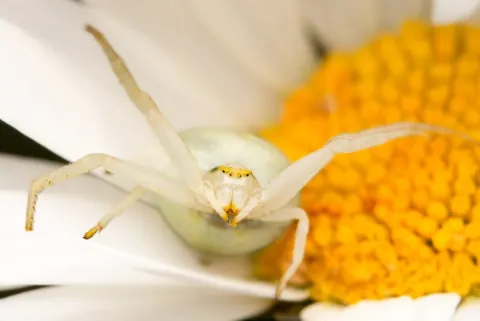 Crab SpidersGoldenrod Crab (Misumena vatia)Identify the goldenrod crab spider (Misumena vatia): size, the red abdominal streaks, how the female changes colour, where it lives and whet
Cellar Spiders
Orb WeaversPhonognathaA guide to Phonognatha, the leaf-curling orb weavers of Australia: the curled-leaf retreat, the open-sector web, the four species and the ha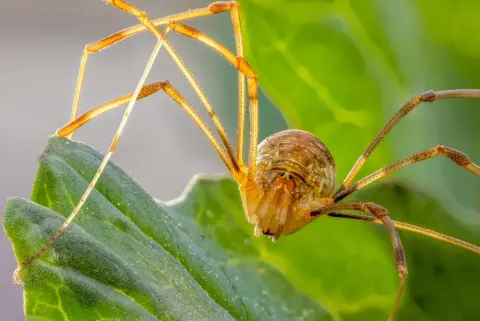 Cellar SpidersLong Bodied Cellar (Pholcus phalangioides)Identify the long-bodied cellar spider (Pholcus phalangioides): size, legs, web and eggs, plus the truth about the daddy-long-legs venom myt
Giant Crab Spiders/Huntsman Spiders
Orb WeaversPhonognathaA guide to Phonognatha, the leaf-curling orb weavers of Australia: the curled-leaf retreat, the open-sector web, the four species and the ha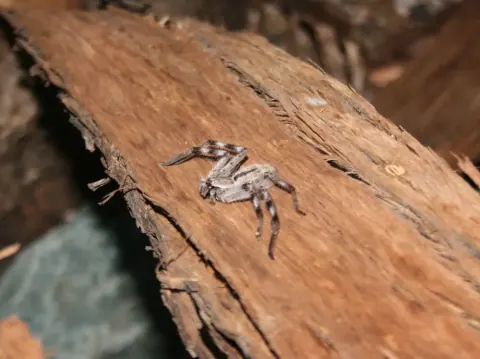 Huntsman SpidersAvondale (Delena cancerides)Identify the Avondale spider (Delena cancerides): its flat body, huge leg span, life in bark colonies, range in Australia and New Zealand, a
Less Venomous Spiders in the Maldives
Orb-weaver spider (family Araneidae)
Orb WeaversPhonognathaA guide to Phonognatha, the leaf-curling orb weavers of Australia: the curled-leaf retreat, the open-sector web, the four species and the ha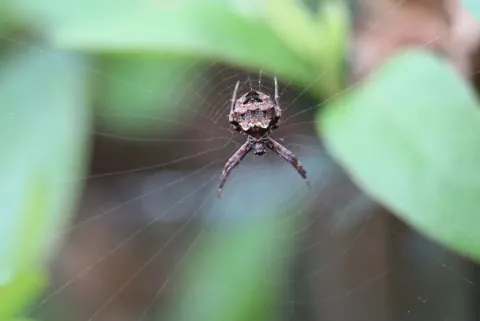 Orb WeaversStarbellied Orb-weaver (Acanthepeira stellata)Identify the starbellied orb-weaver (Acanthepeira stellata): the spiked star-shaped abdomen, size, its grassland orb web, range and whether
Living with spiders on a coral island
On an island the size of a football pitch, spiders are doing useful work. A single huntsman patrolling a kitchen removes more cockroaches than any spray, and a garden orb web takes mosquitoes out of the evening air. Nothing about the Maldivian fauna justifies treating a room with insecticide.
- Shake out shoes, beach bags and folded towels left on a terrace overnight.
- Move an indoor spider with a glass and a sheet of card rather than a shoe — a huntsman will run for the nearest gap on its own if you open a door.
- Wear gloves around coconut husks, timber and stacked building materials in harbour yards, the one setting where an introduced brown widow could be sitting.
- Repair window screens instead of spraying; that keeps out the insects the spiders follow.
Our guide to spider webs explains why a signature spider builds that zigzag into the middle of its wheel.
Frequently asked questions
Are there poisonous spiders in the Maldives?
No spider is poisonous — poison is swallowed, venom is injected — and no Maldivian spider has venom that matters medically. The islands have no established black widow, no recluse and no funnel-web. The largest spider you will see, the pantropical huntsman, is harmless, and orb-weavers and jumping spiders pose no risk at all.
What is the biggest spider found in the Maldives?
The pantropical huntsman, Heteropoda venatoria, with a legspan that can approach the width of a hand. It is flat, tan and extremely fast, and it hunts on walls at night rather than building a web. Large female orb-weavers in undisturbed vegetation can look bigger because of their webs, but their bodies are smaller.
Is the brown huntsman spider in the Maldives dangerous?
No. Its venom has no significant effect on people. Because the fangs are large, a defensive pinch can sting for a few minutes and leave two small marks, but there is no tissue damage and no systemic illness. Huntsmen are shy, quick to run and far more interested in cockroaches than in humans.
Are there black widows in the Maldives?
There is no established population of a true black widow on the atolls. The only widow that could realistically appear is the introduced brown widow, Latrodectus geometricus, a tramp species carried around the tropics in cargo and plants. Its bite usually causes local pain and cramping rather than the severe syndrome of its relatives.
What are the most common spiders in the Maldives?
Pantropical huntsmen indoors, Plexippus paykulli jumping spiders on sunlit walls, signature orb-weavers and tent-web spiders in resort gardens, lynx spiders on flowering shrubs, and long-bodied cellar spiders in bathrooms and store rooms. All of them are harmless, and all of them feed on the insects that gather around island lighting.
Can you find spiders in Maldives resort rooms?
Yes, and that is normal on a tropical island where many rooms are open to the garden by design. A huntsman crossing a wall at night and a cellar spider in the corner of an open-air bathroom are the usual sightings. Neither is dangerous, and housekeeping will relocate anything you would rather not share a room with.
Do Maldivian spiders bite while you sleep?
Effectively never. Spiders have nothing to gain from biting something they cannot eat, and they avoid contact with sleeping people. Most marks blamed on night-time spider bites are insect bites, heat rash or minor skin infections. If a lesion spreads, becomes hot or discharges, it needs a doctor rather than a spider diagnosis.
Which spiders on the Maldives chart are not really found there?
The Avondale spider is Australasian, Phonognatha leaf-curling orb-weavers are Australian, the star-bellied orb-weaver is North American, and the goldenrod crab spider belongs to cool northern grassland. They stand in for their families on older charts. The local equivalents are Heteropoda, Argiope anasuja and tropical crab spiders.
When are spiders most active in the Maldives?
All year, because the equatorial climate never forces them into hiding. Webs are biggest and most obvious during the wet southwest monsoon from May to November, when flying insects peak. The drier months from December to April bring more indoor sightings as hunters move out of the heat into shaded buildings.
How do I keep spiders out of a Maldivian villa?
Keep window and door screens intact, reduce the outdoor lighting that draws the insects spiders follow, shake out shoes and bags left on a terrace, and wear gloves around stacked timber or coconut husks. Removing a spider does nothing long-term; removing its food supply and its entry points does.
Published July 30, 2023 · Last updated September 14, 2026