
Spiders in Oman
Oman has two spiders worth knowing about medically — the widow spiders of the genus Latrodectus, which sit in low tangle webs in outdoor clutter, and the Mediterranean recluse that lives quietly inside old buildings. Everything else, from the fast huntsman on a majlis wall to the lobed argiope in a garden hedge, is harmless. The camel spiders that frighten visitors most are not spiders at all, and the real arachnid risk in Oman is a scorpion.

On this page
- What spiders live in Oman?
- Which spiders in Oman are actually dangerous?
- Camel spiders and scorpions: the things that are not spiders
- Where you meet them in Oman
- Spider season in Oman
- Common Spiders in Oman
- Biggest Spiders in Oman
- Most Venomous Spiders in Oman
- Less Venomous Spiders in Oman
- Species wrongly listed for Oman, and living with the rest
- Frequently asked questions
What spiders live in Oman?
Oman packs several climates into one country. The Hajar mountains behind Muscat catch enough winter rain to fill wadis with oleander and date palm; the Wahiba Sands and interior gravel plains are true desert; the Batinah coast is irrigated farmland; and Dhofar, in the far south, is drenched every summer by the khareef monsoon and turns into green misty hill country unlike anywhere else in Arabia. Each supports a different set of spiders, and Dhofar in particular holds species with African rather than Arabian affinities.
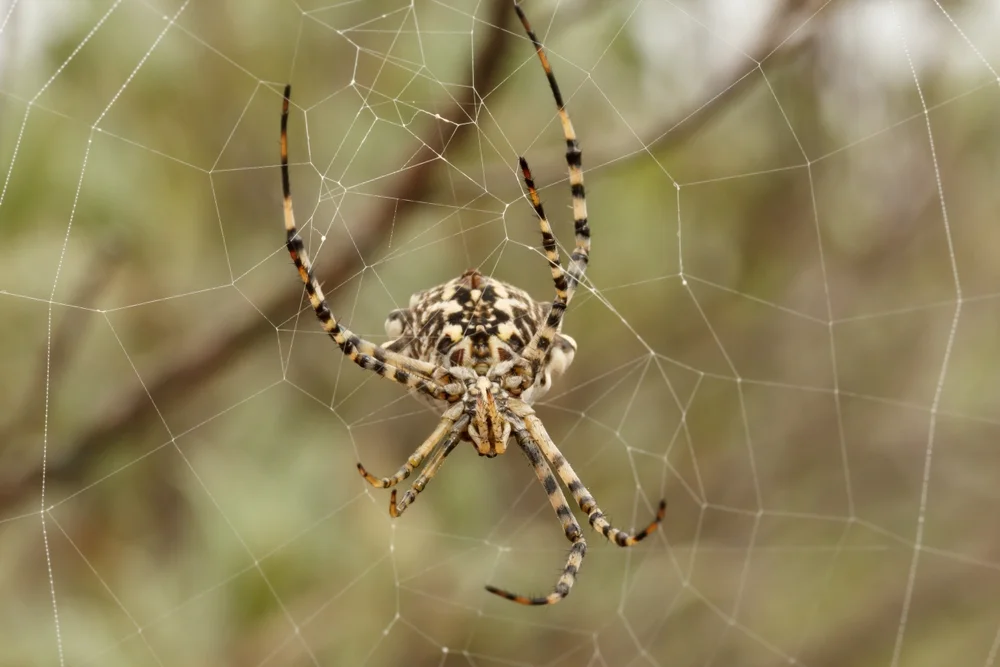
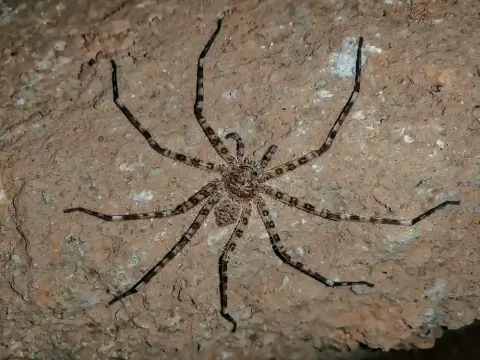
Most of what you see is a hunter rather than a web-builder, because permanent webs do not last in wind and blowing sand. Huntsman spiders of the genera Olios and Eusparassus are the big ones — flat, long-legged and startlingly fast, sheltering under rock and bark by day and crossing walls at night. Wolf spiders work the open gravel, and small jumping spiders such as Hasarius adansoni and Plexippus paykulli hunt on sunlit plaster.
Where there is shelter and irrigation you get webs. Orb-weavers hang wheel webs in gardens and along falaj channels: the lobe-edged Argiope lobata and the striped banded garden spider are the two most recognisable. Indoors, cellar spiders of the genus Crossopriza hang in every stairwell corner, and tangle-web spiders occupy the gaps behind furniture.
Which spiders in Oman are actually dangerous?
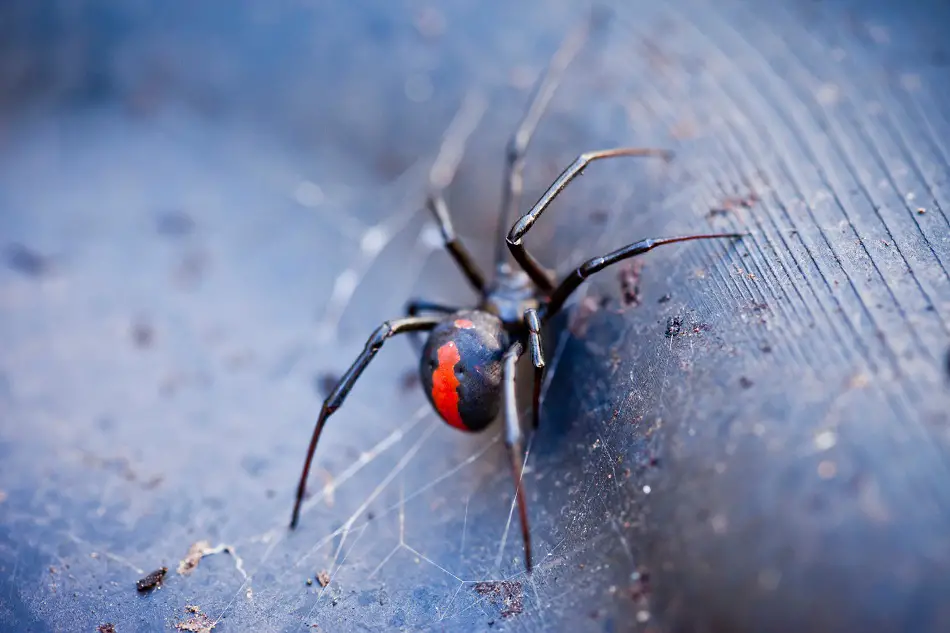
Two groups, and both are avoidable. First, widow spiders of the genus Latrodectus. Arabia's species include the pale Latrodectus pallidus, Latrodectus dahli and the cosmopolitan brown widow, Latrodectus geometricus; the Mediterranean black widow, Latrodectus tredecimguttatus, occurs across the wider region. All build untidy low tangle webs with sticky ground lines, in exactly the places people put their hands: under stacked blocks and pipes, inside irrigation boxes, beneath garden furniture and among rocks at the base of a wall.

A widow bite causes latrodectism — cramping pain that spreads from the bite into the abdomen, back and thighs, with sweating, nausea and restlessness. It is genuinely unpleasant and genuinely treatable, with pain relief and supportive care in hospital. Our guide to the world's most venomous spiders puts it in context.
Second, the Mediterranean recluse, Loxosceles rufescens, a small plain fawn spider with a violin mark and six eyes in three pairs. It lives inside buildings — behind skirting, in stored boxes, under rarely moved furniture. Bites are uncommon and most heal as an ordinary sore, but a minority form a slowly enlarging necrotic lesion needing proper wound care. Such sores are often bacterial instead, so let a doctor judge the wound.
Bitten? Wash the site with soap and water, apply a cold pack and keep the limb still and elevated. Photograph the spider if it is safe. Go to a hospital if cramping pain spreads from the bite, if sweating or vomiting follow, if the wound darkens over days, or for any bite on a young child. Do not cut, suck or burn the bite.
Camel spiders and scorpions: the things that are not spiders
No animal in Oman generates more alarm than the camel spider, and almost everything said about it is wrong. Camel spiders are solifuges, order Solifugae — a separate group of arachnids with enormous forward-facing jaws, ten apparent legs (the front pair are sensory pedipalps) and a habit of running toward your shadow because they want shade, not you. They have no venom glands at all. A large one can pinch hard enough to break skin, which hurts and can become infected, but there is nothing to envenomate you. They do not scream and they do not eat camels.
Scorpions are the arachnids that actually matter here. Oman has medically significant species including the fat-tailed Androctonus crassicauda and members of Hottentotta and Leiurus, and a sting deserves immediate hospital assessment, particularly in a child. If you check your boots in the desert, scorpions are the reason.
Where you meet them in Oman
Houses and villas
Air conditioning, tiled shade and outdoor lighting make Omani homes attractive. Cellar spiders occupy stairwells, huntsman spiders appear on walls after dark, and jumping spiders patrol sunlit windowsills. Our house spiders guide covers the group; a huntsman indoors is free cockroach control.
Gardens, farms and falaj
Date gardens, alfalfa plots and the shaded channels of a falaj are the richest habitat inland, holding the big orb webs and the crab spiders that ambush pollinators. Widows live at the edges of this — in stacked pipes and blockwork, not the flowerbed.
Desert, wadi and Dhofar
In the sands and gravel plains, spiders sit out the day in burrows and rock crevices and hunt at night. Dhofar during the khareef is the exception: cool, wet and green, with large orb-weavers slung between monsoon-fed trees.
Spider season in Oman
Heat drives the calendar. From November to April, when the interior is pleasant and winter rain has lifted insect numbers, spiders are active by day as well as night and webs are easiest to find. Through the furnace of June to September most species turn strictly nocturnal or retreat into burrows, walls and air-conditioned buildings — which is why huntsman sightings indoors peak in summer.
Dhofar runs on its own clock. The khareef, roughly June to September, brings fog and drizzle to the Salalah escarpment and triggers a green flush, an insect boom and the year's best web-building while the rest of the country bakes.
Common Spiders in Oman
- Common House Spider (Parasteatoda tepidariorum)
Biggest Spiders in Oman
- Giant Huntsman Spider (Heteropoda maxima)
Most Venomous Spiders in Oman
Cobweb Spiders/Tangle Web Spiders (Theridiidae)
 Cobweb SpidersFalse Black Widow (Steatoda grossa)Identify the false black widow (Steatoda grossa): size, colour, its gumfoot cobweb, how it differs from a true widow, and how bad the bite r
 Cobweb SpidersBrown Widow (Latrodectus geometricus)Identify the brown widow (Latrodectus geometricus) by its orange hourglass and spiky egg sac, and learn how its bite compares with a black w
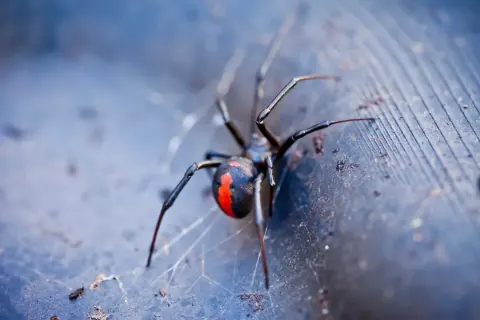 Cobweb SpidersRedback Spider (Latrodectus hasseltii)Identify the redback spider (Latrodectus hasseltii): the female's red stripe, the gum-footed web, where it lives, and how dangerous its bite
 Cobweb SpidersWidow (Latrodectus)A guide to the widow spiders (Latrodectus): how to identify the genus, the species you may meet, the gumfoot web, and how serious a widow bi
Desidae Spiders
Less Venomous Spiders in Oman
Orb Weavers
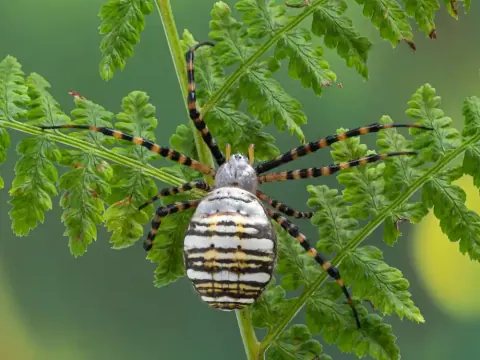 Orb WeaversBanded Garden (Argiope trifasciata)Identify the banded garden spider (Argiope trifasciata): silver banding, size, the zigzag in its web, egg sac, range, and whether its bite i
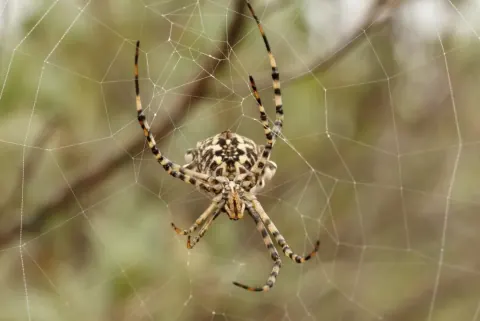 Orb WeaversLobed Argiope (Argiope lobata)Identify the lobed argiope (Argiope lobata): the scalloped silver abdomen, the big orb web, its range from Spain to South Africa, and how ha
Huntsman Spiders (Sparassidae Family)
Species wrongly listed for Oman, and living with the rest
Three names on older versions of this page belong to Australia or Southeast Asia. The redback, Latrodectus hasselti, is Australian; Oman's widows are the Arabian Latrodectus species listed above. The black house spider, Badumna insignis, is likewise an Australian species and not part of the Omani fauna. And the giant huntsman, Heteropoda maxima, is known only from caves in Laos — Oman's are Olios and Eusparassus, fast but nothing like that legspan.
Two more corrections. The false black widow, Steatoda, really does live in Omani buildings but is not medically significant: a cobweb spider whose bite causes brief local pain, mistaken for a true widow because of its glossy dark body. And there are no wandering spiders and no Australian funnel-webs anywhere in Arabia, whatever a forwarded message claims.
- Wear gloves and closed shoes when you move blockwork, pipes, crates or irrigation boxes that have stood untouched — that is widow habitat.
- Shake out shoes and clothing left on a floor, especially in older buildings where recluses may live.
- Leave the huntsman on the wall; it is eating cockroaches, and it will not chase you.
- Treat a camel spider as harmless and a scorpion as urgent — most people have that the wrong way round.
For comparison across the peninsula, see our guide to the spiders of Saudi Arabia.
Frequently asked questions
What is the most dangerous spider in Oman?
The widow spiders, Latrodectus. Arabian species include Latrodectus pallidus, L. dahli and the brown widow, all of which build low tangle webs in outdoor clutter. A bite causes latrodectism — cramping pain spreading from the bite with sweating and nausea — treated with pain relief and supportive care in hospital.
Are camel spiders in Oman venomous?
No. Camel spiders are solifuges, a separate order of arachnids, and they have no venom glands at all. A big one can pinch hard enough to break skin with its jaws, which hurts and can become infected, but there is nothing to envenomate you. They run toward your shadow seeking shade, not attacking.
What is the biggest spider in Oman?
A huntsman spider of the genus Olios or Eusparassus — flat, pale, long-legged and very fast, with a legspan that can cover a hand. They shelter under rock and bark by day and hunt on walls at night. They are not aggressive, and a bite is a painful pinch rather than a medical event.
Is the giant huntsman spider found in Oman?
No. Heteropoda maxima, the world record holder for legspan, is known only from caves in Laos. Oman's huntsman spiders belong to Olios and Eusparassus, which are large and startlingly quick but far smaller. Lists placing Heteropoda maxima in Arabia are repeating an error.
Are there recluse spiders in Oman?
Yes. The Mediterranean recluse, Loxosceles rufescens, lives inside older buildings — behind skirting, in stored boxes, under undisturbed furniture. It is small, plain fawn, with six eyes in three pairs. Bites are uncommon; most heal ordinarily, but a minority form a slowly enlarging necrotic sore that needs proper wound care.
Are redback spiders found in Oman?
No. The redback, Latrodectus hasselti, is Australian. Oman has its own widow spiders in the same genus, including the pale Latrodectus pallidus and the brown widow, which look different but cause the same kind of cramping envenomation. Any Omani record of a redback is a misidentification.
What are the most common spiders in Omani houses?
Long-legged cellar spiders of the genus Crossopriza in stairwells and bathroom corners, small jumping spiders such as Adanson's house jumper on sunlit sills, tangle-web spiders behind furniture, and huntsman spiders crossing walls after dark. None of these is dangerous, and all of them eat insects you would rather not have.
Where do orb weaver spiders live in Oman?
In gardens, date plantations, falaj channels and anywhere sheltered enough for a wheel web to survive the wind. The lobed argiope and the banded garden spider are the ones most often photographed, sitting head-down at the hub. In Dhofar's khareef season the webs get much larger and more numerous.
What should you do if a spider bites you in Oman?
Wash the site with soap and water, apply a cold pack and rest the limb. Photograph the spider only if it is safe. Seek hospital care if cramping pain spreads from the bite, if sweating or vomiting follow, if the wound darkens over several days, or for any bite on a young child.
Are huntsman spiders in Oman aggressive?
No. A huntsman's response to a person is to sprint away, usually sideways and behind the nearest object. Bites happen only when one is pinned against skin — under a sleeve or a towel — and amount to a sharp pinch with local soreness. They are useful predators of cockroaches indoors.
Published November 25, 2023 · Last updated September 14, 2026