
Spiders in Russia
Across a country spanning eleven time zones, exactly one spider is medically significant: the karakurt, Latrodectus tredecimguttatus, a widow of the dry southern steppe around Astrakhan, Volgograd, Rostov, Crimea and the North Caucasus. There are no established recluse spiders anywhere in Russia, and Siberia, the Urals and the Arctic north have no dangerous spiders at all. Everything else you meet — orb-weavers, crab spiders, jumping spiders, cellar spiders — is harmless.

On this page
- What spiders live in Russia?
- Which Russian spiders are actually dangerous?
- Where you meet them in Russia
- Spider season in Russia
- Look-alikes and species that do not live here
- Common Spiders in Russia
- Biggest Spiders in Russia
- Most Venomous Spiders in Russia
- Less Venomous Spiders in Russia
- Living with Russia's spiders
- Frequently asked questions
What spiders live in Russia?
Russia's spider fauna is a fauna of zones rather than of one country. Tundra and boreal taiga are dominated by tiny money spiders (Linyphiidae) and by wolf spiders working moss and litter through a brief, intense summer — the same cold-climate assemblage found in Finland. European Russia adds the familiar web-builders of temperate Europe; the southern steppe, the Caucasus foothills and Crimea hold a warm, Mediterranean-flavoured fauna of their own; and the Far East around Primorye brings in East Asian species found nowhere else in the country.

What most people actually see are orb-weavers: the cross orb-weaver on garden fences and dacha porches, the small cricket-bat orbweaver low in meadow grass, and the boldly striped wasp spider spreading north through abandoned farmland. Indoors the cast is the usual European one — long-bodied cellar spiders in bathrooms, cobweb spiders in ceiling corners, and a jumping spider or two on a sunny windowsill.
Two Russian species are worth travelling to see: Argyroneta aquatica, the diving bell spider, the only spider that lives its whole life underwater, breathing from a silk bubble anchored in still ponds; and the crimson-backed ladybird spider Eresus kollari, which burrows on warm southern slopes.
Which Russian spiders are actually dangerous?
One, and only in the south. The karakurt — Latrodectus tredecimguttatus, the Mediterranean black widow — is a matt-black widow that in Russian populations is often plain, with the red spots of Mediterranean specimens reduced or absent in adults. She builds a low, untidy tangle in rodent burrows, under stones, in tussock grass and beside irrigation ditches on dry steppe. Her core range runs through Astrakhan, Kalmykia, Volgograd, Rostov, Stavropol, Crimea and the North Caucasus, with outbreak years pushing records further north in long hot summers.
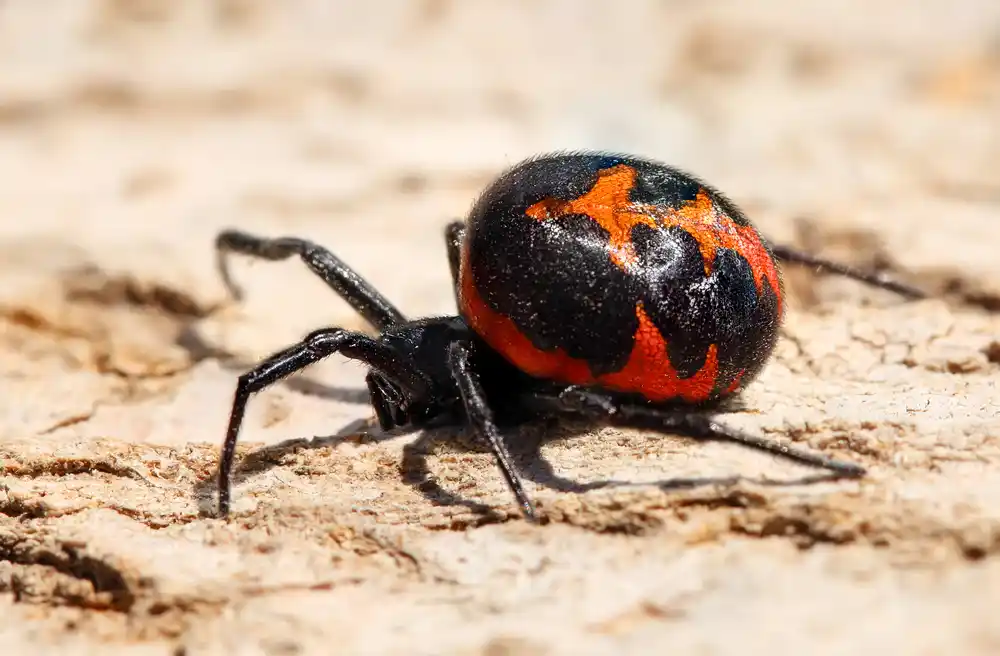
A karakurt bite is a real medical event. The pinprick is barely felt, then within an hour cramping pain spreads to the abdomen, back and thighs, with profuse sweating, nausea, a rigid belly wall and restlessness — the picture Russian clinicians know as latrodectism. It responds to analgesia and supportive care, with antivenom available in the southern regions. Almost every case involves someone sleeping on the ground, harvesting by hand, or moving hay and stones bare-handed.
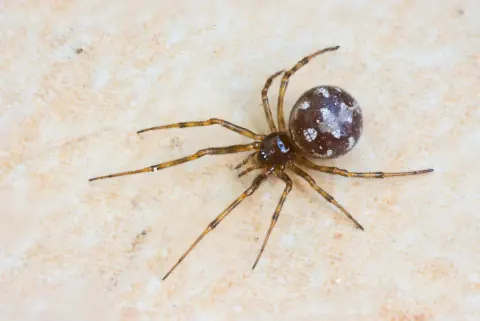
There is no established population of any recluse spider (Loxosceles) in Russia, so a slow-healing ulcer is not a recluse bite but far more likely a bacterial skin infection needing a doctor. Nor is the false black widow, Steatoda grossa, dangerous, despite appearing on the original list among the "most venomous": Steatoda bites cause local pain and sometimes brief malaise, and the same goes for its smaller relative the triangulate cobweb spider. North of the steppe belt — Siberia, the Urals, the taiga, the Arctic — the Russian fauna contributes nothing at all to any ranking of the most venomous spiders.
Bitten? Clean the site, cool it, rest the limb, and photograph the spider if that is safe. Ring 103 or get to hospital if the pain begins to travel, if the stomach wall stiffens, or if heavy sweating, vomiting or breathlessness follow — and for any child. Never cut, cauterise or suck a bite.
Where you meet them in Russia
Flats, dachas and cellars
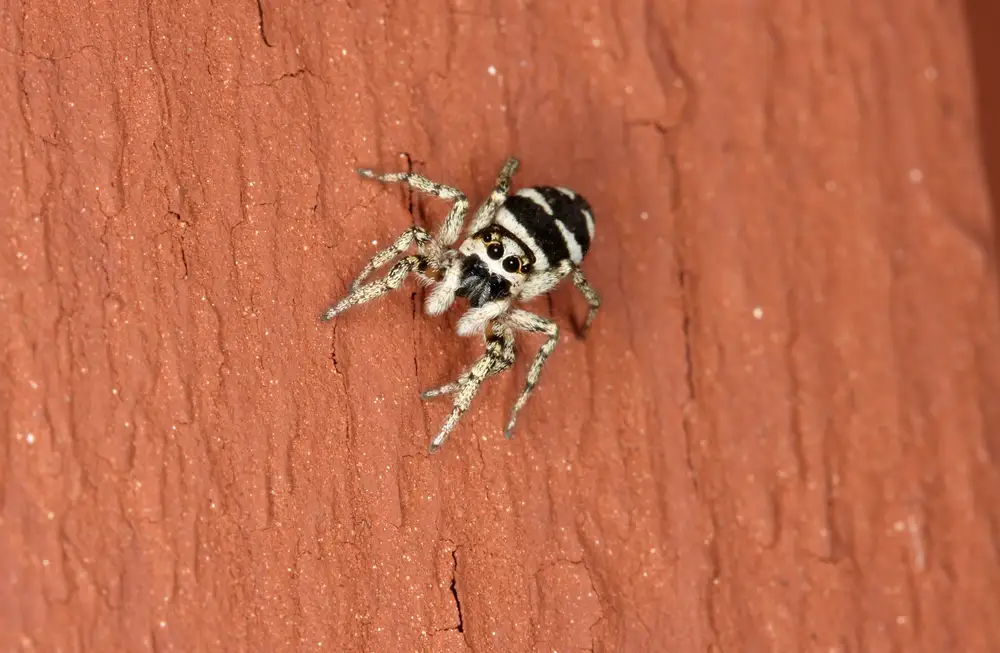
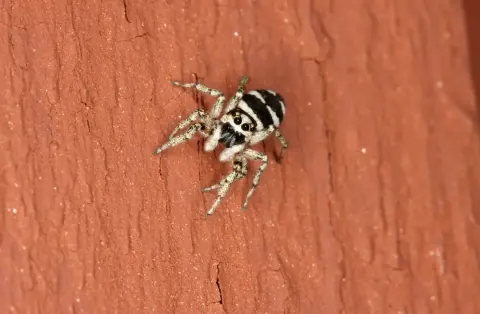
Russian buildings host few species but plenty of individuals. Cellar spiders take bathrooms, stairwells and garages, cobweb spiders the ceiling angles, and the zebra jumping spider patrols sunlit sills from spring onward — the same cast as in our guide to house spiders. None is a reason to spray.
Meadows, forest edge and dacha gardens
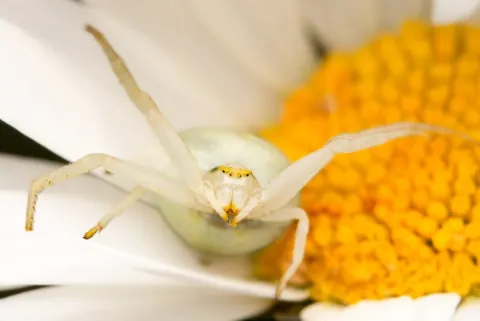
This is orb-weaver country from midsummer: wheel webs across paths, in fences and between raspberry canes, with crab spiders sitting motionless on umbellifer flowers and wolf spiders running the bare ground between beds.
Southern steppe and Crimea
The only landscape where care is needed. Karakurt webs sit at ankle height among stones, in old rodent holes and under farm debris, so gloves and closed boots matter when you clear ground, stack hay or camp on open steppe.
Spider season in Russia
Nearly the whole year is winter for a Russian spider. Most species overwinter as eggs or part-grown juveniles under bark, in leaf litter or below the snowpack — a metre of snow is excellent insulation — and activity resumes only as the ground thaws.
Adults appear from June, and the visible peak runs from July to September, when orb-webs reach full size, the wasp spider becomes obvious in southern and central meadows, and male hunters wander indoors looking for mates. Autumn also brings mass ballooning, when young spiders drift on silk threads and lay gossamer over stubble fields. Karakurt numbers swing sharply year to year, and hot, dry summers produce the booms that make regional news along the Volga and the Caspian.
Look-alikes and species that do not live here
The mistake that matters is a Steatoda false widow taken for a karakurt. Both are shiny and globe-bodied, but Steatoda is brown to purple-black, often with a pale crescent across the front of the abdomen, and lives in buildings rather than on open steppe; the karakurt is matt black and lives at ground level outdoors in the south.
Several species on older Russian lists belong to other continents or other climates. The pantropical huntsman, Heteropoda venatoria, reaches Russia only in heated greenhouses and imported fruit — it is not a wild member of the fauna, nor the country's biggest spider. That title goes to large steppe wolf spiders and to raft spiders of the genus Dolomedes. The goldenrod crab spider and other crab spiders are often reported as dangerous because they change colour and ambush from flowers, but they are entirely harmless.
Finally, not everything long-legged is a spider: harvestmen have a single fused body, no silk and no venom, and the leggy insects that swarm windows in late summer are crane flies.
Common Spiders in Russia
- Common House Spider (Parasteatoda tepidariorum)
- Cricket-bat Orbweaver (Mangora acalypha)
- Triangle Crab Spider (Ebrechtella tricuspidate)
- Long-bodied Cellar Spider (Pholcus phalangioides)
Biggest Spiders in Russia
- Pantropical Huntsman Spider (Heteropoda venatoria)
Most Venomous Spiders in Russia
Cobweb Spiders/Tangle Web Spiders (Theridiidae)
 Cobweb SpidersFalse Black Widow (Steatoda grossa)Identify the false black widow (Steatoda grossa): size, colour, its gumfoot cobweb, how it differs from a true widow, and how bad the bite r
 Cobweb SpidersWidow (Latrodectus)A guide to the widow spiders (Latrodectus): how to identify the genus, the species you may meet, the gumfoot web, and how serious a widow bi
 Cobweb SpidersMediterranean Black Widow (Latrodectus tredecimguttatus)Identify the Mediterranean black widow (Latrodectus tredecimguttatus): the thirteen spots, its steppe habitat, its web, and how serious the
Less Venomous Spiders in Russia
Orb Weavers
 Orb WeaversCross Orb Weaver (Araneus diadematus)Identify the cross orb weaver (Araneus diadematus) by the white cross on its abdomen: size, colour, web, egg sac, range and whether the bite
 Orb WeaversWasp (Argiope Bruennichi)Identify the wasp spider (Argiope bruennichi): yellow, black and white bands, zigzag orb web, where it lives in Europe and whether its bite
Crab Spiders
Jumping Spiders
Cobweb Spiders
Living with Russia's spiders
Outside the steppe belt, Russian spiders are free pest control: they eat the mosquitoes, midges and flies that make a northern summer hard work, and a cleared corner refills within weeks.
- In the south, wear gloves and closed boots for hay, stones, irrigation pipe and field clearance.
- Camp on a sewn-in groundsheet on open steppe, and shake out bedding and boots.
- Vacuum webs from window frames and cellars instead of spraying; fit fly screens.
- Move an indoor spider outside with a jar and a sheet of paper.
- Treat any slow-healing sore as a possible infection, not a spider bite.
The fauna of European Russia is essentially that of Poland and the rest of the north European plain, so identification guides written for central Europe work well west of the Urals, while the Far East needs East Asian references instead.
Frequently asked questions
Are there dangerous spiders in Russia?
One: the karakurt, Latrodectus tredecimguttatus, a widow of the dry southern steppe around Astrakhan, Volgograd, Rostov, Crimea and the North Caucasus. Its bite causes cramping pain, sweating and abdominal rigidity and is treated in hospital, with antivenom available in the southern regions. No other Russian spider is medically significant.
What is a karakurt spider?
Karakurt is the Russian and Central Asian name for the Mediterranean black widow, Latrodectus tredecimguttatus. Russian females are usually matt black, often without obvious red spots, and build low tangle webs in rodent burrows, under stones and in steppe grass. It is the only spider in the country with venom that matters medically.
Are there spiders in Siberia that can hurt you?
No. Siberia, the Urals and the Arctic north have no medically significant spiders. The fauna there is dominated by tiny money spiders and by wolf spiders that hunt moss and litter during the short summer. Karakurt records from southern Siberia are marginal and tied to hot summers, not a normal feature of the region.
Does Russia have brown recluse spiders?
No. There is no established population of any Loxosceles recluse in Russia. Necrotic or slow-healing wounds blamed on recluses are far more often bacterial skin infections and should be assessed and cultured by a doctor rather than attributed to a spider that does not live in the country.
What is the biggest spider in Russia?
Large wolf spiders of the southern steppe and raft spiders of the genus Dolomedes in wetlands are the biggest resident species. The pantropical huntsman listed on older pages is a tropical tramp that reaches Russia only in heated greenhouses and imported produce, so it is not a genuine member of the wild fauna.
What spiders live in Russian flats and houses?
Long-bodied cellar spiders in bathrooms, stairwells and garages, common house spiders and Steatoda cobweb spiders in ceiling angles, and zebra jumping spiders on sunlit sills and balconies. All are harmless, and all of them reduce the number of flies and mosquitoes getting indoors during the summer.
Is the false black widow dangerous in Russia?
No. Steatoda grossa and the smaller triangulate cobweb spider are often mistaken for widows and were listed among Russia's most venomous species, but their bites produce local pain and occasionally brief malaise. Neither causes the cramping, sweating illness of a genuine karakurt bite, and neither needs antivenom.
Is the wasp spider in Russia venomous?
The wasp spider, Argiope bruennichi, is harmless to people. Its yellow-and-black banded abdomen looks alarming, but the venom only subdues insects caught in its wheel web. The species has expanded north across European Russia in recent decades and is now a common sight in meadows and abandoned farmland.
When are spiders most active in Russia?
From July to September. Most species overwinter as eggs or juveniles beneath snow, bark and leaf litter, mature in early summer, and reach peak visibility in late summer when orb-webs are largest. Autumn brings mass ballooning, with young spiders drifting on silk and laying gossamer over stubble fields.
How do you avoid karakurt bites in southern Russia?
Wear gloves and closed boots when moving hay, stones, irrigation pipe or field debris, use a sewn-in groundsheet when camping on open steppe, and shake out bedding, clothing and footwear left on the ground. Almost every genuine bite involves a hand or a sleeping body pressing against a spider in its web.
Published November 26, 2023 · Last updated September 14, 2026