
Spiders in Venezuela
Venezuela has three kinds of spider worth treating with respect: wandering spiders of the genus Phoneutria in warm lowlands and plantations, widow spiders in dry scrub and outbuildings, and recluses in stored clothing and cupboards. The country's famous giants, the goliath tarantulas of the Guiana Shield, are not among them. Almost everything people photograph here is an orb-weaver, a jumping spider or a harmless house spider.

On this page
- What spiders live in Venezuela?
- Which spiders in Venezuela are dangerous?
- The giants that are not a threat
- Where you actually meet them
- When spiders are most active in Venezuela
- Look-alikes and the banana spider problem
- Common Spiders in Venezuela
- Biggest Spiders in Venezuela
- Most Venomous Spiders in Venezuela
- Less Venomous Spiders in Venezuela
- Living with spiders in Venezuela
- Frequently asked questions
What spiders live in Venezuela?
Venezuela runs from Caribbean beaches and the dry Maracaibo basin, over the northern end of the Andes, across the seasonally flooded Llanos and into the ancient sandstone tepuis of the Guiana Shield and lowland Amazon forest in the far south. Each belt carries a different spider fauna, and the national list already holds many hundreds of described species.

Three groups cover almost everything people actually see. Orb-weavers hang across gardens, hedges and forest gaps: the silver garden orbweaver Argiope argentata sits head-down in a web marked with a bright zigzag ribbon, thorn spiders of the genus Micrathena string small webs with hard, spined abdomens across forest paths, and the golden silk orb-weaver builds the large yellow-tinted sheets you walk into at head height. Jumping spiders hunt by sight in the open, among them the translucent green Lyssomanes on shaded leaves and the gray wall jumping spider on sunlit masonry. Indoors, the southern house spider lays flat radiating silk over wall cracks.
Which spiders in Venezuela are dangerous?
Wandering spiders
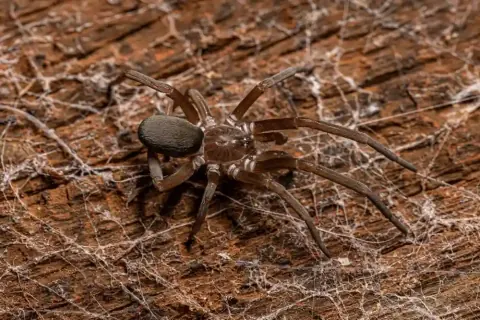
The genus Phoneutria is the country's main spider of medical importance, and Phoneutria boliviensis is the species most often met in settled parts of the north. These wandering spiders build no snare at all. They hunt at night on the ground and on low vegetation and spend the day pressed into banana bunches, woodpiles and stacked crates, which is why farm and market workers, not hikers, account for most bites. Cornered, the spider lifts its front legs high over its head and rocks from side to side.
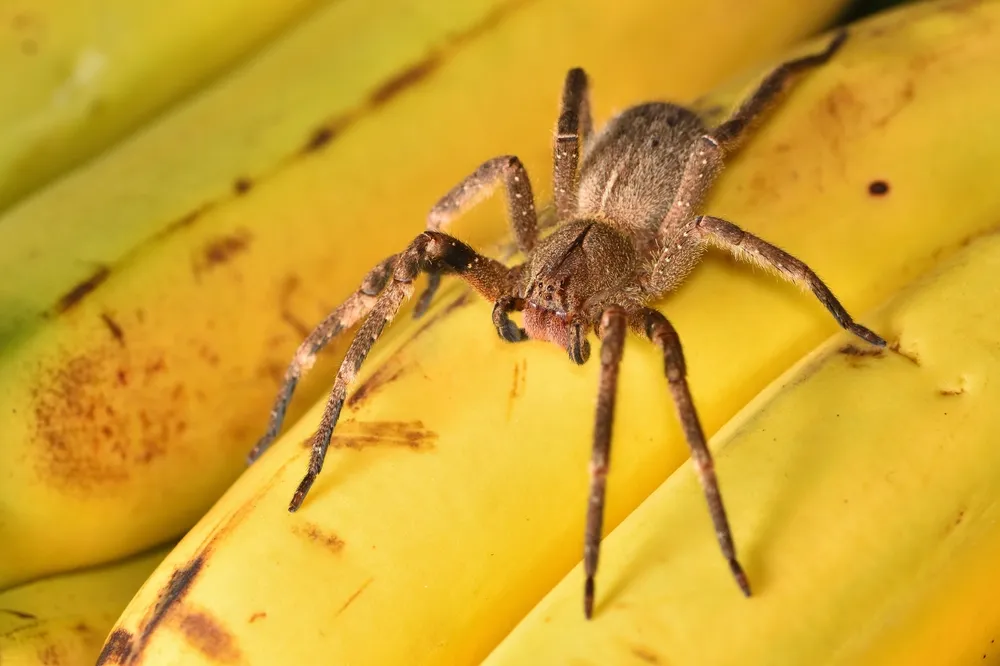
The risk is real but routinely exaggerated. The great majority of recorded bites produce intense local pain, sweating around the puncture and swelling, and are managed with pain control and a few hours of observation. Severe envenomation, with vomiting, raised blood pressure, drooling and disturbed heart rhythm, is uncommon and falls mainly on small children and frail adults. Venezuela produces no antivenom for the genus, so serious cases are treated supportively with advice from a poison-information centre.
Widows
Two widows matter here. The native South American black widow, Latrodectus curacaviensis, lives in dry coastal scrub, cactus stands, stone piles and fence lines, and the introduced brown widow has spread through towns and gardens, where it hangs its spiky egg sacs under furniture, meter boxes and window ledges. Both are shy cobweb spiders that bite only when pressed against skin. A significant bite causes cramping pain that spreads from the limb to the abdomen and back, with sweating, restlessness and a raised heart rate; it responds to pain relief and, in severe cases, to the Latin American anti-Latrodectus serum.
Recluses
Recluse spiders of the genus Loxosceles are present in Venezuela and cause a small, steady number of cases each year. They are plain brown, long-legged and reclusive, and they live in stored boxes, wardrobes and rarely worn clothing. The bite is often painless at first and then develops over a day or two into a bruised, blistered patch that can break down into a slow-healing ulcer, so it needs medical review rather than home treatment.
Bitten? Wash the site with soap and water, apply a cold pack, keep the limb still and go to a health centre, taking a photograph of the spider if it is safe to do so. Spreading cramping pain, sweating, vomiting, a racing heart, or any bite on a young child needs a hospital the same day. Never cut, suck, burn or tourniquet a bite.
The giants that are not a threat
Venezuela's largest spiders are theraphosids of the Guiana Shield. The pinkfoot goliath, Theraphosa apophysis, is effectively a Venezuelan speciality from the forests around the upper Orinoco, and its relative the goliath birdeater reaches the same region; both approach a 28-centimetre leg span and a body the size of a fist. Neither is dangerous. Their working defence is a cloud of barbed urticating hairs flicked off the abdomen, which itch on skin and are genuinely damaging in the eyes; the bite is mechanically painful, like a deep double scratch, and carries venom of no medical importance.

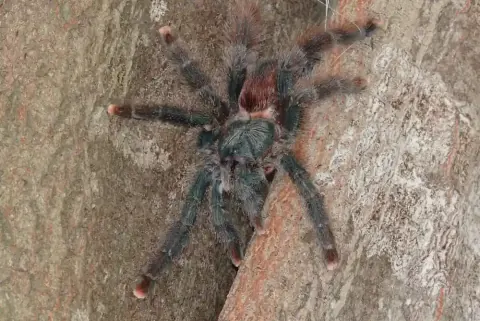
The same applies to the rest of the country's tarantulas, including the arboreal Venezuelan sun tiger Psalmopoeus irminia, which older lists wrongly file under the most venomous species, the pink toe tarantula that sits on trunks and porch posts, and the Venezuelan redstripe pinktoe. Huntsman spiders such as the pantropical Heteropoda venatoria are the other false alarm: flat, fast, fond of bathroom walls and harmless. Venezuela's biggest spiders and its dangerous spiders are simply different animals.
Where you actually meet them
In and around the house
A typical Venezuelan house holds cellar spiders on ceilings, the red house spider in corners, the southern house spider spreading pale silk from cracks in block walls, and jumping spiders patrolling window frames. All of them are harmless and all of them eat mosquitoes, flies and young cockroaches, which is a good reason to leave them alone; our guide to house spiders covers the group. The recluse is the one indoor spider worth knowing by sight.
Gardens, farms and plantations
Hedges and fences carry Argiope orb-weavers and the colonial tent webs of Cyrtophora citricola, now well established in coastal towns and a frequent surprise because dozens share one shrub. Banana, plantain and coffee plots are the meeting point with wandering spiders.
Forest, savanna and tepui
Amazon and Guiana forest hold the deepest diversity and the giant tarantulas, while the Llanos support ground hunters that ride out the annual flood. On the tepui summits a small, specialised fauna lives among bromeliads and wet rock, much of it still undescribed.
When spiders are most active in Venezuela
Most of the country has no cold season, so spiders are active all year and rainfall, not temperature, sets the rhythm. Insect numbers climb through the wet months, roughly May to November, and with them the size and visibility of webs; an orb web that was a hand's width in March can span a garden path by September.
Wandering spiders become more noticeable in homes during heavy rain, when flooding drives them out of leaf litter and plantation debris onto dry ground. After a downpour in the lowlands, look inside boots and behind stacked crates before putting a hand in.
Look-alikes and the banana spider problem
No name causes more confusion in Venezuela than banana spider. Locally it means Phoneutria, the wandering spiders that shelter in fruit bunches; in North American usage it means the golden silk orb-weaver, which cannot hurt anyone. Judge by behaviour rather than by the word: a large spider sitting calmly head-down in a big yellow-tinted web is the harmless one, while one running loose across a floor or a crate at night is the one to leave alone.
Two other regular reports are not spiders at all. Tailless whip scorpions, the flat amblypygids that sit on cave and shed walls, have no venom glands, and harvestmen, with one fused body and no silk, are equally harmless.
Common Spiders in Venezuela
- Silver Garden Orbweaver (Argiope argentata)
- Amazon Thorn Spider (Micrathena schreibersi)
- Tropical Tent-web Spider (Cyrtophora citricola)
Biggest Spiders in Venezuela
- Golden Silk Orb Weaver Spider (Trichonephila clavipes)
- Pantropical Huntsman Spider (Heteropoda venatoria)
- Southern House Spider (Kukulcania hibernalis)
Most Venomous Spiders in Venezuela
Cobweb Spiders/Tangle Web Spiders (Theridiidae)

Wandering Spiders
Less Venomous Spiders in Venezuela
Cobweb Spiders/Tangle Web Spiders (Theridiidae)

Orb Weavers (Araneidae)
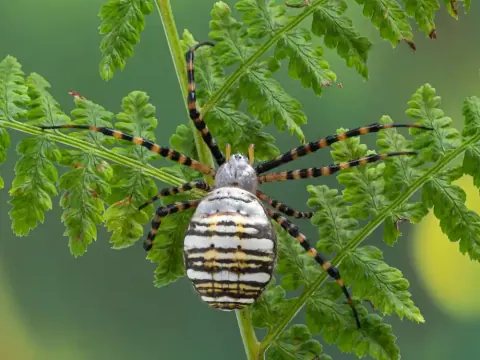 Orb WeaversBanded Garden (Argiope trifasciata)Identify the banded garden spider (Argiope trifasciata): silver banding, size, the zigzag in its web, egg sac, range, and whether its bite i
 Orb WeaversGolden Silk Orb-Weaver (Nephila)Golden silk orb-weavers (Nephila): huge females, tiny males, giant golden webs, where they live, what they eat and whether their bite is dan
Jumping Spiders
 Jumping SpidersLyssomanesA guide to Lyssomanes, the translucent green jumping spiders of the Americas: how to identify them, where they live, what they hunt and whet
 Jumping SpidersGray Wall Jumping (Menemerus bivittatus)Identify the gray wall jumping spider (Menemerus bivittatus): size, the flattened grey-haired body, its walls-and-tree-trunks habitat, and w
Tarantulas (Theraphosidae)
Crevice Weavers (Filistatidae)
Living with spiders in Venezuela
Nearly every spider in the country is harmless, and the handful that are not can be avoided with habits rather than pesticide. Blanket spraying kills the house spiders that control mosquitoes and leaves the wandering spiders in the plantation untouched.
- Shake out shoes, boots, clothing and bedding, especially in the lowlands and after heavy rain.
- Wear gloves when handling banana and plantain bunches, firewood, crates and stored produce.
- Keep beds away from walls, store nothing in boxes underneath them, and vacuum behind wardrobes to deny recluses their hiding places.
- Carry a torch outside at night in warm areas; wandering spiders are nocturnal ground hunters.
- Seal gaps under doors, repair screens and cut back vegetation that touches the walls.
- Leave garden orb webs where they are. They cost nothing and remove a great many mosquitoes.
Neighbouring Colombia and Brazil share almost the same medically important groups, and our most venomous spiders round-up shows how Phoneutria compares with widows, recluses and funnel-webs worldwide.
Frequently asked questions
What is the most venomous spider in Venezuela?
A wandering spider of the genus Phoneutria, usually Phoneutria boliviensis in settled areas. Most bites cause severe local pain, sweating and swelling and settle with pain control and observation. Serious systemic cases are uncommon and mainly involve small children. Widow spiders and recluses are the other two groups that need medical attention.
Are tarantulas in Venezuela dangerous to humans?
No. No Venezuelan tarantula, including the Venezuelan sun tiger and the goliath species of the Guiana Shield, has venom of medical significance. Their real defence is the barbed urticating hairs they flick from the abdomen, which itch badly on skin and can injure eyes. A bite hurts mechanically but causes no serious systemic effects.
What is the biggest spider in Venezuela?
A goliath tarantula. The pinkfoot goliath, Theraphosa apophysis, is largely a Venezuelan species from forests near the upper Orinoco, and Theraphosa blondi reaches the same region. Both approach a 28 centimetre leg span and weigh over 100 grams, which makes them among the heaviest spiders alive anywhere.
Are there black widows in Venezuela?
Yes. The native South American black widow, Latrodectus curacaviensis, lives in dry scrub, stone piles and outbuildings, and the introduced brown widow is now common around houses and gardens. Both bite only when trapped against skin. The result is cramping pain that spreads to the abdomen and back and responds well to treatment.
Are there recluse spiders in Venezuela?
Yes, Loxosceles species occur in Venezuela and cause a small number of cases each year. They shelter in undisturbed indoor places such as stored boxes, wardrobes and seldom worn clothing. A bite may be painless at first and then develop into a bruised, blistering patch that can ulcerate, so it needs medical review.
What are banana spiders in Venezuela?
Locally the name means Phoneutria wandering spiders, which shelter by day inside banana and plantain bunches and are medically important. In North American usage the same phrase means the harmless golden silk orb-weaver. Behaviour separates them: a spider sitting head-down in a large yellow-tinted web is the harmless one.
How do you identify a golden silk orb-weaver in Venezuela?
Look for a big female with a long, spotted abdomen, a silvery front body and dark legs carrying brush-like tufts, hanging head-down in a wide web with a distinctly yellow sheen that stays in the same spot for weeks. Tiny males often share the web. The spider is harmless and extremely reluctant to bite.
Which spiders are common inside Venezuelan homes?
The southern house spider in cracks in block walls, the red house spider in ceiling corners, long-bodied cellar spiders on ceilings and beams, and jumping spiders such as the gray wall jumper around windows. All are harmless, and together they take a serious number of mosquitoes, flies and cockroaches out of the house.
Which spiders build webs in Venezuelan gardens?
Silver garden orbweavers spin a classic round web with a zigzag silk ribbon across the centre, thorn spiders string small webs across forest and garden paths, and the tropical tent-web spider builds dense colonial sheets over shrubs in coastal towns, where dozens of individuals can share a single bush.
When is spider season in Venezuela?
There is no true off season. Activity follows rainfall rather than temperature, so webs are biggest and most numerous through the wet months from about May to November. Wandering spiders enter buildings more often during heavy rain, when flooding pushes them out of leaf litter and plantation debris onto dry ground.
Published December 7, 2023 · Last updated September 14, 2026