
Spiders in Albania
Albania's spider fauna is Mediterranean and overwhelmingly harmless. Only two species here carry venom of real medical interest: the Mediterranean black widow, a scarce, localised spider of dry grassland and stone terraces, and the Mediterranean recluse, which lives quietly inside old buildings. Every other spider on this page bites feebly, or not at all.

On this page
- What spiders live in Albania?
- Which Albanian spiders are dangerous?
- What the older Albania list gets wrong
- Where you meet them
- Spider season in Albania
- Easy mix-ups in Albania
- Common Spiders in Albania
- Biggest Spiders in Albania
- Most Venomous Spiders in Albania
- Less Venomous Spiders in Albania
- Living with Albania's spiders
- Frequently asked questions
What spiders live in Albania?
Albania packs an unusual amount of habitat into a small country. The Adriatic and Ionian coasts are hot, dry and Mediterranean, with olive terraces, maquis scrub and limestone headlands at Karaburun and Llogara. Inland the land climbs quickly into the Accursed Mountains and the Korçë highlands, where beech and pine forest, alpine meadow and karst sinkholes give a cool, almost central-European fauna. Several hundred spider species have been recorded from the Balkan region that Albania sits in, and the nine profiled here are the ones travellers and residents are most likely to photograph.

The showiest are the orb weavers. The cross orb weaver hangs its wheel in gardens, hedges and forest edges and carries a pale cross of dots on a plump abdomen, while the lobed argiope is a creature of hot coastal scrub, its silvery abdomen deeply scalloped along the edges like a shell.
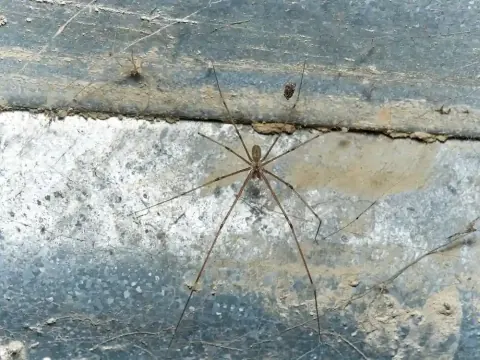
The hunters are just as common but easier to miss. Hogna radiata is the big wolf spider of sun-baked hillsides and olive groves, running down prey on foot after dark. The goldenrod crab spider sits motionless inside flower heads with its front legs open like a trap, and slowly changes between white and yellow to match the petals. Indoors, the marbled cellar spider hangs upside down in loose tangles in cellars, stairwells and under eaves.
Which Albanian spiders are dangerous?
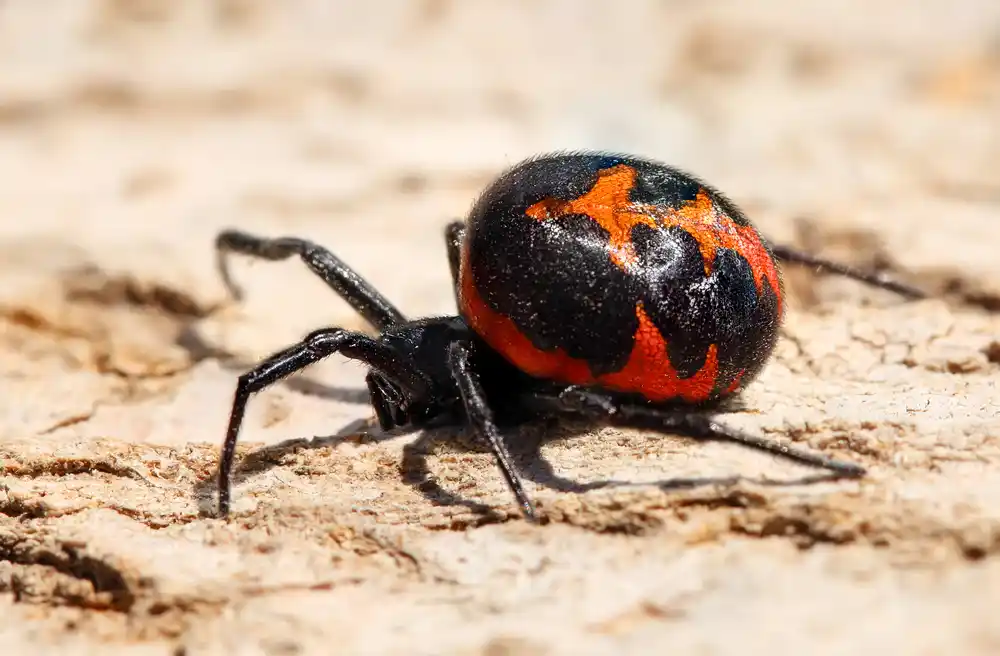
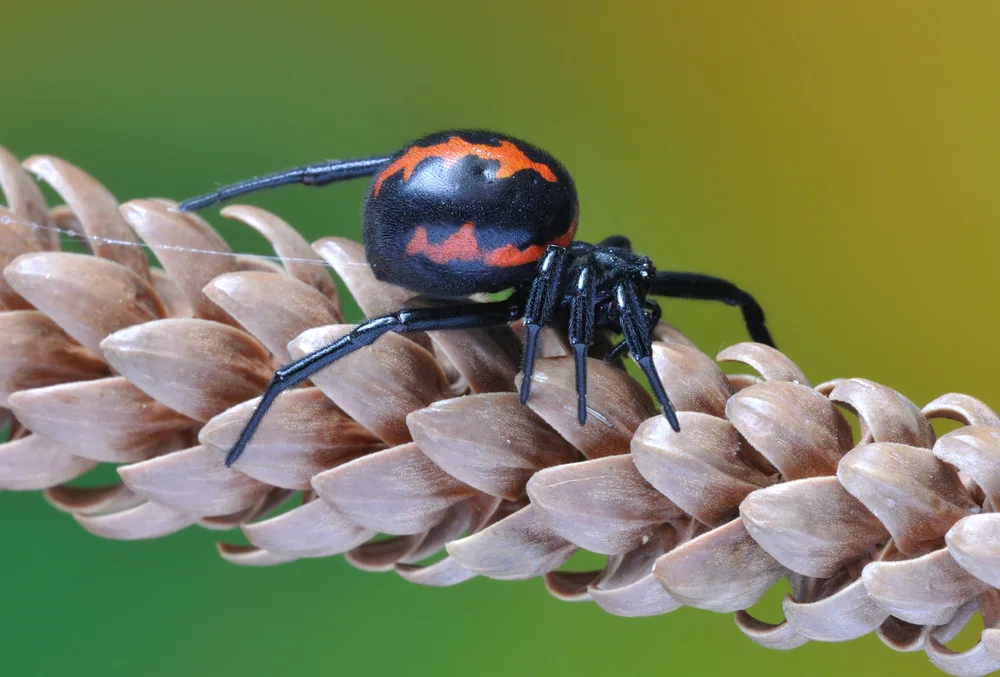
Two species, and both are uncommon. The Mediterranean black widow (Latrodectus tredecimguttatus) is the region's true cobweb spider of medical importance, known around the Mediterranean as the malmignatte. The female is velvety black with a row of red, orange or cream spots across the top of the abdomen, and she builds a tangled ground-level snare in dry grassland, cereal stubble, dry-stone walls and olive terraces rather than inside houses. Her venom is neurotoxic and produces latrodectism: local pain that spreads within an hour or two into muscle cramping, sweating, raised blood pressure, nausea and a rigid abdomen. Historically it was a harvest-worker's injury. It is painful and frightening, but specific antivenom exists in Europe and recoveries are the rule.
The second is the Mediterranean recluse (Loxosceles rufescens), a plain tan spider with six eyes arranged in three pairs that lives in old stone houses, cellars, ruins and behind furniture across the Mediterranean basin. It is genuinely reclusive and bites only when pressed against skin, usually in clothing or bedding. Most bites heal uneventfully; a minority develop a slow, dark ulcer that can take weeks to close, and systemic illness is rare with this species.
Bitten? Wash with soap and water, apply a cold pack, keep the limb still and photograph the spider if you safely can. Go to a hospital for spreading cramping pain, sweating, vomiting or abdominal rigidity, and for any wound that darkens or enlarges over the following days. Do not cut, suck, burn or apply a tourniquet.
What the older Albania list gets wrong
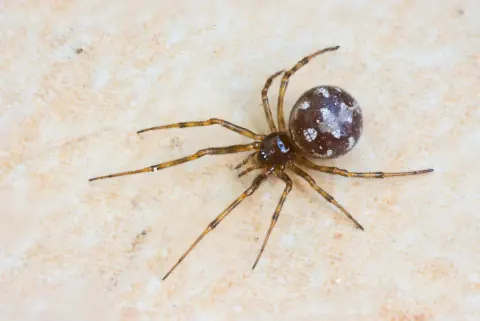
False widows are not medically significant. Steatoda paykulliana and the triangulate cobweb spider are Steatoda species that resemble a small widow and are often mistaken for one. Their bites cause local pain and a little swelling; the same is true of the white-spotted false widow quoted on older lists.
The silver-sided spider is not Albania's biggest. Zygiella x-notata is a small orb weaver of window frames, barely 7 mm long. The bulkiest spiders here are the lobed argiope and Hogna radiata, whose leg span can approach four centimetres.
The goldenrod crab spider is not a wolf spider. The old page filed Misumena vatia under both families. It belongs to the crab spiders (Thomisidae), which ambush from flowers and never chase prey.
Where you meet them
Houses, guesthouses and cellars
The marbled cellar spider is the standard Albanian indoor spider, a long-legged species that vibrates its web into a blur when disturbed. Small Steatoda cobweb spiders share the same corners. Our guide to house spiders covers the species that genuinely live indoors rather than wandering in.
Olive terraces, dry-stone walls and stubble
This is the one habitat where a black widow is plausible, and the one place worth gloves when you lift stones or move dry brush in summer. The same walls hold wolf spiders and, at night, a great many small hunting species.
Maquis, coast and mountain forest
Lobed argiopes build across gaps in coastal scrub from midsummer; cross orb weavers prefer damper gardens and forest edges in the hills.
Spider season in Albania
Most Albanian spiders mature in the second half of summer. Adults of the large orb weavers appear from July and are conspicuous through September and October, when the webs go up overnight across garden paths and olive rows. Wandering males of ground-hunting species show up indoors in the same weeks, which is why late summer feels like a spider invasion when it is really a mating season. The nightly rebuilding cycle behind the webs is explained in our guide to the spider web.
Winters are mild on the coast and cold in the mountains. Cellar spiders and indoor Steatoda carry on all year in heated buildings, while outdoor species overwinter as eggs in silk sacs or as juveniles under stones, bark and leaf litter.
Easy mix-ups in Albania
The commonest false alarm is a false widow reported as a black widow. A true Mediterranean black widow has bright red or orange spots on the upper surface of a velvety black abdomen and lives outdoors near the ground; Steatoda species are glossy brown to purplish with a pale crescent or zigzag and are usually found on a wall or in a shed.
The second is the woodlouse hunter, Dysdera crocata, a red-legged spider with enormous forward-pointing jaws that lives under stones and alarms everyone who turns one over. It has six eyes like a recluse but a shiny cream abdomen, and it is entirely harmless. Harvestmen, with a single fused body section and no venom glands, are not spiders at all.
Common Spiders in Albania
- Tropical Tent-web Spider (Cyrtophora citricola)
- Sweet Ray Spider (Enoplognatha ovata)
Biggest Spiders in Albania
- Silver-sided Spider (Zygiella x-notata)
Most Venomous Spiders in Albania
Cobweb Spiders/Tangle Web Spiders (Theridiidae)
 Cobweb SpidersWidow (Latrodectus)A guide to the widow spiders (Latrodectus): how to identify the genus, the species you may meet, the gumfoot web, and how serious a widow bi
 Cobweb SpidersSteatoda paykullianaIdentify Steatoda paykulliana: size, the red crescent and dorsal stripe, its gumfoot web under stones, its Mediterranean range and how painf
 Cobweb SpidersMediterranean Black Widow (Latrodectus tredecimguttatus)Identify the Mediterranean black widow (Latrodectus tredecimguttatus): the thirteen spots, its steppe habitat, its web, and how serious the
Less Venomous Spiders in Albania
Orb Weavers
 Orb WeaversCross Orb Weaver (Araneus diadematus)Identify the cross orb weaver (Araneus diadematus) by the white cross on its abdomen: size, colour, web, egg sac, range and whether the bite
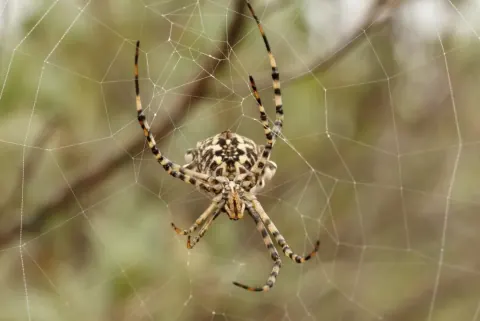 Orb WeaversLobed Argiope (Argiope lobata)Identify the lobed argiope (Argiope lobata): the scalloped silver abdomen, the big orb web, its range from Spain to South Africa, and how ha
Crab Spiders
Wolf Spiders
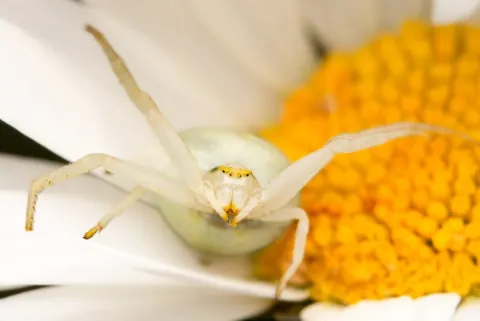 Crab SpidersGoldenrod Crab (Misumena vatia)Identify the goldenrod crab spider (Misumena vatia): size, the red abdominal streaks, how the female changes colour, where it lives and whet
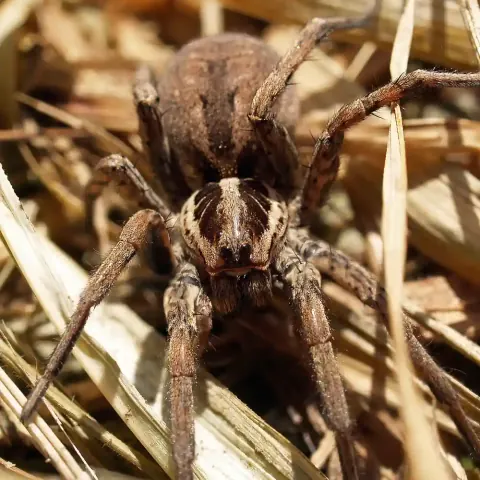 Wolf SpidersHogna radiataIdentify Hogna radiata, the big Mediterranean wolf spider: size, the radiating carapace pattern, where it lives, its burrow and how serious
Cellar Spiders
Cobweb Spiders/Tangle Web Spiders (Theridiidae)
Living with Albania's spiders
Nothing here calls for insecticide. A few habits remove almost all risk:
- Wear gloves when lifting dry-stone wall caps, stacked tiles, firewood or old timber in summer.
- Shake out boots, gloves and clothing stored in a cellar, ruin or unused room before putting them on.
- Move beds away from stone walls in old houses, and keep bedding off the floor.
- Vacuum webs and egg sacs rather than spraying, and fit screens on windows left open at night.
For the same Mediterranean fauna next door, see Montenegro and Greece.
Frequently asked questions
Are there dangerous spiders in Albania?
Two, and both are uncommon. The Mediterranean black widow lives outdoors in dry grassland, stubble and stone terraces and causes cramping, sweating and abdominal rigidity. The Mediterranean recluse hides in old buildings and can leave a slow-healing sore. Every other spider in Albania is harmless to people, and bites of any kind are rare.
What is the most venomous spider in Albania?
The Mediterranean black widow, Latrodectus tredecimguttatus. The female is velvety black with a row of red or orange spots on the upper side of the abdomen and builds a tangled snare close to the ground. Her neurotoxic venom causes latrodectism, which is treatable with supportive care and, where needed, European widow antivenom.
Does Albania have recluse spiders?
Yes, the Mediterranean recluse, Loxosceles rufescens. It is a plain tan spider with six eyes in three pairs that lives in old stone houses, cellars and ruins throughout the Mediterranean basin. It bites only when trapped against skin. Most bites heal normally; a minority form a dark ulcer that needs weeks and medical follow-up.
Are false widow spiders in Albania dangerous?
No. Steatoda paykulliana, the triangulate cobweb spider and the white-spotted false widow all resemble a small black widow and are regularly reported as one. Their bites produce local pain and mild swelling that settle within a day. The reliable difference is colour and place: false widows are glossy brown and usually on walls or in sheds.
What are the most common spiders in Albania?
Indoors, the marbled cellar spider and small Steatoda cobweb spiders. Outdoors, the cross orb weaver in gardens and hedges, the tropical tent-web spider in coastal scrub, and the candy-striped Enoplognatha ovata in low vegetation. All of them are harmless and all are most obvious from July onwards.
What is the biggest spider in Albania?
The lobed argiope, a coastal orb weaver with a scalloped silver abdomen, and the wolf spider Hogna radiata, whose leg span approaches four centimetres. Older lists name the silver-sided spider Zygiella x-notata, but that species is a small orb weaver barely seven millimetres long. Neither of the real contenders is dangerous.
Where are you most likely to see spiders in Albania?
Around buildings and on dry, sunny ground. Cellars, stairwells and porches hold cellar and cobweb spiders year-round; olive terraces, dry-stone walls, stubble fields and maquis scrub hold the hunting species and the occasional widow. Mountain forest and alpine meadow have their own fauna but far fewer encounters with people.
Are orb weavers in Albania harmful?
No. Cross orb weavers, lobed argiopes and tent-web spiders have venom suited to insects, cannot deliver a medically meaningful bite and retreat rather than defend a web. They are among the most useful animals in a garden, removing large numbers of flies and mosquitoes through the summer.
When is spider season in Albania?
July to October. Spiders hatched in spring reach adult size in midsummer, the large orb webs go up across paths and terraces, and mature males of ground-hunting species wander in search of females, which is when they turn up indoors. Activity drops sharply once the autumn rains and cooler nights arrive.
What should you do if a spider bites you in Albania?
Wash the site with soap and water, apply a cold pack and keep the limb still. Photograph the spider only if you can do so safely. Seek hospital care for spreading cramping pain, sweating, vomiting or abdominal rigidity, or if the wound darkens and enlarges over the following days. Never cut, suck or apply a tourniquet.
Published November 26, 2023 · Last updated September 14, 2026