
Spiders in Ecuador
Ecuador packs Pacific lowlands, the high Andes, the upper Amazon and the Galapagos into one small country, and its spider fauna is correspondingly huge. Only three groups matter medically: wandering spiders of the genus Phoneutria in the warm lowlands, the Chilean recluse in buildings, and widow spiders around gardens and field edges. The tarantulas and giant orb-weavers that alarm visitors are harmless.

On this page
- What spiders live in Ecuador?
- Which Ecuadorian spiders are dangerous?
- Tarantulas and other big harmless spiders
- Where you meet them
- When spiders are most obvious in Ecuador
- Confusions and species that are not what the name says
- Common Spiders in Ecuador
- Biggest Spiders in Ecuador
- Most Venomous Spiders in Ecuador
- Less Venomous Spiders in Ecuador
- Living with Ecuador's spiders
- Frequently asked questions
What spiders live in Ecuador?
Ecuador is one of the most spider-rich countries on earth for its size, because it stacks four different worlds within a few hundred kilometres: the humid Pacific lowlands and dry Manabi scrub, the Andes rising past 4,000 metres, the upper Amazon of the Oriente, and the Galapagos with its own endemic fauna. Diversity is highest in the warm lowlands and drops steeply with altitude: a Quito flat at 2,850 metres holds a small, harmless set of spiders, while an Oriente lodge can turn up dozens of species on one night walk.
Most of what people see is a predictable cast: orb-weavers rebuilding at dusk, colonial tent-web spiders draping hedges, thorn-bodied Micrathena blocking forest paths, jumping spiders on sunlit walls and tarantulas in burrows and tree hollows.
Which Ecuadorian spiders are dangerous?
Wandering spiders
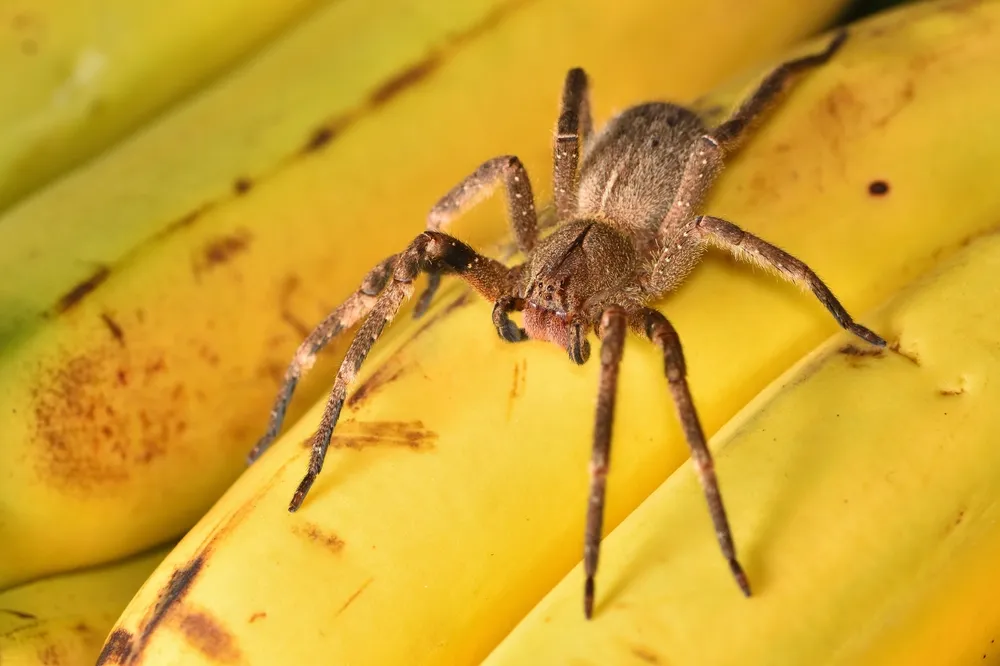
The genus Phoneutria is Ecuador's spider of greatest medical importance, present in the lowlands as P. boliviensis and P. depilata. These are large, long-legged nocturnal hunters that build no capture web, sheltering by day in banana crowns, leaf litter, woodpiles and crates, and raising the front legs high over the body when threatened. They are routinely called the world's most venomous spiders, and the clinical record does not support the headline: most wandering spider bites cause intense local pain, sweating and swelling, then settle with pain control and observation. Severe systemic envenomation is uncommon and concentrated in young children.
Recluses
The Chilean recluse, Loxosceles laeta, is established across much of South America including Ecuador and lives indoors — behind pictures, in stored clothing, under furniture. It is the most dangerous recluse in the world. Most bites produce a slowly enlarging, painful lesion that can ulcerate over days; a minority, mainly children, develop the systemic viscerocutaneous form with fever, haemolysis and dark urine, a genuine emergency.
Widows
The third group is the widows: the introduced brown widow around buildings and garden clutter, plus native black widows in field edges and stone piles. Their neurotoxic venom causes cramping pain that spreads from the bite to the abdomen and back.
Bitten? Wash with soap and water, apply a cold pack, keep the limb still and get to a clinic; photograph the spider if you safely can. Go immediately for spreading cramps, vomiting, fever, dark urine or any bite on a child. Spider antivenom is not routinely stocked in Ecuador — care is supportive and guided by the national poison service, with Brazilian anti-arachnid serum the regional product for severe cases. Never cut, suck, burn or tourniquet a bite.
Tarantulas and other big harmless spiders
None of Ecuador's tarantulas is medically significant, and one correction is overdue: the Goliath birdeater, Theraphosa blondi, does not live in Ecuador. It is a Guiana Shield animal of Venezuela, Guyana, Suriname and northern Brazil. Ecuador's heavyweights are Pamphobeteus species, thick-bodied ground tarantulas of Andean foothill and Amazon forest.

The country's best-known tarantulas are the arboreal pinktoes. The pink toe tarantula builds silk tubes in bromeliads, palm crowns and under bark, and the purple tarantula, Avicularia purpurea, is an Ecuadorian speciality with a metallic violet sheen. Like all New World tarantulas they defend themselves by flicking barbed urticating hairs, which itch on skin and hurt in the eyes; a bite hurts because of fang size, not venom. Hand-sized female golden silk orb-weavers hang in yellow-tinted webs across forest gaps and almost never bite.
Where you meet them
Houses and hotels
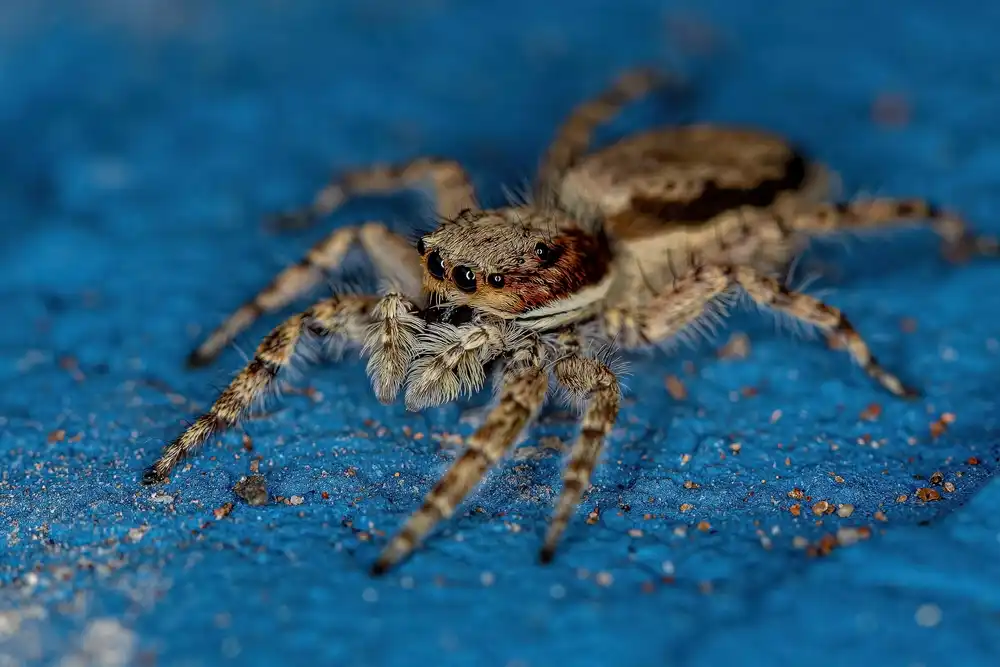
Indoors the cast is small and harmless: cellar spiders on ceilings, the red house spider and triangulate cobweb spider in corners, and the gray wall jumping spider hunting flies on sunlit plaster. The one indoor species to respect is the Chilean recluse, which is why stored clothing and undisturbed boxes deserve a shake rather than a blind hand.
Coast, plantations and gardens
Banana, plantain and cacao plots are where people and wandering spiders genuinely overlap, so most serious bites involve agricultural work rather than tourism. Gardens hold the banded garden spider and silver argiopes in stabilimented webs, and translucent green Lyssomanes jumpers under leaves.
Amazon and cloud forest
The Oriente is where the fauna becomes spectacular: thorn spiders across trails, huge colonial web complexes, wandering spiders on the ground after dark and tarantulas in bank burrows. Above roughly 2,000 metres the dangerous groups simply drop out.
When spiders are most obvious in Ecuador
On the equator there is no winter, and the calendar is written by rain, differently in each region. On the coast the wet season runs from December to May, and that is when webs are biggest and ground hunters most active. The Amazon is wet most of the year, so activity barely pauses. The highlands have two rainy periods, roughly February to May and October to November.
Heavy rain has an immediate effect: it floods leaf litter, burrows and plantation debris and pushes ground hunters, wandering spiders included, into houses, sheds and stored crates for a day or two. Male tarantulas also walk in the open after the wet months, which is when most road crossings are seen.
Confusions and species that are not what the name says
The word banana spider is the biggest trap. In Ecuador it means a Phoneutria wandering spider, while North American usage gives the same name to the harmless golden silk orb-weaver. Describe what the animal was doing rather than what it was called: an orb-weaver hangs in a web, a wandering spider runs on the ground.
False widows are the second trap. The glossy dark Steatoda cobweb spiders around buildings, including Steatoda grossa and the introduced Steatoda nobilis, are not Latrodectus, and their bites amount to local pain and swelling. Third, several arachnids reported as dangerous spiders are not spiders: tailless whip scorpions behind shutters have no venom glands at all, and harvestmen, with one oval body piece and no waist, have neither venom nor silk. Our list of the most venomous spiders puts the real short list in context.
Common Spiders in Ecuador
- Silver Garden Orb weaver (Argiope argentata)
- Adanson’s House Jumper (Hasarius adansoni)
- Amazon Thorn Spider (Micrathena schreibersi
- Common House Spider (Parasteatoda tepidariorum)
- Tropical tent web spider (Cyrtophora citricola)
- Long-bodied Cellar Spider (Pholcus phalangioides)
Biggest Spiders in Ecuador
- Golden Silk Orb Weaver (Trichonephila clavipes)
- Pantropical Huntsman Spider (Heteropoda venatoria)
- Goliath bird-eating spider (Theraphosa Blondi)
Most Venomous Spiders in Ecuador
Cobweb Spiders/Tangle Web Spiders (Theridiidae)
 Cobweb SpidersBrown Widow (Latrodectus geometricus)Identify the brown widow (Latrodectus geometricus) by its orange hourglass and spiky egg sac, and learn how its bite compares with a black w
 Cobweb SpidersFalse Widow (Steatoda nobilis)Identify the noble false widow (Steatoda nobilis): cream markings, reddish legs, its tangle web, where it lives and how painful its bite rea
 Cobweb SpidersFalse Black Widow (Steatoda grossa)Identify the false black widow (Steatoda grossa): size, colour, its gumfoot cobweb, how it differs from a true widow, and how bad the bite r
Wandering Spiders
Sicariidae
Less Venomous Spiders in Ecuador
Orb Weavers (Araneids)
 Orb WeaversGolden Silk Orb-Weaver (Nephila)Golden silk orb-weavers (Nephila): huge females, tiny males, giant golden webs, where they live, what they eat and whether their bite is dan
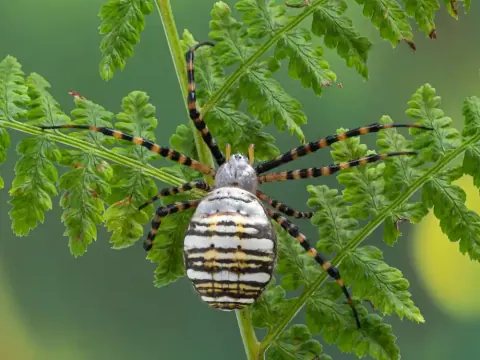 Orb WeaversBanded Garden (Argiope trifasciata)Identify the banded garden spider (Argiope trifasciata): silver banding, size, the zigzag in its web, egg sac, range, and whether its bite i
Cobweb Spiders/Tangle Web Spiders (Theridiidae)
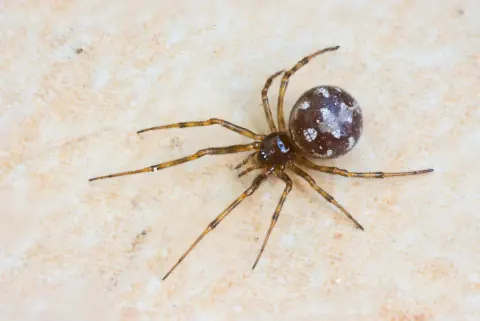 Cobweb SpidersTriangulate Cobweb (Steatoda triangulosa)Identify the triangulate cobweb spider (Steatoda triangulosa): the purple zigzag pattern, yellow legs, its tangle web, and whether the bite
 Cobweb SpidersRed House (Nesticodes rufipes)Identify the red house spider (Nesticodes rufipes): rusty red body, tangled indoor web, why it is mistaken for a widow, and what its bite ac
Jumping Spiders
Cobweb SpidersRed House (Nesticodes rufipes)Identify the red house spider (Nesticodes rufipes): rusty red body, tangled indoor web, why it is mistaken for a widow, and what its bite ac Jumping SpidersLyssomanesA guide to Lyssomanes, the translucent green jumping spiders of the Americas: how to identify them, where they live, what they hunt and whet
 Jumping SpidersGray Wall Jumping (Menemerus bivittatus)Identify the gray wall jumping spider (Menemerus bivittatus): size, the flattened grey-haired body, its walls-and-tree-trunks habitat, and w
Tarantulas (Theraphosidae)
Jumping SpidersGray Wall Jumping (Menemerus bivittatus)Identify the gray wall jumping spider (Menemerus bivittatus): size, the flattened grey-haired body, its walls-and-tree-trunks habitat, and w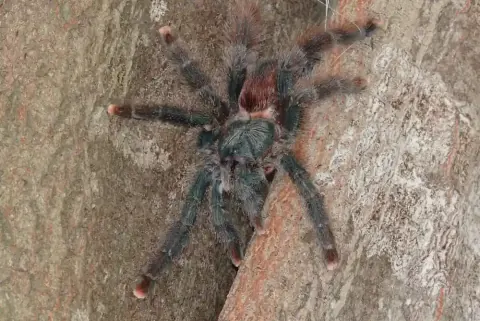 TarantulasPink Toe Tarantula (Avicularia avicularia)Identify the pink toe tarantula (Avicularia avicularia): size, the pink foot pads, its silk tube retreat, where it lives and how dangerous i
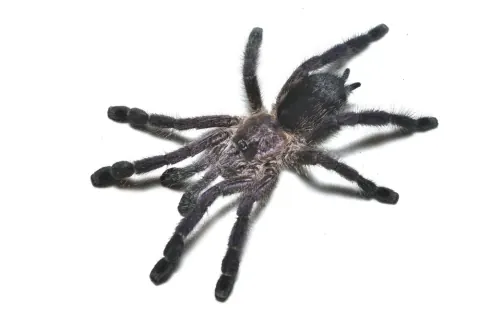 TarantulasPurple Tarantula (Avicularia purpurea)Identify the Ecuadorian purple tarantula (Avicularia purpurea): its purple sheen, size, silk tube retreat, rainforest range and how harmless
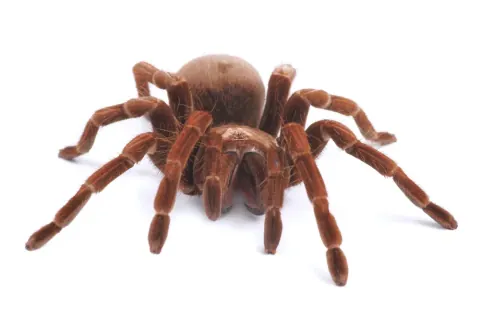 TarantulasGoliath Birdeater (Theraphosa blondi)Identify the Goliath birdeater (Theraphosa blondi): true size and weight, urticating hairs, burrow, range in the Guianas, and how bad its bi
Living with Ecuador's spiders
Ecuador's spiders are part of what makes the country worth visiting, and the genuine risk is low enough that a few habits cover it. Spraying a lodge or garden achieves little and removes the animals eating the mosquitoes.
- Shake out boots, clothing, towels and bedding, especially in the lowlands and after heavy rain.
- Wear gloves for firewood, crates, banana bunches and stored timber.
- Use a torch on paths after dark, because wandering spiders hunt on the ground at night.
- Move beds away from walls and keep stored clothing in sealed bags where recluses are a concern.
- Never handle a tarantula; the urticating hairs are the real problem.
- Carry a stick at face height on forest trails to clear orb webs without destroying the spider.
The same fauna continues into Peru and Colombia, whose lists overlap heavily with this one.
Frequently asked questions
What is the most venomous spider in Ecuador?
Wandering spiders of the genus Phoneutria, found in the warm lowlands of the coast and the Amazon. They hunt on the ground at night and raise their front legs when threatened. Most bites cause severe local pain, sweating and swelling and settle with pain control; serious systemic cases are uncommon and mainly affect small children.
Are there recluse spiders in Ecuador?
Yes. The Chilean recluse, Loxosceles laeta, is established across much of South America and lives indoors, behind furniture and in stored clothing. Most bites cause a slowly enlarging, painful lesion that can ulcerate. A minority, especially in children, develop a systemic form with fever and dark urine that is a medical emergency.
Does the Goliath birdeater live in Ecuador?
No. Theraphosa blondi is a Guiana Shield species of Venezuela, Guyana, Suriname and northern Brazil, and it does not occur in Ecuador despite appearing on many Ecuadorian spider lists. Ecuador's largest tarantulas are Pamphobeteus species of Andean foothill and Amazon forest, along with the arboreal pinktoes.
Are tarantulas in Ecuador dangerous to humans?
No. No Ecuadorian tarantula has venom of medical significance. Their defence is to flick barbed urticating hairs from the abdomen, which itch on skin and are painful in the eyes, or simply to retreat. A bite hurts because of the size of the fangs rather than because of anything in the venom.
Is there spider antivenom in Ecuador?
Spider antivenom is not routinely stocked in Ecuadorian hospitals. Management of wandering spider and recluse bites is mainly supportive, with pain control, wound care and observation, guided by the national poison information service. Brazilian anti-arachnid serum is the regional product used for severe wandering spider and recluse envenomation.
What are the most common house spiders in Ecuador?
Long-bodied cellar spiders on ceilings and in bathrooms, the red house spider and triangulate cobweb spider in corners, and jumping spiders such as Adanson's house jumper and the gray wall jumping spider on sunlit walls. All are harmless and useful, taking flies, mosquitoes and small cockroaches indoors.
Are there spiders in Quito and the highlands?
Yes, but the highland fauna is small, drab and entirely harmless. Spider diversity falls steeply with altitude, and the medically significant lowland groups, especially wandering spiders, effectively drop out above roughly two thousand metres. Quito households mainly see cellar spiders, cobweb spiders and jumping spiders.
How big does the golden silk orb-weaver get in Ecuador?
A large female spans roughly the width of an adult hand, about twelve centimetres including the legs, hanging in a strong yellow-tinted web across a forest gap. Males are a fraction of that size and often share the web. The spider is extremely reluctant to bite and usually drops from the web when disturbed.
What does the Amazon thorn spider look like?
Micrathena schreibersi is a small orb-weaver with a hard, angular abdomen carrying long sharp spines, often patterned in black with yellow, red or white. It sits in a tough vertical web strung across narrow forest paths, which is where walkers usually meet it. It is harmless and unable to bite through skin easily.
When is spider activity highest in Ecuador?
It depends on the region. On the coast webs and ground hunters peak in the December to May rains; the Amazon stays active almost year-round; the highlands follow two rainy periods, around February to May and October to November. Heavy rain briefly drives ground spiders into houses and stored crates.
Published November 30, 2023 · Last updated September 14, 2026