
Spiders in Puerto Rico
Puerto Rico has no deadly spider. The only ones whose venom matters medically are the widows — mainly the brown widow, with the southern black widow in drier coastal spots — and even their bites are treated and go home the same day. The island's famous giants, the cane spider and the Puerto Rican tarantulas, are harmless, and the hairy "guabá" that frightens people in caves is not a spider at all.

On this page
- What spiders live in Puerto Rico?
- Which Puerto Rico spiders are actually dangerous?
- Where you meet them in Puerto Rico
- Spider season in Puerto Rico
- Guabás, look-alikes and names that mislead
- Common Spiders in Puerto Rico
- Biggest Spiders in Puerto Rico
- Most Venomous Spiders in Puerto Rico
- Less Venomous Spiders in Puerto Rico
- Living with Puerto Rico's spiders
- Frequently asked questions
What spiders live in Puerto Rico?
Puerto Rico packs an unusual range of habitats into a small, warm, wet island: dry limestone forest on the south coast, cane and plantain country on the plain, a karst belt of sinkholes and caves across the north, and the soaking montane forest of El Yunque. Spiders track that gradient closely, and the fauna is West Indian rather than North American, shared largely with Hispaniola and the rest of the Greater Antilles.

Nearly everything a visitor notices is a web-builder. The broad, faintly gold sheets slung between trees along trails belong to the golden silk orb-weaver, Nephila clavipes — now usually placed in Trichonephila — which islanders call the banana spider. Smaller wheels in gardens and cane rows belong to the banded garden spider and the brown sailor spider, and the untidy tangles in door frames and porch corners to cobweb spiders such as the red house spider.
The hunters get indoors: the flat, fawn cane spider on walls at night, jumping spiders on sunlit masonry, tarantulas in burrows in the hills. One common ceiling resident, the grey house spider Zosis geniculata, has no venom glands at all.
Which Puerto Rico spiders are actually dangerous?
The medically significant spiders on the island are the widows, genus Latrodectus, and nothing else. In practice most of what people find is the brown widow, Latrodectus geometricus, a mottled tan-to-charcoal spider with an orange hourglass and a spiky, golf-ball-shaped egg sac. It nests under plastic garden furniture, in meter boxes, under railings and inside the lips of flower pots — exactly where a hand goes without looking. The glossy black southern black widow turns up in drier, stonier coastal country and in rubbish piles.

A widow bite feels like a pinprick, then builds over an hour into cramping muscle pain spreading to the abdomen, back and thighs, often with sweating and nausea. Brown widow bites are usually milder and mostly local, and both are handled in island emergency rooms with pain relief and supportive care.
Everything else on the old lists has a reputation it has not earned. There is no established population of the brown recluse, Loxosceles reclusa, in Puerto Rico — it is a spider of the central United States, and the necrotic sores blamed on it here are almost always bacterial skin infections, including MRSA.
The cane spider (Heteropoda venatoria), the island's largest and most alarming spider, is a harmless huntsman: fast, flat and uninterested in people, with a defensive nip no worse than a splinter. The Puerto Rican pinktoe and the Puerto Rican brown tarantula are no threat either; ground-dwelling tarantulas simply rub off irritant hairs that itch for a day. Nothing here belongs on a list of the most venomous spiders.
Bitten? Wash with soap and water, apply a cold pack and keep the limb still. Go to an emergency room, or call 9-1-1, if cramping pain spreads beyond the bite, if sweating, vomiting or chest tightness follow, or for any bite on a young child. Do not cut, suck or burn the wound.
Where you meet them in Puerto Rico
Houses, porches and carports
Island houses are open to the air, so the fauna indoors is the fauna outdoors: cobweb spiders in ceiling corners, cellar spiders in bathrooms, jumping spiders on window louvres, the cane spider crossing a wall at two in the morning — the same cast covered in our guide to house spiders. Widows sit outside rather than in: under a planter rim, behind a gas meter, inside a folded beach chair.
Gardens, cane and plantain
Old cane country and plantain plots are golden silk orb-weaver territory, webs slung head-high between rows, with banded garden and lynx spiders along the same edges. Gloves matter here: widows shelter in stacked pots, coiled hose and stored timber.
Karst, caves and El Yunque
The northern karst belt is where visitors meet the tailless whip scorpion. Wet forest holds sheet-web weavers, big Nephila across trail gaps and abundant litter hunters — the best place on the island to see spiders and the least likely place to be bitten.
Spider season in Puerto Rico
A tropical island has no spider-free winter. Activity runs year-round and tracks rainfall rather than temperature, so the visible peak follows the wet season from August into November, when insects are abundant and orb-weavers reach full size. That is also hurricane season, and the weeks after a storm bring the classic reports of large spiders indoors: webs destroyed, vegetation flattened, displaced hunters walking into buildings for cover.
January to April is quieter but never empty, and widows are if anything easier to find then, because gardens are being tidied and stored furniture moved.
Guabás, look-alikes and names that mislead
The animal most often reported as a giant Puerto Rican spider is not one. The guabá, or tailless whip scorpion (order Amblypygi), is a flat, long-limbed arachnid of caves and damp walls whose thread-thin front legs work as feelers. It has no venom glands and no silk, and it cannot hurt a person.
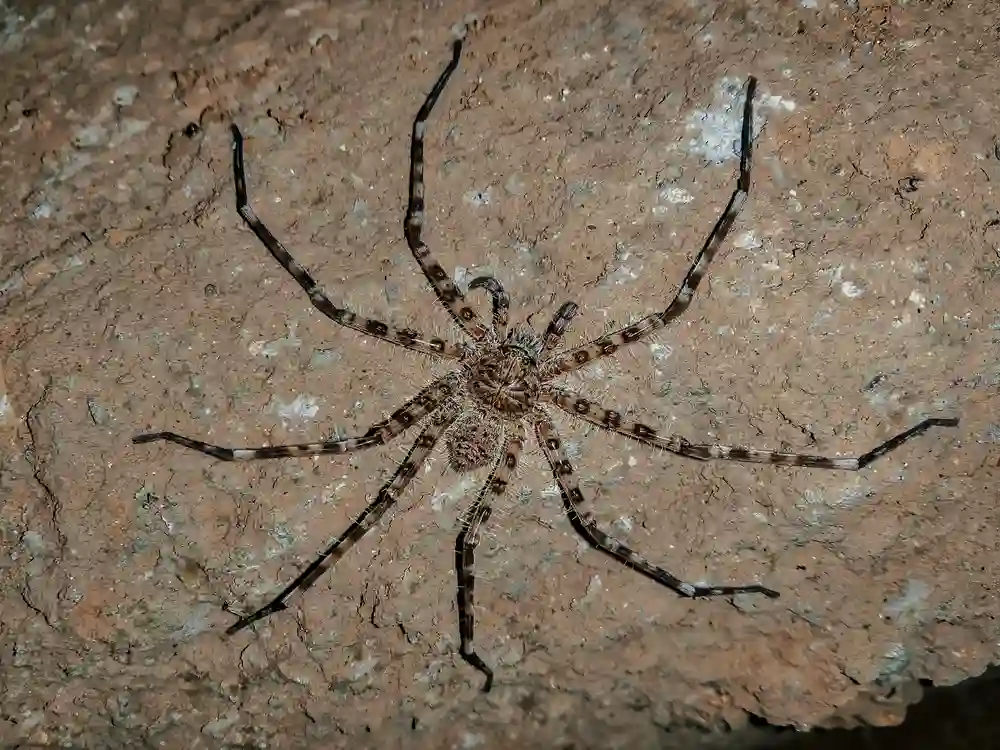
Two names on older island lists belong elsewhere. The giant huntsman, Heteropoda maxima, lives in caves in Laos, not the Antilles; Puerto Rico has its smaller relative, the cane spider. The green huntsman, Micrommata virescens, is a European grassland species that does not occur here. "Banana spider" misleads worst of all: on this island it means the harmless golden silk orb-weaver, not the Brazilian wandering spiders that share the nickname on the mainland.
Among true spiders, the mistake that matters is a false widow for a real one. Steatoda and the red house spider are shiny and round-bodied like a widow but brown to purple-black, often with a pale band across the front of the abdomen, and with no clean red hourglass underneath.
Common Spiders in Puerto Rico
- Golden silk orb weaver
- Banana spiders
- Tent cobweb weavers
- Banded garden spider (Argiope trifasciata)
- Red house spider (Nesticodes rufipes)
- Brown sailor spider (Neoscona nautica)
- Grey House Spiders (Zosis geniculate)
Biggest Spiders in Puerto Rico
- Giant Huntsman spider or Giant Crab Spider (Heteropoda venatoria)
- Tailless whip scorpions, or "guaba” or also known as Cave spiders
- Puerto Rican brown tarantulas
- Green Huntsman Spiders
- Banana spiders or Golden silk spiders
Most Venomous Spiders in Puerto Rico
Recluse Spiders/Fiddleback Spiders/Violin Spiders (Sicariidae Spiders)
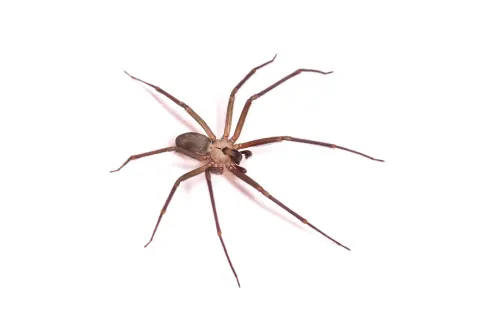
Cobweb Spiders/Tangle Web Spiders (Theridiidae)
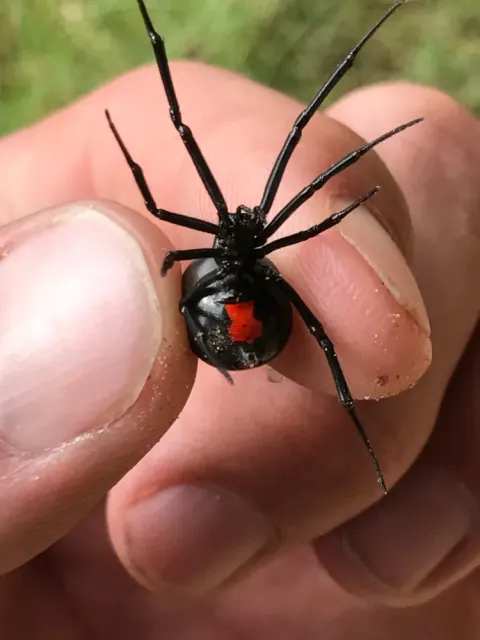
Huntsman Spiders/Giant Crab Spiders (Sparassidae Family)
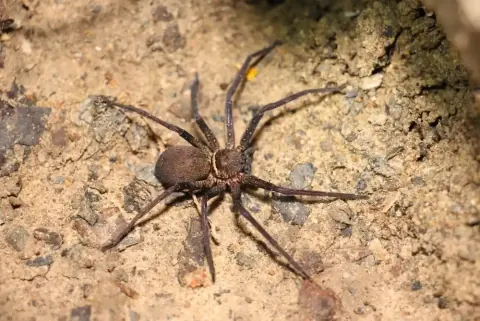 Huntsman SpidersCane (Heteropoda venatoria)Identify the cane spider (Heteropoda venatoria): size, flat brown body, egg sac, where it lives in Hawaii and the tropics, and whether its b
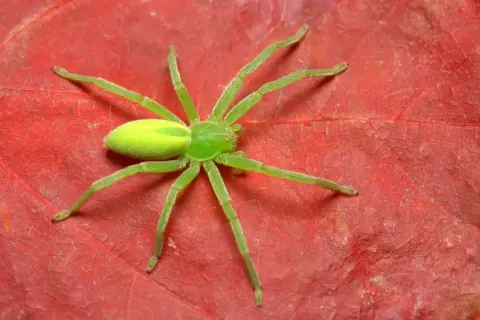 Huntsman SpidersGreen Huntsman (Micrommata virescens)Identify the green huntsman spider (Micrommata virescens): the vivid green female, the striped male, where it lives in Europe and whether it
Less Venomous Spiders in Puerto Rico
Huntsman Spiders/Giant Crab Spiders (Sparassidae Family)
Huntsman SpidersCane (Heteropoda venatoria)Identify the cane spider (Heteropoda venatoria): size, flat brown body, egg sac, where it lives in Hawaii and the tropics, and whether its b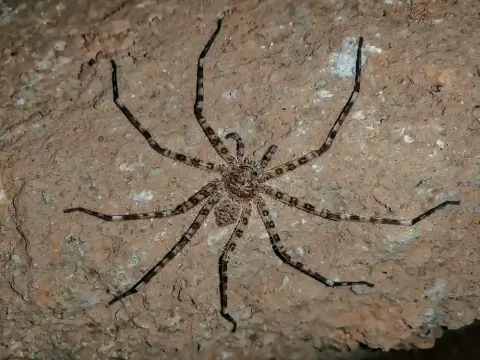 Huntsman SpidersGiant Huntsman (Heteropoda maxima)Identify the giant huntsman spider (Heteropoda maxima): the world's longest leg span, its cave habitat in Laos, diet, and whether its bite i
Tarantulas (Theraphosidae)
Huntsman SpidersCane (Heteropoda venatoria)Identify the cane spider (Heteropoda venatoria): size, flat brown body, egg sac, where it lives in Hawaii and the tropics, and whether its b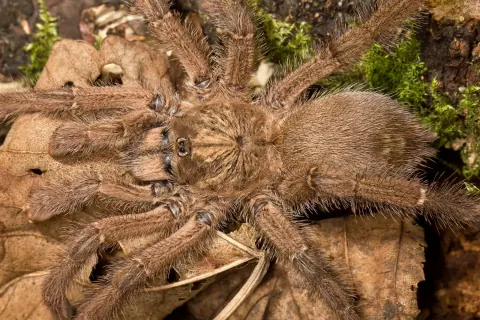 TarantulasPuerto Rican Pinktoe Tarantula (Caribena laeta)Identify the Puerto Rican pinktoe tarantula (Caribena laeta): blonde adults, blue spiderlings, island tree life, and why its bite is genuine
Wandering Spiders
Huntsman SpidersCane (Heteropoda venatoria)Identify the cane spider (Heteropoda venatoria): size, flat brown body, egg sac, where it lives in Hawaii and the tropics, and whether its b Orb WeaversNephila ClavipesNephila clavipes, the golden silk orb weaver or banana spider: size, the golden web, range from Florida to Argentina, and whether its bite i
Living with Puerto Rico's spiders
Blanket spraying a Caribbean house is pointless: the fauna outdoors refills a cleared corner within a fortnight, and these animals eat the mosquitoes, roaches and moths people want gone. A few habits deal with the only real risk — putting a hand where a widow is sitting.
- Wear gloves for garden clean-ups, stacked pots, coiled hose, stored timber and meter boxes.
- Shake out shoes, beach chairs and folded umbrellas left outside overnight.
- Knock webs off doorways with a broom instead of chemicals, and fit door brushes and screens.
- Move an indoor cane spider outside with a glass and a sheet of card — it is on your side.
The island's fauna overlaps closely with Cuba, where the same brown widows and cane spiders live around houses, and our explainer on spider webs makes it easy to tell a widow's scrappy tangle from an orb-weaver's wheel before you get close.
Frequently asked questions
Are there poisonous spiders in Puerto Rico?
No spider is poisonous — poison is swallowed, venom is injected — and only the widows in Puerto Rico have venom that matters. A brown widow or black widow bite can cause cramping pain, sweating and nausea, and hospitals treat it routinely. Every other spider on the island, including the big cane spider and the tarantulas, is harmless to people.
Does Puerto Rico have brown recluse spiders?
No. The brown recluse, Loxosceles reclusa, is a species of the central United States and has no established population in Puerto Rico. Slow-healing ulcers blamed on recluses here are usually bacterial skin infections, including MRSA, and need a doctor rather than a spider identification. If a wound spreads or will not close, get it cultured.
What is the most dangerous spider in Puerto Rico?
The widow spiders, Latrodectus. The brown widow is the one people find most often, nesting under planters, garden furniture and meter boxes, while the southern black widow prefers drier coastal ground and rubbish piles. Bites cause cramping muscle pain and sweating for a day or two and are treated with pain relief and supportive care.
What is the biggest spider in Puerto Rico?
The cane spider, Heteropoda venatoria, a flat huntsman whose legs span close to ten centimetres. It hunts roaches on walls and ceilings at night and is completely harmless. The Puerto Rican brown tarantula is heavier in the body but shorter in the leg, and it spends almost all its life in a burrow.
Are Puerto Rican tarantulas dangerous?
No. Neither the Puerto Rican pinktoe nor the Puerto Rican brown tarantula has medically significant venom. A defensive bite hurts because the fangs are large, and ground-dwelling species can rub off irritant hairs that itch for a day, but there is no tissue damage and no systemic illness. Both retreat rather than confront.
What is the guabá, or cave spider, in Puerto Rico?
The guabá is a tailless whip scorpion, an arachnid in the order Amblypygi, not a true spider. It lives in caves, cisterns and damp walls, and uses its whip-like front legs as feelers. It has no venom glands and no silk, and it is harmless to humans despite an intimidating flat, crab-like shape.
Is the banana spider in Puerto Rico venomous?
The Puerto Rican banana spider is the golden silk orb-weaver, Nephila clavipes, and it is harmless. Its venom subdues insects and produces no more than brief local soreness in a person. The dangerous Brazilian wandering spiders that share the nickname elsewhere in the Americas do not live on the island.
What spiders get into Puerto Rican houses?
Cobweb spiders in ceiling corners, cellar spiders in bathrooms, jumping spiders on window louvres and the cane spider crossing a wall at night. The grey house spider, Zosis geniculata, is a common ceiling resident with no venom glands at all. Widows stay outside, under planters, railings and folded garden furniture.
When are spiders most active in Puerto Rico?
All year, with a visible peak in the wet months from August to November when insects are abundant and orb-weaver webs reach full size. Reports of large spiders indoors spike in the weeks after a hurricane or heavy storm, because destroyed webs and flattened vegetation push displaced hunters into buildings for cover.
Are there spiders in El Yunque that can hurt you?
No. The rainforest holds sheet-web weavers, large golden silk orb-weavers across trail gaps and abundant litter hunters, none of them medically significant. Widows prefer dry, sunny, human-made structures rather than wet montane forest, so a walk in El Yunque is the best place on the island to see spiders and the least likely place to be bitten.
Published August 11, 2023 · Last updated September 14, 2026