
Spiders in Victoria
Victoria's cool-temperate gardens, wet gullies and dry northern plains hold a broad spider fauna, but only a short list of it matters medically: the redback, the state's own Hadronyche funnel-webs and the red-headed mouse spider. The eleven species profiled on this page are dominated by harmless house spiders, orb-weavers and huntsmen.

On this page
- What spiders live in Victoria?
- Which Victorian spiders are dangerous?
- Where you meet them
- Spider season, and the webs that appear after floods
- Species that do not really belong on the Victorian list
- Common Spiders in Victoria
- Biggest Spiders in Victoria
- Most Dangerous Spiders in Victoria
- Most Venomous Spiders in Victoria
- Less Venomous Spiders in Victoria
- Living with Victoria's spiders
- Frequently asked questions
What spiders live in Victoria?
Victoria packs several climates into one state: the wet mountain ash forests of the Dandenongs and Otways, dry mallee and box woodland in the north-west, alpine country in the east and a heavily built coastal strip in between. Spiders track that gradient. Damp forests hold burrowing mygalomorphs and litter hunters, while the drier, warmer suburbs favour the cobweb and house spiders that live alongside people.
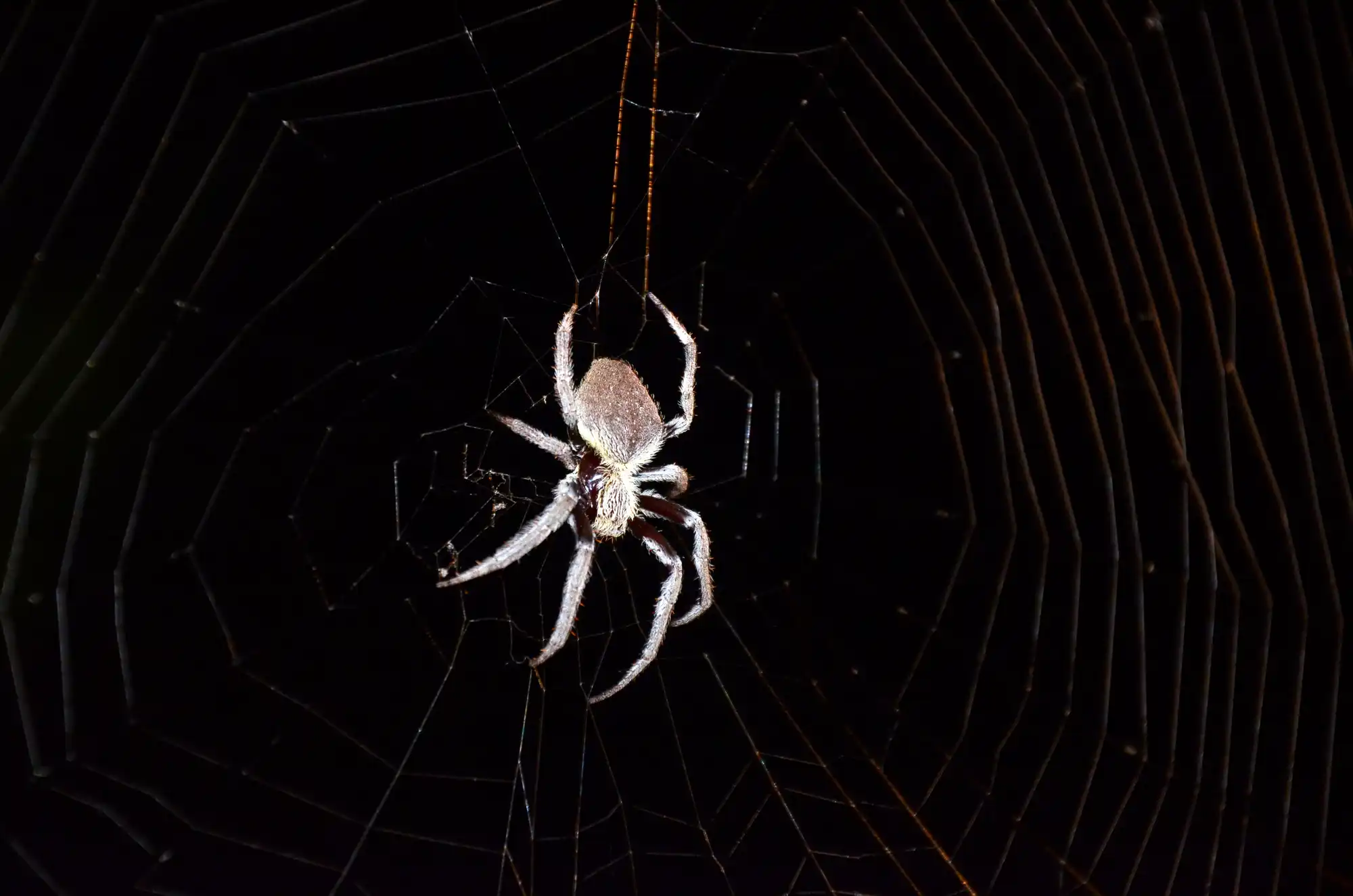
Most of the species profiled here are animals you can meet in a suburban backyard: the Australian garden orb weaver across the clothesline, the long-bodied cellar spider under the sink, the grey house spider on the fence and the introduced woodlouse spider under bricks and pots, where it hunts slaters with fangs built for piercing armour.
Which Victorian spiders are dangerous?
The redback is the state's main concern and genuinely is a widow spider, a close relative of the black widows of North America rather than merely a nickname. Females are glossy black with a red or orange dorsal stripe, they hang in tangled webs in sheds, letterboxes and under seats, and their bite causes latrodectism: pain that builds over hours with sweating and nausea. Antivenom is reserved for severe cases.
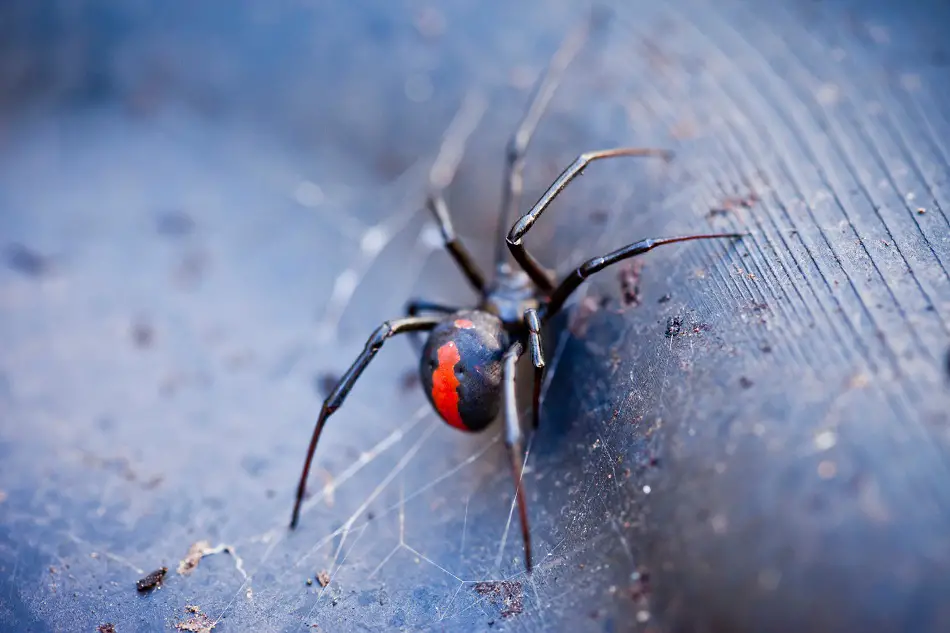
Two medically significant species the original page left out deserve a mention. Victoria has its own funnel-webs, chiefly the Victorian funnel-web (Hadronyche modesta) of wet forest and gullies; bites are uncommon and far milder in record than Sydney's Atrax robustus, which does not occur here, but funnel-web antivenom covers the group. The red-headed mouse spider (Missulena occatoria) is widespread across the drier country, and although its venom is potent, severe envenomation is rare.
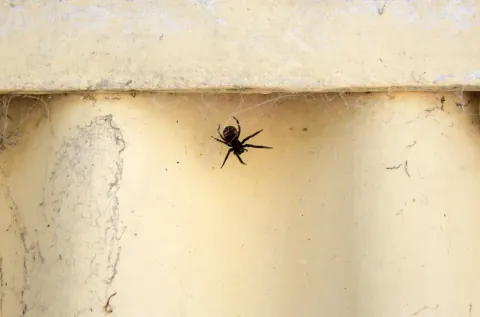
The rest are not dangerous, whatever the lists say. The black house spider gives a painful bite with local swelling and sometimes nausea, and it destroys no tissue. The white-tailed spider is not a flesh-eater: a study of 130 confirmed bites recorded burning pain and itching, and no necrotic ulcers at all.
Bitten? For a suspected funnel-web or mouse spider, apply a pressure-immobilisation bandage over the bite and along the limb, splint it, keep still and call 000. For a redback, use a cold pack instead, keep the limb still and seek care if pain spreads. Wash any bite, and photograph the spider if it is safe to do so.
Where you meet them
In the house
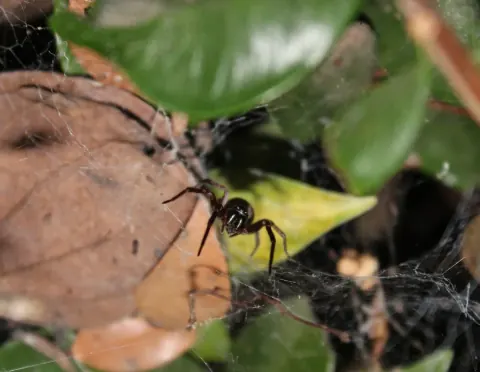
Black house spiders build untidy lacy sheets with a funnel retreat in window frames, weatherboards and brick joints, and their webs collect the grey dust that makes a house look neglected. Cellar spiders take ceilings and subfloors. Huntsmen come inside on hot nights and behind stored timber; the largest is the flat or social huntsman, the Avondale spider (Delena cancerides), which lives in colonies under loose bark and spans roughly fifteen centimetres.

Gardens and paddocks
Garden orb weavers rebuild a fresh wheel each evening across gateways and paths. Wolf spiders (Tasmanicosa, Venatrix) hunt on open soil and lawn at night, the females carrying egg sacs at the spinnerets and then spiderlings on their backs. Redbacks sit in the dry, sheltered gaps around all of it.
Wet forest and gullies
Fern gullies, rotting logs and shaded banks are where Victoria's mygalomorphs live: funnel-webs, wishbone spiders such as the Melbourne trapdoor spider (Stanwellia grisea) and litter-dwelling hunters. These are slow-growing, long-lived animals; a mature female may be older than the garden she lives in.
Spider season, and the webs that appear after floods
Activity peaks from January to April. Orb-weaver females reach full size in late summer, huntsmen wander on hot evenings, and male funnel-webs and mouse spiders move in warm, humid weather. Winter pushes most species into bark, litter and wall cavities rather than killing them.
The sheets of silk that blanket fences and paddocks after Victorian floods are not a plague and not one giant web. They are mass dispersal: thousands of small spiders, mostly money spiders and young wolf spiders driven off waterlogged ground, climb to any high point, release silk threads and let rising air carry them away. The abandoned draglines settle as gossamer. The mechanism is explained in our guide to spider ballooning.
Species that do not really belong on the Victorian list
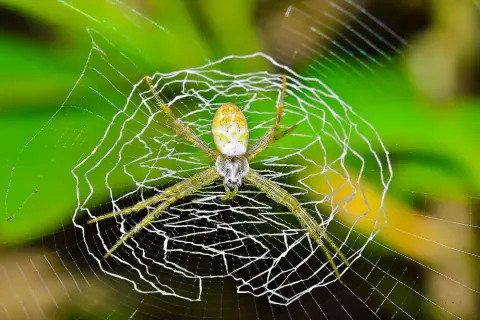
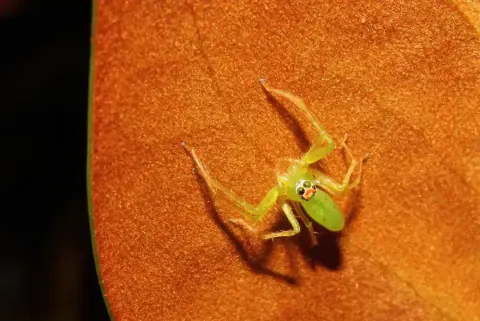
Regional lists copied from national sources drift, and three entries on this page belong to warmer parts of Australia. The giant wood spider (Nephila pilipes) is a tropical golden orb weaver of Queensland, the Northern Territory and Asia; the large golden-silk webs across Victorian tracks belong to smaller local orb-weavers instead. The green jumping spider (Mopsus mormon) is likewise an animal of the warm east coast and the north. The St Andrew's cross spider (Argiope keyserlingi) is common in coastal New South Wales and Queensland, while the zigzag-decorating Argiope in Victorian gardens is usually a related species with the same habit of sitting head-down in a silk cross. The lichen huntsman named on the original list, Pandercetes gracilis, is a rainforest species of the far north-east.
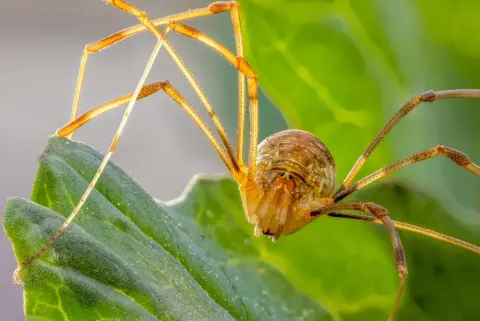
Two harmless creatures round out the misidentifications: harvestmen, which have one fused body section and no silk, and the introduced woodlouse spider, whose large red-brown fangs look alarming but are tools for opening slaters.
Common Spiders in Victoria
- Black House Spider
- Garden Wolf Spider
- Long Bodied Cellar Spider
Biggest Spiders in Victoria
- Flat Huntsman Spider
- Lichen Huntsman Spider
Most Dangerous Spiders in Victoria
Most Venomous Spiders in Victoria
Comb-Footed Spiders
Huntsman Spiders
House Spiders
White‐Tailed Spiders

Orb-weaver Spiders
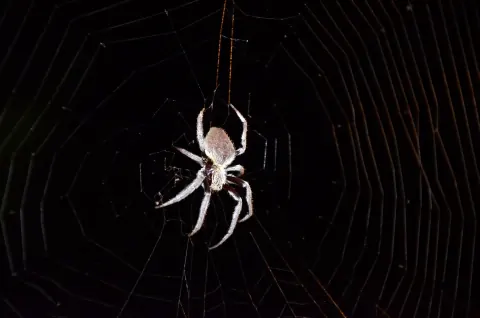 Orb WeaversAustralian Garden Orb Weaver (Eriophora transmarina)Identify the Australian garden orb weaver (Eriophora transmarina): size, colour, leaf-shaped abdomen, its nightly orb web, range and how bad
 Orb WeaversGiant Wood Spider (Nephila pilipes)Identify the giant wood spider (Nephila pilipes): huge black-and-yellow females, tiny males, golden orb webs, range, diet and whether its bi
Less Venomous Spiders in Victoria
Cellar Spiders
House Spiders
Orb-weaver Spiders
Jumping Spiders
Woodlouse Hunter Spiders

Living with Victoria's spiders
Sensible habits do more than insecticide:
- Wear gloves for firewood, mulch, pots and rockeries, and never reach blindly into a cavity.
- Check the undersides of outdoor furniture, trailers and meter boxes, the classic redback spots.
- Shake out boots and gardening gloves that have been left in the shed.
- Brush webs off eaves in winter if you must, when they are least useful to the spider.
- Leave huntsmen indoors alone, or glass-and-card them outside; they hunt cockroaches all night for free.
For the same fauna in a city setting see Melbourne, and for the cooler island version of the same fauna see Tasmania.
Frequently asked questions
What is the most dangerous spider in Victoria?
The redback spider. It is a true widow spider, and its bite causes pain that intensifies over hours together with sweating, nausea and general malaise. Antivenom is available for severe cases. Victoria also has its own funnel-webs and the red-headed mouse spider, but bites from those are far less frequent than redback bites.
Are there funnel-web spiders in Victoria?
Yes, but not the Sydney funnel-web. Victoria has Hadronyche species, including the Victorian funnel-web, in wet forests and shaded gullies. Recorded bites have been much less severe than those from Sydney's Atrax robustus, and funnel-web antivenom covers the group. Treat any bite from a large glossy black burrowing spider as an emergency.
Why do webs cover fields in Victoria after rain?
Flooding drives huge numbers of small ground spiders upward. They climb fences, stubble and shrubs, release silk lines and are lifted away on warm rising air, a dispersal method called ballooning. The silk left behind settles as sheets of gossamer over whole paddocks. It is temporary, harmless and usually gone within days.
What are the biggest spiders in Victoria?
Huntsman spiders have the largest leg span, notably the flat or social huntsman that lives in colonies under loose bark and reaches about fifteen centimetres across. Female orb weavers are bulkier in the body but much smaller overall. Neither group is dangerous, and huntsmen usually flee rather than confront a person.
Are black house spiders dangerous?
No. A black house spider bite can be sharply painful and may cause local swelling, sweating or nausea, but there is no tissue damage and no lasting harm. They are timid web dwellers that bite only when pressed against skin. Clean the bite, use a cold pack and seek advice if symptoms persist.
Is the redback the same as a black widow?
The redback belongs to Latrodectus, the same genus as the North American black widows, so it is a genuine widow spider rather than just a nickname. It shares the tangled web, the glossy black body and the neurotoxic venom, but carries a distinctive red or orange stripe along the top of the abdomen.
Which spiders live inside Victorian homes?
Black house spiders in window frames, grey house spiders on outside walls, long-bodied cellar spiders in garages and subfloors, and huntsmen that wander in on warm nights. None is dangerous to people. All of them reduce the number of flies, mosquitoes and cockroaches sharing the building with you.
Can a white-tailed spider bite cause serious harm?
It can hurt and itch for a day or two, but it does not eat flesh. Researchers who followed 130 verified white-tailed spider bites found no case of ulceration or necrosis. Wounds blamed on white-tails are usually bacterial infections, so any sore that worsens over several days needs a doctor rather than a spider theory.
Are there brown recluse spiders in Victoria?
No. Loxosceles recluse spiders are not established in Victoria, and the necrotic wounds attributed to them are caused by other conditions. Small brown spiders found indoors here are usually house spiders, cellar spiders or wandering males of harmless hunting species rather than any medically important species.
Published April 26, 2022 · Last updated September 14, 2026