
Spiders in Portugal
Portugal has exactly two spiders of any medical importance, and most people will never see either: the Mediterranean black widow of dry scrub and field margins, and the Mediterranean recluse, which lives quietly inside old buildings. Everything else on this page, including the big wolf spiders, false widows and orb-weavers that frighten visitors, is harmless.

On this page
- What spiders live in Portugal?
- Which spiders in Portugal are dangerous?
- Species the old list got wrong
- Big spiders that cannot hurt you
- Where you meet them
- Spider season in Portugal
- Common Spiders in Portugal
- Biggest Spiders in Portugal
- Most Venomous Spiders in Portugal
- Less Venomous Spiders in Portugal
- Living with Portugal's spiders
- Frequently asked questions
What spiders live in Portugal?
Portugal runs from the damp, Atlantic green of the Minho to the hot, dry cork-oak montado of the Alentejo and the limestone hills of the Algarve, and then jumps out into the ocean to Madeira and the Azores. That range gives the country both a northern European fauna and a genuinely Mediterranean one, plus island endemics found nowhere else on earth.

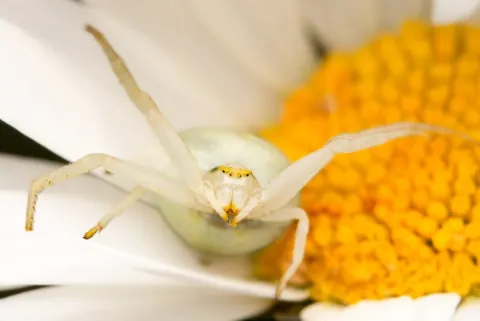
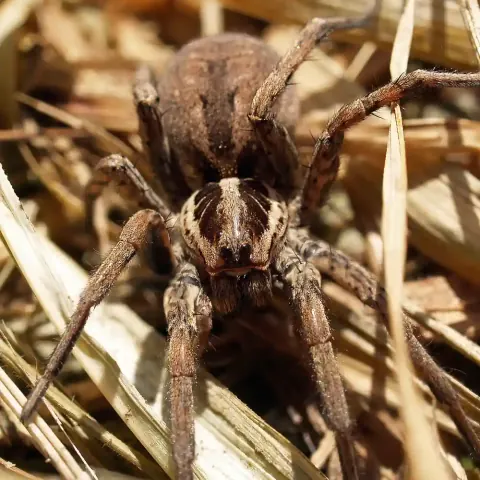
Most encounters are with a short list of conspicuous species. The cross orb-weaver spins across gateways and hedges in autumn; the zebra jumping spider hunts on sunlit walls; the goldenrod crab spider waits in ambush on flowers; and long-legged cellar spiders hang in every bathroom corner. In dry scrub the big Hogna radiata and the true tarantula wolf spider, Lycosa tarantula, run over open ground at night, and the Mediterranean spiny false wolf spider walks into houses in autumn.
Which spiders in Portugal are dangerous?
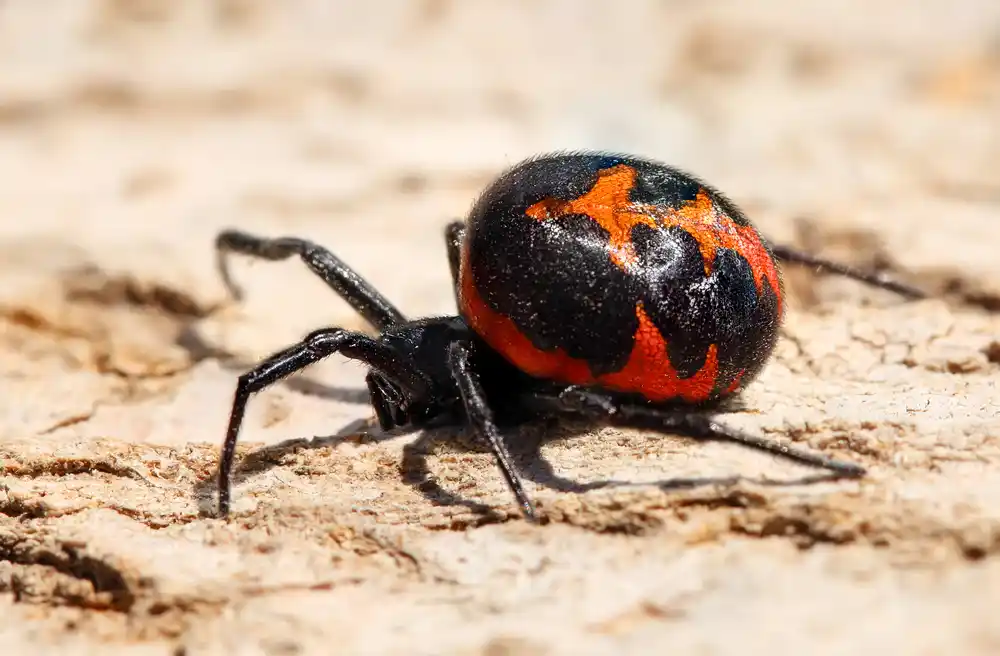
The Mediterranean black widow
The Mediterranean black widow is the one genuinely venomous spider of the Portuguese countryside. Iberian populations are now usually split between Latrodectus tredecimguttatus and Latrodectus lilianae, described from the peninsula itself; both are glossy black with a row of red spots on the upper abdomen rather than the American hourglass underneath. They live low down in dry grassland, scrub, vineyards, stone walls and field margins, not in houses. A bite causes cramping pain spreading from the limb to the abdomen and back, with sweating and restlessness. It is treatable with pain control, and European anti-latrodectus serum exists for severe cases.
The Mediterranean recluse
The Mediterranean recluse, Loxosceles rufescens, occurs in Portugal in old stonework, cellars, ruins and stored material. It is small, sandy brown, with six eyes in three pairs and no leg banding. Bites are rare because the spider is nocturnal and avoids people, but they can leave a slowly enlarging sore that occasionally ulcerates and should be seen by a doctor rather than treated at home. The American brown recluse listed on the older version of this page does not live in Portugal or anywhere in Europe.
Bitten? Wash the site with soap and water, apply a cold pack, keep the limb still and go to a health centre or call the Portuguese poison line; photograph the spider if you can. Go urgently for spreading cramps, sweating, vomiting, a darkening lesion, or any bite on a small child. Never cut, suck, burn or tourniquet a bite.
Species the old list got wrong
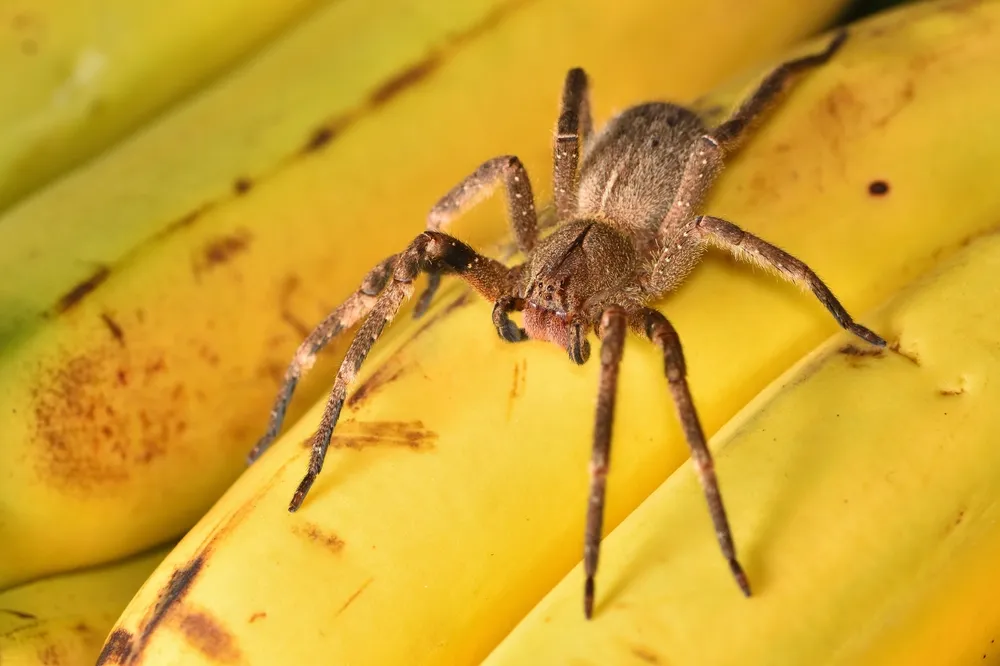
Two of the spiders previously filed here as Portugal's most venomous are not Portuguese animals at all. The Brazilian wandering spider, Phoneutria, is confined to Central and South America and turns up in Europe only as a very rare stowaway in banana cargo. The golden silk orb-weaver, Trichonephila clavipes, is a New World species of the Americas; the large webs you see in Portuguese hedgerows belong to native orb-weavers instead.
A naming error is worth fixing too. Araneus diadematus is the cross or garden orb-weaver, not a "European nursery web spider"; the nursery web spider is Pisaura mirabilis, a long-legged hunter that carries its egg sac in its jaws and builds a silk tent for the spiderlings. Our most venomous spiders guide sets out where the genuinely dangerous species actually live.
Big spiders that cannot hurt you
Portugal's largest spider is the Desertas wolf spider, Hogna ingens, a critically endangered giant restricted to one valley on Deserta Grande in the Madeira archipelago. It can span the width of a hand and is one of Europe's rarest animals, not a threat to anyone. On the mainland, wolf spiders such as Hogna radiata and Lycosa tarantula are the ones that alarm people: they are large, fast, hunt without webs and carry spiderlings on their backs. Their bite is painful but medically insignificant, and the medieval story of tarantism has nothing to do with them.
The noble false widow, Steatoda nobilis, is also worth understanding rather than fearing: it is native to Madeira and the Canary Islands and has spread from there across Europe. Its bite gives local pain and swelling, not the systemic illness of a true widow. The wasp spider and the lobed argiope are large, spectacular orb-weavers of long grass and scrub, and both are harmless.
Where you meet them
In and around the house
Cellar spiders, small cobweb spiders and Zoropsis account for nearly all indoor sightings, and all are harmless; our guide to house spiders covers them. Recluses keep to unrenovated stonework, cellars and stored boxes, so gloves and a torch matter more than insecticide.
Gardens, walls and the montado
Orb-weavers build on gates, vines and washing lines; jumping spiders patrol whitewashed walls; and segestriid tube-dwellers line holes in old masonry with radiating trip lines. Widows live in the drier open ground beyond the garden, under stones, in wall bases and around vineyard posts.
Coast, islands and pine forest
Dune and cliff systems along the Atlantic hold specialist ground hunters, while Madeira and the Azores carry endemic species found nowhere else, including cave-adapted spiders in the lava tubes.
Spider season in Portugal
The Portuguese spider year is driven by the summer drought. Numbers build through spring, dip in the hottest, driest weeks of July and August in the south, and peak in September and October when the first rains return, insects reappear and female orb-weavers reach full size. That autumn peak is when gardens fill with webs and when most people notice spiders at all.
Autumn is also when adult male house spiders and Zoropsis wander indoors looking for mates, and when heavy rain pushes ground hunters, including wolf spiders, under doors. Winters are mild enough that cellar spiders and cobweb spiders stay active indoors all year, and in the Algarve very little truly shuts down.
Common Spiders in Portugal
- European Nursery Web Spider (Araneus diadematus) also known as Cross Spider and Pumpkin Spider
- Daddy Long-Legs Spider or Long-Bodied Cellar Spider (Pholcus phalangioides)
- Flower Spider or Crab Spider (Misumena vatia)
- Banded Garden Spider
- Gorse Orb Weaver
- Wasp Spider
- Noble False Widow
- European Sheet Web
Biggest Spiders in Portugal
- Desertas Wolf Spider (Hogna ingens)
- Tarantula Wolf Spider
- Giant House Spider (Eratigena atrica)
- Mediterranean Spiny False Wolf Spider (Zoropsis spinimana)
- Lobed Argiope
Most Venomous Spiders in Portugal
Wandering Spiders
 Orb WeaversNephila ClavipesNephila clavipes, the golden silk orb weaver or banana spider: size, the golden web, range from Florida to Argentina, and whether its bite i
 Wandering SpidersBrazilian Wandering (Phoneutria)Brazilian wandering spiders (Phoneutria): how to identify them, where the nine species live, what the venom really does, and what to do afte
Cobweb Spiders (Theridiidae)
Orb WeaversNephila ClavipesNephila clavipes, the golden silk orb weaver or banana spider: size, the golden web, range from Florida to Argentina, and whether its bite i Cobweb SpidersMediterranean Black Widow (Latrodectus tredecimguttatus)Identify the Mediterranean black widow (Latrodectus tredecimguttatus): the thirteen spots, its steppe habitat, its web, and how serious the
Sicariidae
Less Venomous Spiders in Portugal
Orb Weavers
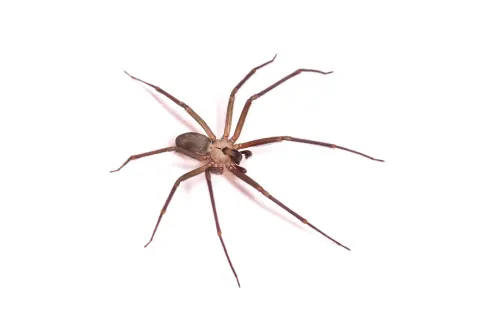 Sicariidae SpidersBrown Recluse Spider (Loxosceles reclusa)How to identify a brown recluse (Loxosceles reclusa): six eyes, violin mark, where it lives, and what a recluse bite really does to skin.
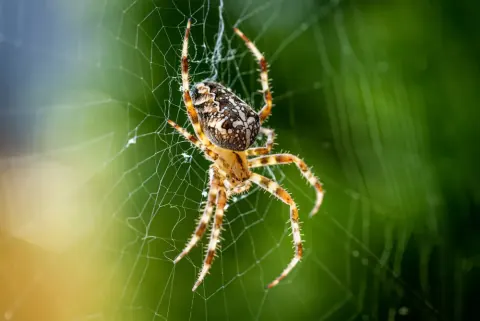 Orb WeaversCross Orb Weaver (Araneus diadematus)Identify the cross orb weaver (Araneus diadematus) by the white cross on its abdomen: size, colour, web, egg sac, range and whether the bite
Jumping Spiders
Sicariidae SpidersBrown Recluse Spider (Loxosceles reclusa)How to identify a brown recluse (Loxosceles reclusa): six eyes, violin mark, where it lives, and what a recluse bite really does to skin.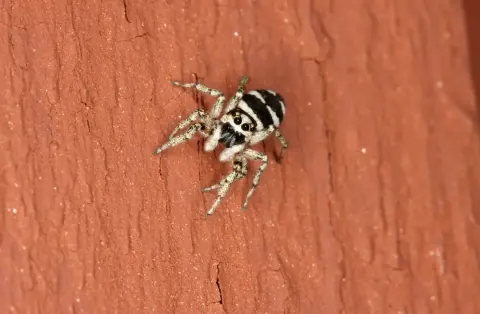 Jumping SpidersZebra (Salticus scenicus)Identify the zebra spider (Salticus scenicus): the black and white bars, the male's oversized jaws, how it hunts without a web, and whether
Crab Spiders
Wolf Spiders
Living with Portugal's spiders
With only two species of any concern and both of them shy, sensible habits cover the whole risk. Spraying a house or garden achieves little and removes the predators that eat mosquitoes and flies.
- Wear gloves for stone walls, firewood, vineyard work, rubble and garden furniture.
- Shake out shoes, gloves and clothing left in sheds, cellars or holiday houses.
- Store boxes off the floor and prefer sealed plastic to cardboard in old buildings.
- Use a torch outdoors at night, when wolf spiders and recluses are active.
- Catch indoor spiders with a glass and card rather than reaching for a spray.
- Seal gaps under doors and repair window screens before the autumn wander.
The fauna is essentially the same across the border in Spain, and the same widow and recluse pair runs right around the Mediterranean basin.
Frequently asked questions
Are there venomous spiders in Portugal?
Two matter. The Mediterranean black widow of dry scrub and field margins gives a cramping, painful bite that is treatable and rarely serious, and the Mediterranean recluse, which lives in old stonework and cellars, can leave a slowly ulcerating sore. Every other Portuguese spider is medically insignificant.
What is the biggest spider in Portugal?
The Desertas wolf spider, Hogna ingens, which lives only in one valley on Deserta Grande in the Madeira archipelago and can span the width of a hand. It is critically endangered rather than dangerous. On the mainland the largest are Lycosa tarantula and Hogna radiata, both harmless wolf spiders.
Do Brazilian wandering spiders live in Portugal?
No. Phoneutria species occur only in Central and South America. They reach Europe occasionally as stowaways in banana shipments, which makes news precisely because it is so unusual. No population is established in Portugal, and no Portuguese spider has venom comparable to that genus.
What is the most common spider in Portuguese houses?
The long-bodied cellar spider, Pholcus phalangioides, with a tiny body and extremely long legs, hanging upside down in a loose tangle in bathroom and ceiling corners. Small cobweb spiders and the flat, mottled Zoropsis spinimana are the other regulars indoors. All of them are harmless to people.
Is the noble false widow dangerous in Portugal?
No. Steatoda nobilis is actually native to Madeira and the Canary Islands and has spread across Europe from there. Its bite causes local pain, redness and swelling, sometimes lasting a day or two, but not the spreading cramps and sweating of a true widow bite. It is not aggressive.
Are wolf spiders in Portugal aggressive?
No. Wolf spiders flee when disturbed and bite only if pressed against skin. They hunt on the ground without webs, which is why they seem to charge at people crossing their path at night. A bite hurts briefly, like a pinprick with some swelling, and needs no medical treatment.
How do you identify a wasp spider in Portugal?
By its bold yellow, black and white banding, which really does look like a wasp, and by the thick zigzag band of silk running down the centre of its orb web. Argiope bruennichi sits head-down in the hub in long grass and scrub. It is a harmless orb-weaver.
Where are you most likely to see spiders in Portugal?
Around lights at night, where moths gather, and in gardens, vineyards, cork-oak montado and stone walls. Indoors, look in bathroom corners, cellars and behind furniture. Autumn, from September to October, is when webs are largest and wandering males are most visible, so that is when encounters peak.
Does Portugal have recluse spiders?
Yes, the Mediterranean recluse, Loxosceles rufescens, in old stonework, ruins, cellars and stored material. It is small and sandy brown with six eyes arranged in three pairs. The American brown recluse does not occur anywhere in Europe, despite frequently being named on Portuguese spider lists.
Are the tarantulas in Portugal dangerous?
There are no true tarantulas in the theraphosid sense in Portugal. The spiders called tarantulas here are large wolf spiders, chiefly Lycosa tarantula, which gave the word its origin through the folklore of tarantism. Their bite is painful for a short while and carries no medical significance.
Published August 12, 2023 · Last updated September 14, 2026