
Spiders in Arkansas
Arkansas sits in the heart of brown recluse country, and it is one of the few states where that spider really is common inside houses. Even so, only two species here matter medically: the recluse and the southern black widow. The other eighteen profiled on this page are harmless hunters and web builders.

On this page
- What spiders live in Arkansas?
- Which Arkansas spiders are dangerous?
- What the old Arkansas list got wrong
- Where you meet them
- Spider season in Arkansas
- Easy mix-ups in Arkansas
- Common Spiders in Arkansas
- Largest Spiders in Arkansas
- Highly Venomous Spiders in Arkansas
- Less Venomous Spiders in Arkansas
- Living with Arkansas's spiders
- Frequently asked questions
What spiders live in Arkansas?
Arkansas packs the Ozark and Ouachita highlands, the Arkansas River valley, the Mississippi delta and the pine woods of the Gulf coastal plain into one state, and its spider fauna reflects that. Several hundred species have been recorded here, far more than the thirty-five to forty quoted on older lists; this page profiles the twenty that people photograph and ask about most.
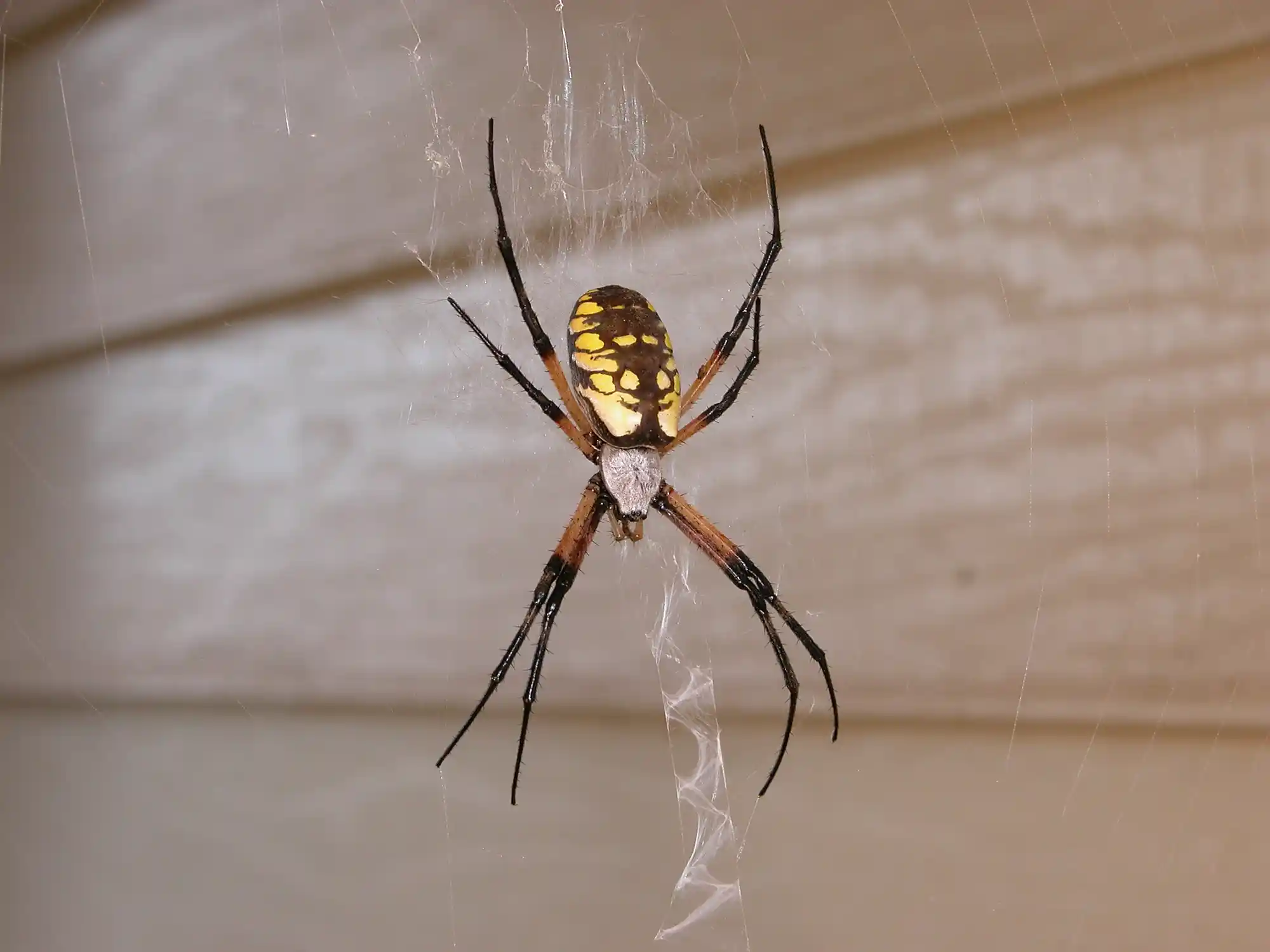
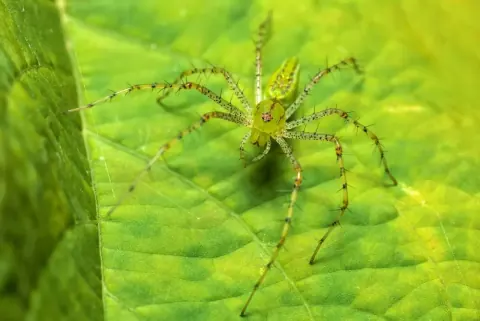
Outdoors, orb weavers dominate from midsummer. The black-and-yellow yellow garden spider anchors big webs in tall vegetation, spotted and banded orb weavers work fence lines and porch lights, and the tiny black-and-white arrow-shaped micrathena strings webs at face height across woodland trails, which is how most hikers meet it. On flowers, the green lynx spider and crab spiders sit motionless and ambush bees.
Indoors the list is short: long-bodied cellar spiders in basements, the common house spider behind furniture, the barn funnel weaver spinning a flat sheet with a funnel retreat in garages and sheds, and the southern house spider, whose long-legged brown male causes more recluse scares than any other spider.
Which Arkansas spiders are dangerous?
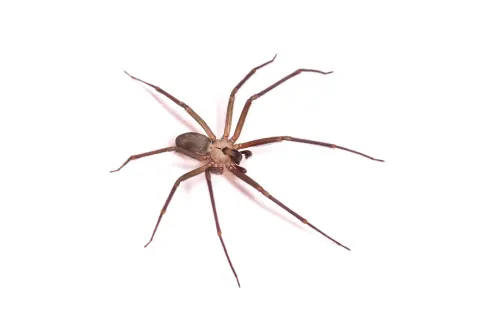
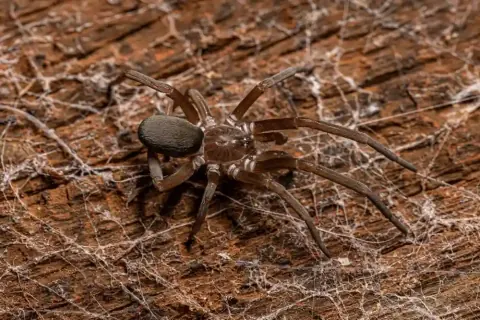
The brown recluse is genuinely at home in Arkansas. This is core range, and household surveys in the region have turned up hundreds of recluses in a single occupied house without anyone being bitten — a useful perspective on how reluctant the spider is. It is plain tan, about a centimetre in body length, with long unbanded legs, six eyes in three pairs and a darker violin mark whose neck points backwards. It hides in cardboard, stored clothing, attic and closet clutter, behind baseboards, in woodpiles and under loose bark.

Most recluse bites produce a sore red patch that heals on its own. A minority develop a slowly enlarging ulcer that takes weeks to close, and systemic illness is uncommon. Deaths are exceedingly rare, so calling the venom simply deadly overstates the risk; it deserves prompt assessment rather than panic.
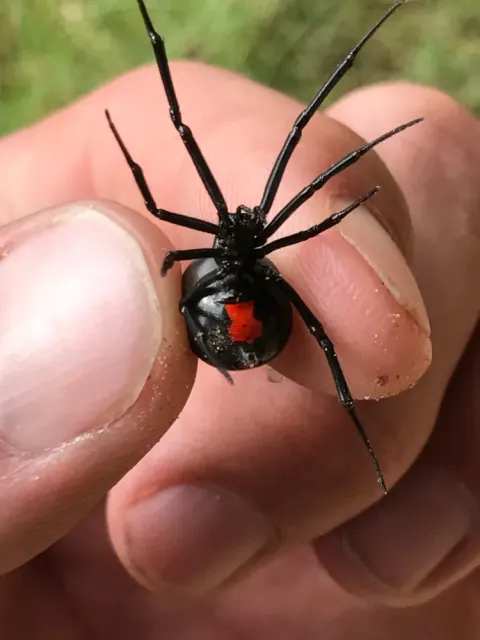
The southern black widow is the state's widow: a glossy black female with a red hourglass under a globular abdomen, hanging upside down in a strong, untidy web close to the ground in woodpiles, meter boxes, crawl spaces, barns and under stored equipment. Her venom is neurotoxic rather than tissue-destroying, causing cramping pain, sweating, abdominal rigidity and raised blood pressure within a few hours. Antivenom exists, is rarely required, and fatal cases are essentially unheard of with modern treatment.
Bitten? Wash with soap and water, apply a cold pack, keep the limb still and photograph the spider if it is safe to do so. Go to an emergency department for cramping pain, sweating, vomiting or an enlarging wound, and for any suspected widow or recluse bite in a child or older adult. Do not cut, suck, burn or apply a tourniquet.
What the old Arkansas list got wrong
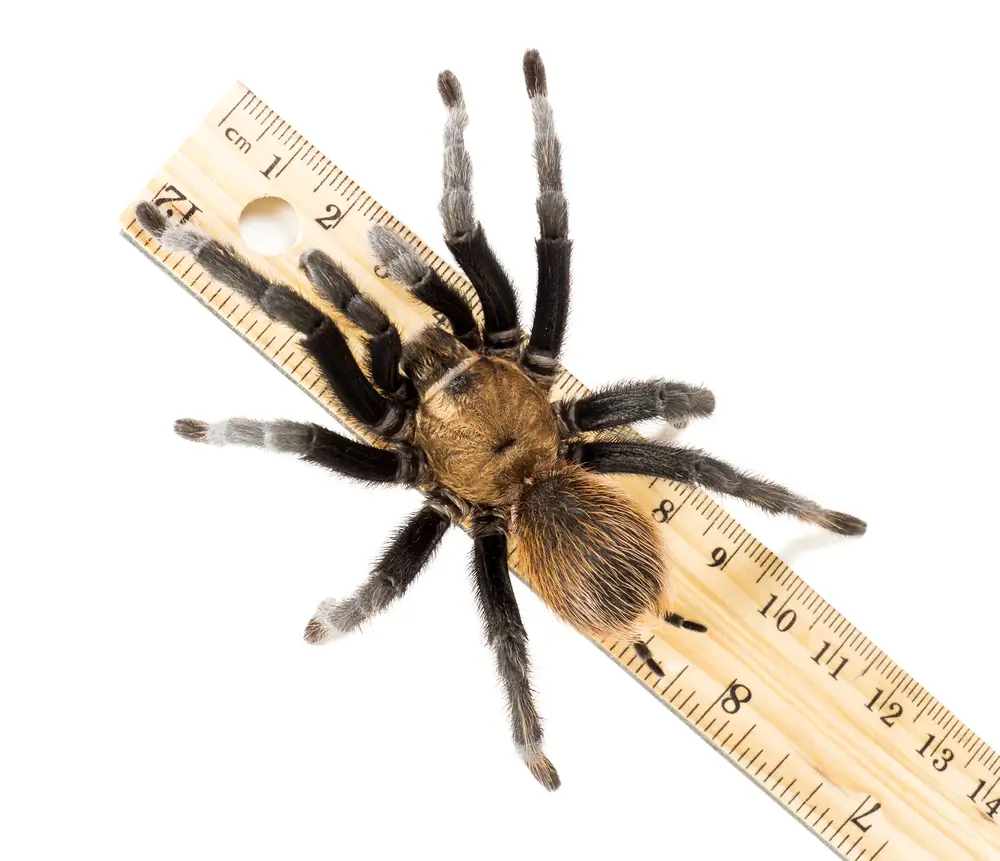
There is one tarantula species in Arkansas, not two. The "Arkansas chocolate tarantula", described as Aphonopelma baergi, was folded into Aphonopelma hentzi when the North American genus was revised, so both names on the original list refer to the same animal. It is also not a common spider statewide: it lives in rocky glades, bluff tops and dry prairie remnants in the Ozarks and Ouachitas.
Several "funnel weavers" on the list are jumping spiders. The zebra spider, tan jumper and gray wall jumper are salticids that hunt by sight and build no snare web at all, while Castianeira longipalpa is a ground spider that mimics an ant as it walks. Only the barn funnel weaver in that group is an agelenid.
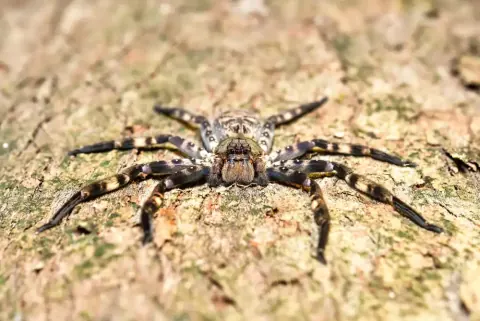
The tarantula is not automatically the biggest spider here. The dark fishing spider matches it for leg span and is far more widespread, turning up on tree trunks and house walls well away from water.
Where you meet them
In the house and outbuildings
Recluses take the quiet, dry, undisturbed places: stored boxes, seldom-worn shoes, the backs of closets, attic insulation and garage clutter. Cellar and cobweb spiders hold the corners, and a flat, dark parson spider running across a wall at night is a common autumn scare with no consequences.
Gardens, fields and fence lines
By August every gap between shrub and gutter carries an orb web. Crab spiders sit on goldenrod and white flowers, changing colour over days to match the bloom, and jumping spiders patrol sunny siding, deck rails and window frames.
Woods, bluffs and water
Fishing spiders sit on bankside logs and tree trunks along the Buffalo, the White and the Ouachita, able to run across the surface film or dive under it. Trapdoor spiders hold burrows with hinged lids in shaded banks, and tarantula burrows appear on open, rocky glades in the highlands.
Spider season in Arkansas
The visible season peaks from August to October. Spring-hatched spiderlings reach full size then, orb webs appear across doorways almost overnight, and mature males wander in search of females, which is when they come indoors. Recluse sightings rise in the same window, and again with spring cleaning, when stored boxes are finally moved.
Autumn is also when male tarantulas leave their burrows in the highlands and cross roads and trails. Winter does not empty the state: brown recluses stay active in heated buildings year-round, while outdoor species overwinter as eggs or part-grown juveniles under leaf litter and bark, as described in our guide to where spiders go in the winter.
Easy mix-ups in Arkansas
Because recluses really are common here, almost every brown spider gets accused. The reliable checks are six eyes in three pairs rather than eight, legs of a uniform tan with no bands or heavy spines, and a plain abdomen with no pattern. A violin-shaped mark alone proves little, since several harmless species show something similar. The usual innocent suspects are the male southern house spider, wolf spiders, and the sac and ground spiders that come indoors in autumn.
On the widow side, the false black widow and other Steatoda are dark, glossy and round-bodied but never show a red hourglass. Harvestmen, with one fused body section and no silk or venom glands, are not spiders at all.
Common Spiders in Arkansas
- Arkansas Chocolate Tarantula (Aphonopelma baergi)
- Audouin’s Trapdoor (Ummidia audouini)
- Bold Jumper (Phidippus audax)
Largest Spiders in Arkansas
- Arkansas Chocolate Tarantula (Aphonopelma baergi)
- Texas Brown Tarantula (Aphonopelma hentzi)
Highly Venomous Spiders in Arkansas
Sicariidae
Cobweb
Less Venomous Spiders in Arkansas
Orb-weaver (Araneidae)
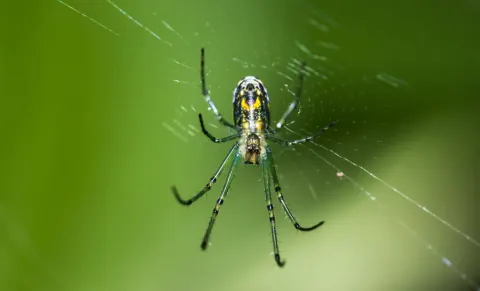 Long-Jawed SpidersOrchard Orbweaver (Leucauge venusta)Identify the orchard orbweaver (Leucauge venusta): size, silver and green colours, its horizontal orb web, where it lives and whether the bi
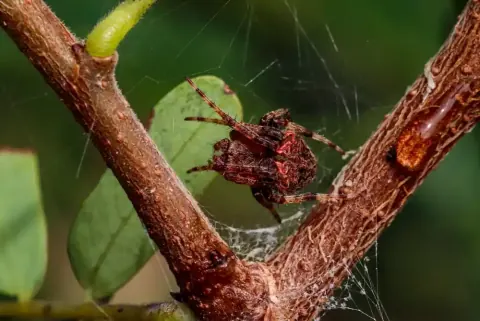 Orb WeaversSpotted Orb Weaver (Neoscona crucifera)Identify the spotted orb weaver (Neoscona crucifera): rusty hairy body, ringed legs, size, the web it rebuilds nightly, range and whether it
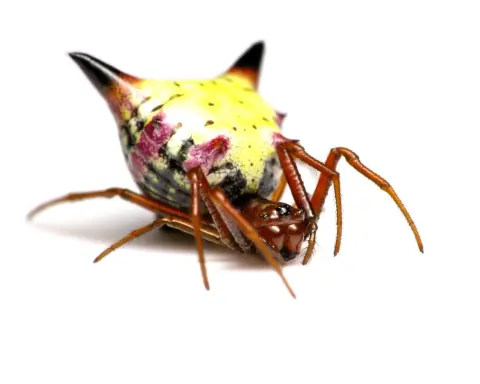 Orb WeaversArrow-shaped Micrathena (Micrathena sagittata)Identify the arrow-shaped micrathena (Micrathena sagittata): the yellow arrowhead abdomen, its two long rear spines, web, range, season and
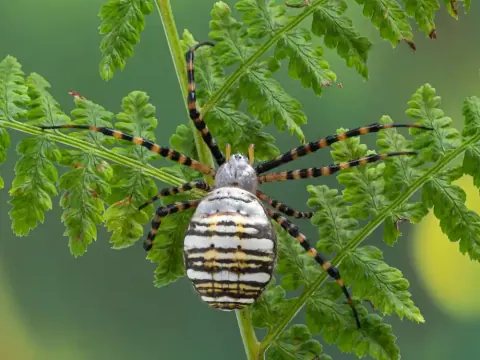 Orb WeaversBanded Garden (Argiope trifasciata)Identify the banded garden spider (Argiope trifasciata): silver banding, size, the zigzag in its web, egg sac, range, and whether its bite i
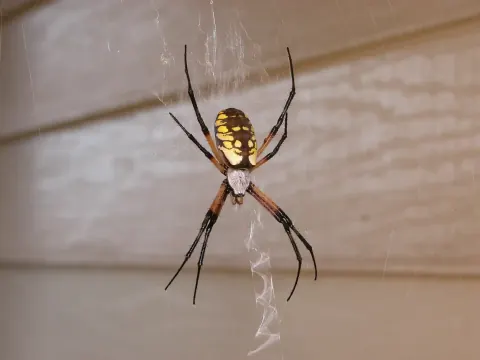 Orb WeaversYellow Garden (Argiope aurantia)Identify the yellow garden spider (Argiope aurantia): black and yellow markings, size, the zigzag stabilimentum, egg sacs, range and whether
Funnel Weaver (Agelenidae)
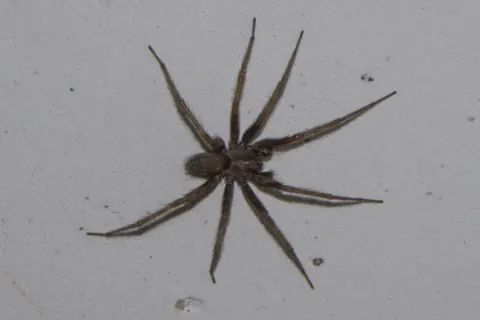 Funnel Weaver SpidersBarn Funnel Weaver (Tegenaria domestica)Identify the barn funnel weaver (Tegenaria domestica): size, banded legs, its flat funnel web, where it lives indoors, and whether the bite
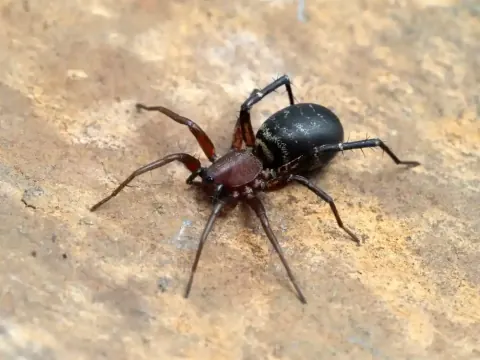 Corinnidae SpidersCastianeira longipalpaIdentify Castianeira longipalpa: size, the pale bands on its dark abdomen, its ant-like walk, where it lives in North America, and whether i
 Jumping SpidersGray Wall Jumping (Menemerus bivittatus)Identify the gray wall jumping spider (Menemerus bivittatus): size, the flattened grey-haired body, its walls-and-tree-trunks habitat, and w
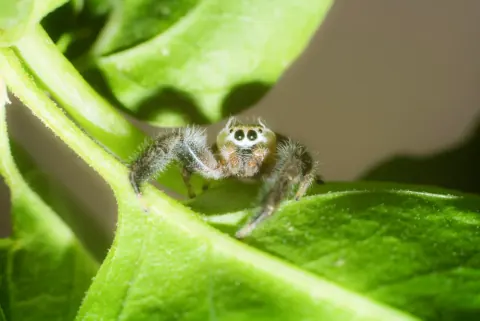 Jumping SpidersTan Jumping (Platycryptus undatus)Identify the tan jumping spider (Platycryptus undatus): flattened body, wavy abdominal pattern, size, where it lives and whether its bite is
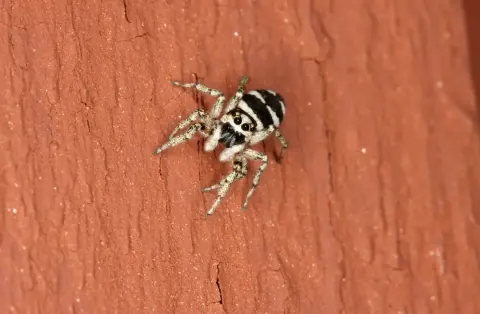 Jumping SpidersZebra (Salticus scenicus)Identify the zebra spider (Salticus scenicus): the black and white bars, the male's oversized jaws, how it hunts without a web, and whether
Cobweb (Theridiidae)
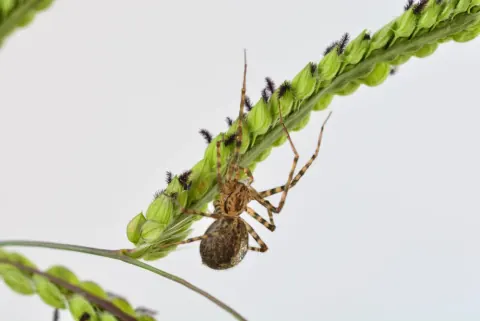
Nursery Web (Pisauridae)
Lynx (Oxyopidae)
Crab (Thomisidae)
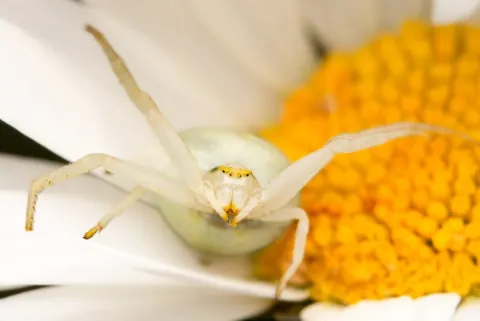 Crab SpidersGoldenrod Crab (Misumena vatia)Identify the goldenrod crab spider (Misumena vatia): size, the red abdominal streaks, how the female changes colour, where it lives and whet
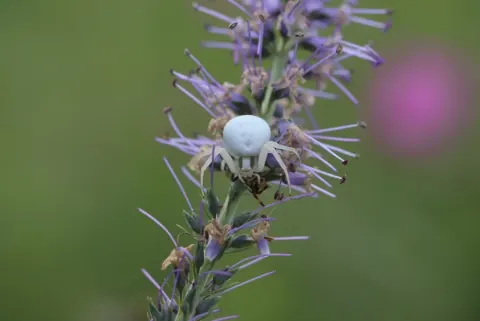 Cellar SpidersWhite Banded Crab (Misumenoides formosipes)Identify the white banded crab spider (Misumenoides formosipes): the white face ridge, colour change, huge size gap between sexes, and wheth
Ground (Gnaphosidae)
Cellar SpidersWhite Banded Crab (Misumenoides formosipes)Identify the white banded crab spider (Misumenoides formosipes): the white face ridge, colour change, huge size gap between sexes, and wheth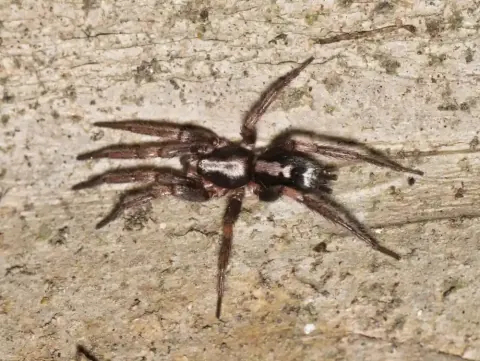 Ground SpidersParson (Herpyllus ecclesiasticus)Identify the eastern parson spider (Herpyllus ecclesiasticus): the cravat mark, size, speed, where it lives, and how much its bite really ma
Cellar (Phocidae)
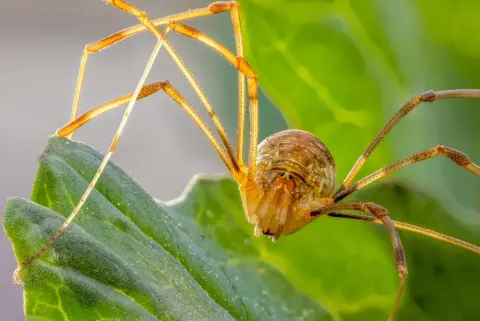
Crevice Weaver (Filistatidae)
Living with Arkansas's spiders
Recluse country rewards a few simple habits, and they handle the widows too:
- Shake out shoes, gloves and clothing that has been stored or left on the floor.
- Swap cardboard boxes for sealed plastic bins, which recluses cannot colonise.
- Keep beds away from walls and skirts and bedding off the floor.
- Wear gloves for woodpiles, bricks, stored lumber and equipment that has sat untouched.
- Use sticky traps along baseboards to gauge how many recluses a house actually holds.
- Vacuum webs and egg sacs instead of spraying; removing the insect supply works better than insecticide.
For the fauna of the state next door, which shares Arkansas's recluse population almost exactly, see Missouri.
Frequently asked questions
Is the brown recluse common in Arkansas?
Yes. Arkansas lies in the centre of the species' range, and recluses are genuinely common inside houses here, particularly in attics, closets, garages and stored cardboard. Even so, bites are far rarer than the population would suggest, because the spider retreats rather than confronts and bites mainly when pressed against skin.
What are the most venomous spiders in Arkansas?
The brown recluse and the southern black widow. They are the only Arkansas spiders whose venom is medically significant to people, and they work in completely different ways: the recluse can cause a slow-healing skin wound, while widow venom produces cramping muscle pain and sweating. Everything else here is harmless.
How do I identify a brown recluse?
Count the eyes: six, arranged in three pairs, instead of the usual eight. Then check the legs, which should be uniformly tan without bands, stripes or heavy spines, and the abdomen, which should be plain. The violin mark is helpful but unreliable on its own, since several harmless brown spiders show something similar.
Are tarantulas native to Arkansas?
Yes, but only one species. The Texas brown tarantula, Aphonopelma hentzi, lives on rocky glades, bluff tops and dry prairie in the Ozarks and Ouachitas. The name Aphonopelma baergi, sometimes listed as an Arkansas chocolate tarantula, refers to the same animal. It is docile and not medically significant.
How many spider species live in Arkansas?
Several hundred, across highland forest, prairie remnant, delta and pine woods, and the total keeps climbing as small ground and sheet-web spiders are surveyed. The figure of thirty-five to forty quoted on older pages counts only the conspicuous species that appear on identification charts, not the state's documented fauna.
What is the largest spider in Arkansas?
Two contenders. The Texas brown tarantula is heaviest, with a thick body and a leg span around ten centimetres. The dark fishing spider matches it for leg span, is far more widespread, and often turns up on tree trunks and house walls well away from water. Neither is dangerous to people.
Where do black widows live in Arkansas?
In dry, sheltered spaces close to the ground: woodpiles, meter and utility boxes, crawl spaces, barns, sheds, and under stored equipment or upturned pots. The web is a strong, irregular tangle rather than a neat orb, and the female usually hangs upside down in it with the red hourglass visible.
Are jumping spiders found in Arkansas?
Yes, and they are among the most common spiders around houses. The bold jumper, zebra spider, tan jumper and gray wall jumper hunt by sight on sunny walls, fences and window frames rather than building snare webs. They have excellent vision, often turn to watch people, and are harmless.
Do brown recluse bites always cause a wound?
No. Most bites produce nothing worse than a sore red patch that heals on its own within a week or two. A minority develop a slowly enlarging ulcer that needs weeks to close, and systemic illness is uncommon. Any wound that keeps enlarging should be assessed, since infections look similar.
When are spiders most active in Arkansas?
Late summer into autumn, roughly August through October, when spring-hatched spiders reach adult size and mature males wander in search of females. That is when orb webs seem to appear overnight and spiders come indoors. Brown recluses inside heated buildings stay active through the winter as well.
Published February 12, 2020 · Last updated September 14, 2026